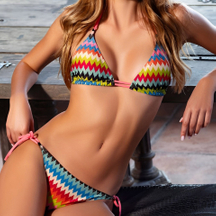
Content Menu
● Are Swimsuits Really Waterproof? Understanding Swimwear Fabrics
>> Common Swimsuit Fabrics Under 200 RMB
● When Do "Waterproof" Options Make Sense? Neoprene, Lycra and More
>> Neoprene and Dive-Suit–Style Swimwear
>> Lycra-Rich and Performance Fabrics
● Why Swimsuits Feel Tighter on Land and Looser in Water
>> How Water Affects Fit and Stretch
>> Practical Buying Tip – Do Not Fear a Snug Fit
● Popular Swimsuit Styles for Regular Swimmers
>> Why Many Swimmers Choose Tank-Style One-Piece Suits
● Hygiene Risks and Private Area Infections: What Beginners Overlook
>> Why Loose Swimsuits Increase Hygiene Risk
>> Expert Tips to Reduce Infection Risk for Women
● From Shopper to Brand Owner: What Our OEM Experience Teaches About "Good Swimwear"
>> How We Design Better Beginner-Friendly Swimwear
>> Typical OEM Service Flow for Swimwear Brands
● Step-by-Step: How a Beginner Should Choose a Swimsuit
>> Step 1 – Clarify Your Swimming Scenario
>> Step 2 – Choose the Right Fabric and Thickness
>> Step 3 – Focus on Fit: Tight Is Better Than Too Loose
>> Step 4 – Consider Style and Coverage
>> Step 5 – Hygiene Practices Before and After Swimming
● UX Tips – When to Use Visuals, Charts and Video
● When You Should Replace Your Swimsuit
● Work with a Professional Swimsuit OEM Manufacturer
● FAQs: Beginner Swimsuit Buying and OEM Basics
● References
If you are new to swimming or planning to launch your own swimwear line, choosing the right swimsuit is not just about style; it is about fabric, fit, function, and hygiene. As Dongguan Abely Fashion Co., Ltd., a professional swimsuit OEM manufacturer serving global brands, we see the same beginner mistakes repeatedly and help partners correct them at the product development stage. [berunclothes]
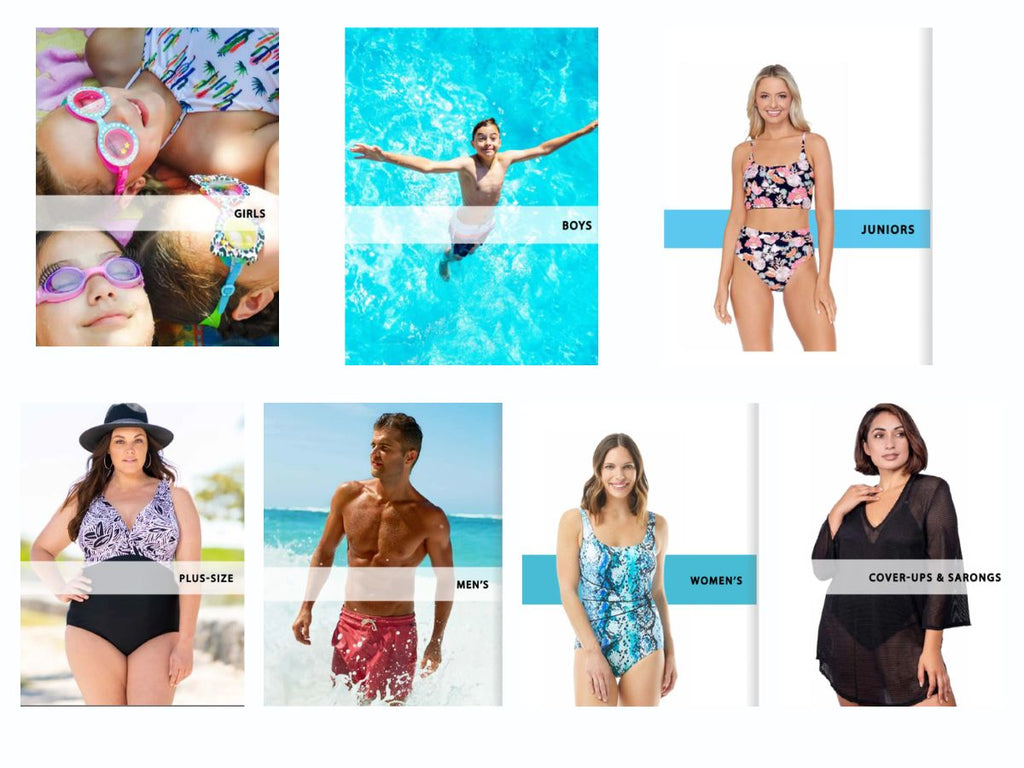
Are Swimsuits Really Waterproof? Understanding Swimwear Fabrics
Many beginners assume that "a swimsuit must be waterproof," but most fashion swimwear fabrics are not fully waterproof in the sense of blocking water like a raincoat. Instead, they are designed to let water in, stretch with your body, and then dry quickly after you leave the pool. [baliswim]
Common Swimsuit Fabrics Under 200 RMB
For mainstream consumer price points (under about 200 RMB), most swimsuits use blends such as:
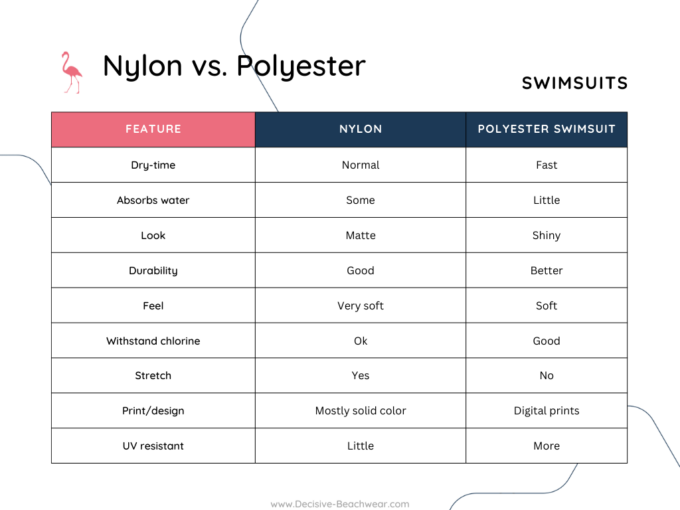
- Nylon + Spandex (Lycra/elastane) – soft, stretchy, body-hugging, but medium chlorine resistance. [seamwork]
- Polyester + Spandex – more chlorine-resistant and colorfast, often used for training and competitive swimwear. [pinecrestfabrics]
- Polyester / Polyamide (polyester fiber, polyamide fiber) – slightly firmer, good durability, but not "waterproof" in the diving-suit sense. [swimsuitcustom]
These fabrics allow quick drying, good comfort, and a flattering fit, but they do not keep your skin completely dry; water passes through the knit structure. [swimsuitcustom]
When Do "Waterproof" Options Make Sense? Neoprene, Lycra and More
Once you move above 200 RMB and into more technical products, you start to see materials like neoprene, high-performance Lycra blends, and thicker nylon composites. [baliswim]
Neoprene and Dive-Suit–Style Swimwear
Neoprene (the material used in many wetsuits) offers:
- Better thermal insulation – keeps you warmer in cooler pools or open water.
- Higher water resistance – water still enters but more slowly and in smaller amounts.
- A more structured silhouette – can smooth the body, but feels thicker and tighter. [swimsuitcustom]
However, full neoprene dive suits can feel "too serious" or embarrassing in a casual public pool, which is exactly what many beginners worry about. From our OEM experience, we often recommend hybrid designs (for example, neoprene panels combined with regular swim fabric) for brands targeting cooler climates or long-distance swimmers. [berunclothes]
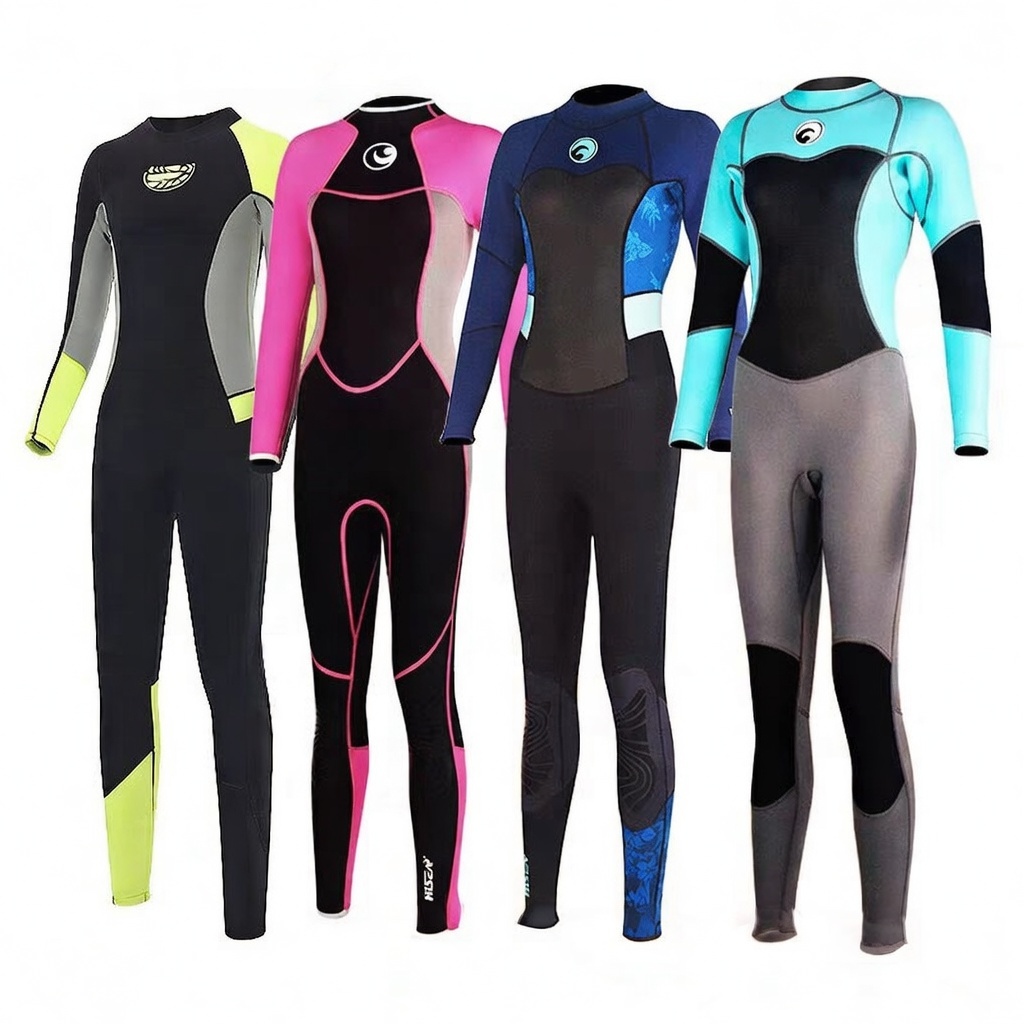
Examples of full-body neoprene wetsuits used for colder pools, open-water swimming, surfing and diving, offering more insulation and water resistance than regular fashion swimwear.
Lycra-Rich and Performance Fabrics
Premium Lycra-rich blends and engineered polyester fabrics provide:
- Excellent stretch and recovery for performance fit.
- UPF 50+ UV protection in many modern fabrics.
- Improved chlorine and color resistance for frequent pool swimmers. [pinecrestfabrics]
If you are sensitive to cold or want more structure, choosing a slightly thicker fabric or a style with lining and compression panels will be more practical than just chasing a "waterproof" label. [swimsuitcustom]
Why Swimsuits Feel Tighter on Land and Looser in Water
One of the biggest surprises for beginners: a swimsuit that feels tight in the fitting room will feel noticeably looser after you get into the pool. [seamwork]
How Water Affects Fit and Stretch
When swim fabrics such as nylon–spandex absorb water, the fibers relax slightly, and gravity in the water changes how the suit hangs on your body. The result is: [swimsuitcustom]
- A "just right" fit on land becomes too loose in water.
- Straps and leg openings may start to gap or shift.
- You spend your swim adjusting your suit instead of focusing on your strokes.
From our OEM production feedback, we always advise brand clients to fit-test samples in real water, not only in a dry fitting room. [berunclothes]
Practical Buying Tip – Do Not Fear a Snug Fit
For both beginners and experienced swimmers, a good rule is:
- On land, your swimsuit should feel snug but not painful.
- You should be able to move freely, but you will notice firm tension at the shoulders, bust, and hips.
- After entering the water, that tension will reduce and become comfortable.
The same principle applies to swim caps and goggles—what feels slightly tight on land is usually right once you start swimming. [swimsuitcustom]
Popular Swimsuit Styles for Regular Swimmers
If you observe regular lap swimmers or club members, you will notice common patterns in their swimsuit choices. [berunclothes]
Why Many Swimmers Choose Tank-Style One-Piece Suits
A very popular option is the tank-style one-piece with boy leg (four-corner) bottoms. This style is favored because it:
- Provides secure coverage during all strokes, including freestyle and breaststroke.
- Reduces drag compared to loose two-piece fashion suits.
- Minimizes wardrobe malfunctions when pushing off the wall or practicing flip turns.
As a swimsuit OEM manufacturer, we see this silhouette frequently requested by swim schools, training clubs, and conservative markets that want both performance and modesty. [abelyfashion]
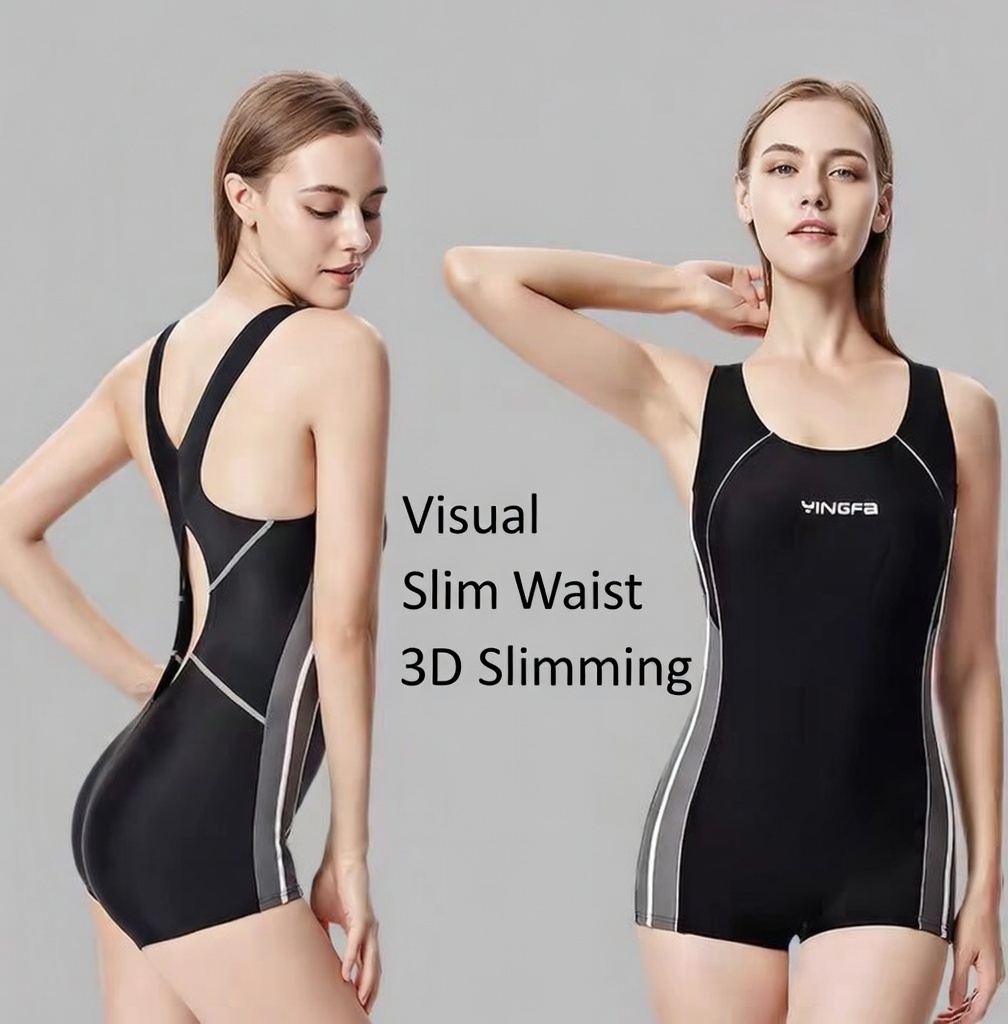
Example of a tank-style one-piece swimsuit with boy-leg cut and slimming side panels, ideal for beginners who want secure coverage and a visual slimming effect.
Hygiene Risks and Private Area Infections: What Beginners Overlook
Many new swimmers worry about "private-area infections" from public pools, and this concern is not completely unfounded, especially when suits are too loose or of poor quality. [stdcheck]
Why Loose Swimsuits Increase Hygiene Risk
During strokes like breaststroke (frog kick), the legs open wide and the fabric at the crotch can shift or gap, allowing more direct contact between sensitive skin and pool water. When the swimsuit is too loose: [stdcheck]
- Water flows freely into intimate areas, causing a persistent cold, exposed feeling.
- Damp, poorly ventilated fabric stays against the skin longer after swimming.
- Combined with imbalanced pool hygiene, this can increase irritation risk.
While properly chlorinated pools reduce many infection risks, comfort, coverage, and fit still play a big role in how protected you feel. [stdcheck]
Expert Tips to Reduce Infection Risk for Women
From both medical guidance and user feedback, several practical steps help lower your risk:
1. Choose a well-fitted swimsuit
- Pick a snug, lined crotch area with good elastic recovery.
- Avoid overly thin, transparent, or badly sewn panels in sensitive zones. [pinecrestfabrics]
2. Prioritize fabric quality
- Higher-quality nylon or polyester blends with proper lining reduce friction and drying time.
- Consider investing a bit more in a suit that fits you well instead of chasing the lowest price. [seamwork]
3. Pay attention to pool hygiene and personal care
- Shower before and after swimming.
- Change out of a wet swimsuit as soon as possible.
- If you notice persistent discomfort, itching, or unusual discharge, visit a doctor early for diagnosis and treatment. [stdcheck]
Special accessories like silicone underwear or waterproof patches can be used, but quality varies widely in the market, and counterfeits or defective items are common; any product that arrives damaged or dirty should be discarded immediately. [stdcheck]
From Shopper to Brand Owner: What Our OEM Experience Teaches About "Good Swimwear"
Because we supply global brands, wholesalers, and online retailers, we see the full journey from beginner user reviews to professional product development. [abelyfashion]
How We Design Better Beginner-Friendly Swimwear
When designing for first-time swimmers, we typically:
- Reinforce key stress points – such as straps, crotch, and side seams, to prevent gaping.
- Use double-layer fronts for modesty and improved shape.
- Select chlorine-conscious fabrics for collections aimed at pool training. [pinecrestfabrics]
- Offer sizes graded carefully so that "snug on land, perfect in water" becomes predictable for your customers.
For brands, this means fewer returns and better reviews; for end users, it means a smoother, more confident first swimming experience. [berunclothes]
Typical OEM Service Flow for Swimwear Brands
If you are a brand owner or wholesaler planning your swimwear line, a standard OEM workflow with a factory like ours often looks like:
1. Concept & positioning
- Define target users (beginners, performance swimmers, modest swimwear, etc.).
- Decide main selling points: anti-chlorine, shaping, plus-size, or eco-friendly. [abelyfashion]
2. Fabric and trim selection
- Review swatch books for nylon–spandex, polyester–spandex, neoprene, and sustainable options.
- Match fabric choice to price segment and usage scenario (pool, beach, surfing). [pinecrestfabrics]
3. Pattern development & sampling
- OEM team builds patterns based on your sketches or tech packs.
- Fit samples are tested in both dry and wet conditions.
4. Bulk production & quality control
- After sample approval, bulk fabrics are cut, sewn, and inspected.
- Final pieces are checked for fit consistency, print quality, stitching strength, and labeling compliance. [unijoyswimwear]
5. Logistics & after-sales feedback
- Products are shipped to your markets.
- User feedback about fit, comfort, and durability feeds into the next season's improvements.
Step-by-Step: How a Beginner Should Choose a Swimsuit
To make this practical, here is a clear checklist you can follow as a first-time buyer.
Step 1 – Clarify Your Swimming Scenario
Ask yourself:
- Will you mainly swim in a public indoor pool, outdoor pool, or the sea?
- Are you planning to swim laps regularly or just play in the water during holidays?
- Do you feel cold easily in water?
Frequent pool swimmers and those who get cold quickly may benefit more from chlorine-resistant fabrics and slightly thicker constructions. [pinecrestfabrics]
Step 2 – Choose the Right Fabric and Thickness
- For casual beach or vacation use: nylon–spandex styles are soft and flattering.
- For regular pool training: polyester–spandex or PBT blends offer better chlorine resistance. [swimsuitcustom]
- If you get cold easily or swim outdoors in cooler water: consider thicker fabrics, partial neoprene, or long-sleeve rash-guard styles. [baliswim]
Step 3 – Focus on Fit: Tight Is Better Than Too Loose
When you try on a swimsuit:
- It should feel firm and supportive around bust, waist, and hips.
- You should be able to raise your arms, squat, and mimic a frog kick without the suit riding up excessively.
- If you feel it is "just a bit too tight," that is often correct; a "perfectly comfortable" dry fit usually becomes too loose in water. [seamwork]
Step 4 – Consider Style and Coverage
- If you care about security and modesty, a tank-style one-piece with boy-leg is a very safe choice.
- If you prioritize tanning or fashion, a bikini or cut-out design is fine, but check that it stays put when you move.
- For women worried about pelvic health, choose styles with full, stable crotch coverage and quality lining.
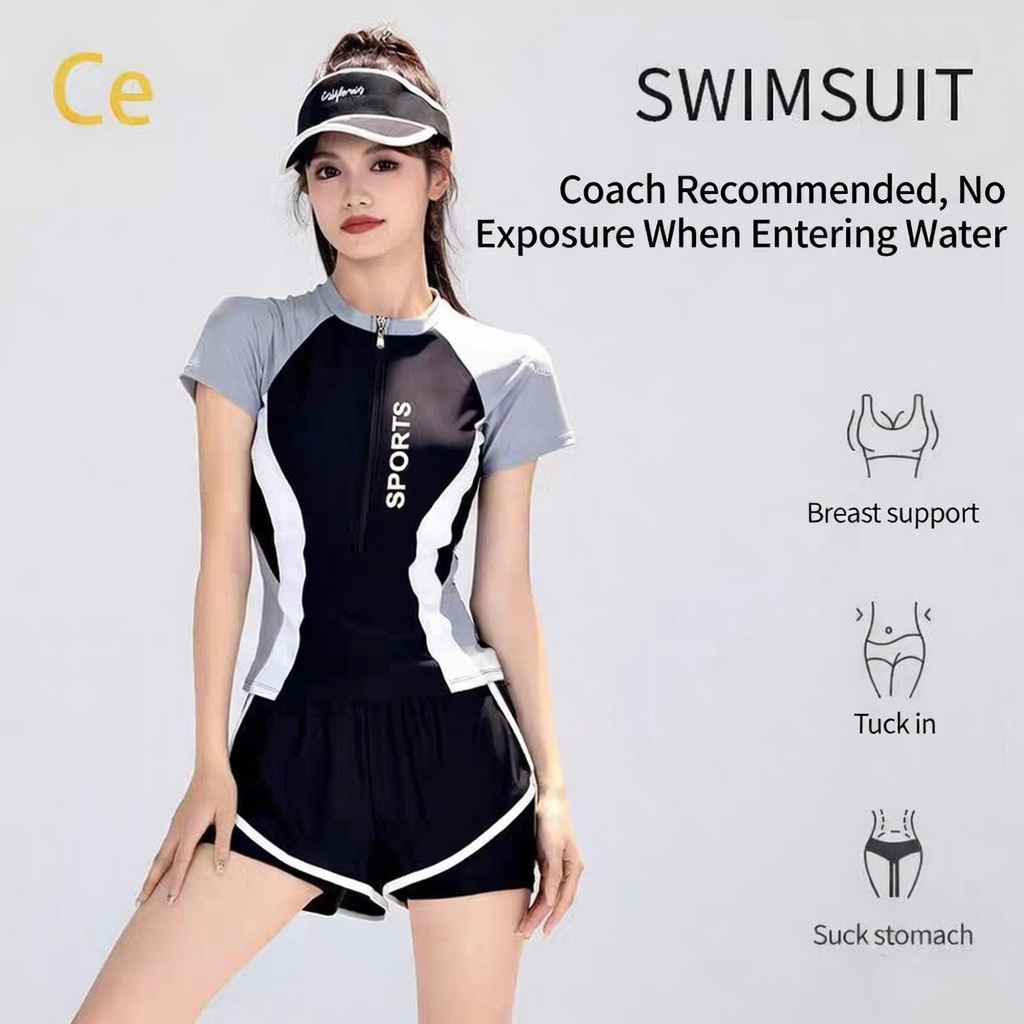
Women's modest swimsuit set with built-in breast support and secure coverage, recommended by coaches for beginners who want to avoid exposure when entering the water.
Step 5 – Hygiene Practices Before and After Swimming
- Always wash a new swimsuit before wearing it, especially if you bought it in-store where others may have tried it on. [goaskalice.columbia]
- Keep your underwear on when trying swimsuits in a shop to reduce exposure to germs. [stdcheck]
- Rinse your body before swimming and shower thoroughly afterward; change out of wet swimwear as soon as possible. [stdcheck]
UX Tips – When to Use Visuals, Charts and Video
If you are a brand creating content for your customers, or simply want to understand better, visuals can make this topic much easier to digest.
We recommend:
- Fabric comparison chart: A simple table comparing nylon, polyester, and neoprene by stretch, chlorine resistance, and warmth, ideally visualized as an infographic. [pinecrestfabrics]
- Fit demonstration images: Side-by-side photos of correct vs. overly loose fit at the shoulders and leg openings.
- Short video: A 30–60 second clip showing how a swimsuit behaves when entering water and why a tight dry fit matters.
Placing these visuals near the fabric and fit sections of this guide will improve dwell time and clarity for first-time buyers.
When You Should Replace Your Swimsuit
Even the best swimsuit will not last forever, especially with chlorine, sun, and body oils.
You should consider replacing your suit when:
- The fabric feels thinner, rougher, or "baggy", especially around the rear and bust.
- The elastic at leg openings and straps no longer snaps back firmly.
- Colors have noticeably faded or prints look washed out.
Most regular pool swimmers replace their main training suit every 3–6 months depending on fabric and usage, while vacation-only suits may last several seasons with proper care. [swimsuitcustom]
Clear Call to Action – Work with a Professional Swimsuit OEM Manufacturer
Whether you are a beginner choosing your first swimsuit or a brand planning your next collection, quality starts with fabric, fit, and a trustworthy manufacturing partner. At Dongguan Abely Fashion Co., Ltd., we help international labels develop swimwear that is beginner-friendly, performance-ready, and aligned with real user needs. [abelyfashion]
If you want to:
- Launch or upgrade your swimsuit line.
- Optimize fits for beginners and frequent swimmers.
- Choose fabrics that balance comfort, durability, and price.
You are welcome to contact our swimsuit OEM team for fabric recommendations, sampling support, and full-package production from design to delivery. [abelyfashion]
FAQs: Beginner Swimsuit Buying and OEM Basics
1. Are most swimsuits waterproof?
Most fashion swimsuits are made from nylon–spandex or polyester–spandex blends that allow water in but dry quickly; they are not fully waterproof like raincoats or drysuits. [baliswim]
2. How tight should a swimsuit be for a beginner?
It should feel snug, supportive, and slightly tight on land without restricting breathing or movement; once you get into the water, it will relax and feel more comfortable. [seamwork]
3. Which fabric is best if I swim in a pool every week?
Polyester–spandex or PBT blends typically offer better chlorine resistance and colorfastness than pure nylon–spandex, making them ideal for regular pool training. [pinecrestfabrics]
4. Can I get infections from wearing a swimsuit in public pools?
Properly maintained pools reduce many risks, but poor hygiene, staying in a wet suit too long, or wearing very loose, unlined swimwear can increase irritation and infection risk; showering and changing quickly helps. [stdcheck]
5. What services does a swimsuit OEM manufacturer provide?
A professional swimsuit OEM manufacturer can support you with fabric sourcing, pattern development, fit sampling, full-scale production, quality control, and logistics for your custom-branded swimwear line. [unijoygarment]
References
1. Swimsuit fabric guide and performance properties – SwimsuitCustom, "How to choose a fabric for swimwear (a complete guide)" [https://www.swimsuitcustom.com/blogArticle/how-to-choose-swimwear-fabrics-complete-guide] [swimsuitcustom]
2. Seamwork, "How to Shop for Swimwear Fabric" – recommendations on nylon and Lycra blends for swimwear [https://www.seamwork.com/fabric-guides/how-to-shop-for-swimwear-fabric] [seamwork]
3. Pinecrest Fabrics, "How to Choose Quality Swimwear Fabric: A Guide for Fashion Designers" – comparison of nylon-spandex and polyester-spandex blends [https://pinecrestfabrics.com/blog/how-to-choose-quality-swimwear-fabric-a-guide-for-fashion-designers] [pinecrestfabrics]
4. STDCheck Blog, "Understanding the Connection: STDs and Swimsuits" – hygiene practices for trying and washing swimwear [https://www.stdcheck.com/blog/stds-and-swimsuits] [stdcheck]
5. Columbia University Go Ask Alice, "Are there hygiene concerns when it comes to buying used swimwear?" – hygiene risks with second-hand and tried-on swimwear [https://goaskalice.columbia.edu/answered-questions/are-there-hygiene-concerns-when-it-comes-buying-used-swimwear] [goaskalice.columbia]
6. STDCheck Blog, "Summer Safety Guide: Preventing Swim-related Infections" – advice on showering, drying, and changing after swimming [https://www.stdcheck.com/blog/summer-safety-guide-preventing-swim-related-infections] [stdcheck]
7. Unijoy, "Swimwear & Activewear Manufacturer From China – Unijoy OEM" – overview of OEM swimwear services and support [https://www.unijoyswimwear.com] [unijoyswimwear]
8. Unijoy, "Premium Swimwear Manufacturer & Supplier in China | Unijoy" – description of OEM/ODM capabilities and production scale [https://www.unijoygarment.com/swimsuit-manufacturer.html] [unijoygarment]
9. Berun Clothes, "Swimwear Manufacturer | Custom Bikini & Swimsuit OEM Factory" – positioning and benefits of working with an experienced swimwear OEM manufacturer [https://berunclothes.com/swimwear-manufacturers] [berunclothes]
10. Abely Fashion, "Custom Bikini and Swimwear China Manufacturer" – introduction to Abely Fashion's custom swimwear OEM services [https://www.abelyfashion.com] [abelyfashion]