Content Menu
● Understanding the Core of Premium Swimwear
>> Why Fabric Composition Matters
● What Separates Professional Swimwear from Regular Ones
>> Key Differences
● The Science of Fit: "Better Small Than Big"
● OEM vs. ODM: What Our Clients Usually Ask
● The Manufacturing Process Inside Our Factory
>> Step-by-Step Process
● Latest Trends in Global Swimwear Manufacturing (2026 Update)
>> 1. Recycled Nylon (Econyl®)
>> 2. Digital Sublimation Printing
>> 3. Seamless Construction
● Choosing the Right Swimwear Fabric: Our Professional Recommendations
● Our OEM Swimwear Expertise for Global Brands
● Enhancing Brand Value Through Manufacturing Excellence
● Final Tip: Avoid the Common Swimwear Pitfalls
● Call to Action: Start Your Swimwear Brand with Us
● FAQs
● References
As a leading OEM swimwear manufacturer in China, I've often been asked the same question: "what truly makes a high-quality swimsuit?" To many buyers, the difference between a professional sport swimsuit and a regular one may seem minimal—but in manufacturing, those small details define quality, comfort, and brand reputation.
At Dongguan Abely Fashion Co., Ltd., our daily work is to bring global swimwear brands' ideas to life through professional OEM and private label swimwear manufacturing. Whether our clients design highly technical women's sport swimsuits or market lifestyle bikini collections, they all share one goal—premium quality with consistent fit, elasticity, and durability.
Understanding the Core of Premium Swimwear
Swimwear manufacturing is not only about stitching fabric together; it's a science of fit, fiber composition, and finishing. A swimsuit must feel like a second skin—supportive yet flexible.
Why Fabric Composition Matters
The ideal blend for performance swimwear, as we recommend to all our clients, is 80% nylon and 20% spandex (elastane). This ratio ensures that:
- The fabric stretches easily in four directions.
- The wearer enjoys freedom of movement underwater.
- The material retains shape even after repeated use.
If the spandex content drops below 20%, flexibility declines sharply, causing discomfort during swimming. Conversely, too high a spandex level can make the swimsuit overly tight or prone to fiber fatigue over time.
This blend is our go-to for nylon spandex swimwear, which dominates the professional sports segment due to its superior elasticity and comfort.
What Separates Professional Swimwear from Regular Ones
Whether you're a competitive athlete or a casual swimmer, not all swimsuits are created equal. The price difference between "budget" and "premium" models isn't just branding—it's technical engineering.
Key Differences
- Fabric Technology: Higher-end models use chlorine-resistant yarns treated for UV protection and anti-pilling durability.
- Construction Techniques: Premium suits feature bonded seams or flatlock stitching, reducing drag and skin friction.
- Design Precision: Advanced 3D patterning ensures ergonomic fit and body contouring.
At Abely Fashion, we invest in Swiss-imported automatic cutting machines and sports-grade digital print lines to guarantee accuracy and durability in every piece.
The Science of Fit: "Better Small Than Big"
Many customers don't realize that fit is everything in swimwear. When testing samples, we always recommend choosing a size that's slightly snug. As a rule of thumb, swimwear loosens slightly once it gets wet, so buying a larger size can quickly lead to sagging or drag during motion.
In our factory's OEM fittings, we perform:
1. Elastic recovery tests after repeated stretching cycles.
2. Water resistance simulations to measure fabric distortion.
3. Sun exposure testing to check UV stability.
These tests ensure that every custom swimwear piece meets our international clients' expectations for comfort, performance, and longevity.
OEM vs. ODM: What Our Clients Usually Ask
As a custom swimwear factory, we offer both OEM (Original Equipment Manufacturing) and ODM (Original Design Manufacturing) options.
- OEM Swimwear: We produce garments strictly following your design specification, Tech Pack, or pattern. Ideal for established brands seeking precise replication.
- ODM Swimwear: We assist in concept creation, from sketch to prototype, letting new brands start faster with professional guidance.
Both services include fabric sourcing, logo printing, packaging, and export logistics, allowing clients to focus on brand building.
The Manufacturing Process Inside Our Factory
Our factory's production workflow combines automation and human craftsmanship to maintain both consistency and creativity.
Step-by-Step Process
1. Design & Tech Pack Review – Our engineering team evaluates patterns, material requirements, and fit goals.
2. Fabric Sourcing – We work with certified textile suppliers from Taiwan and Italy for high-performance nylon-spandex blends.
3. Sample Development – After pattern confirmation, our prototyping team creates test samples for fitting and feedback.
4. Mass Production – Using digital cutting and precision sewing equipment, we ensure size tolerance stays below ±0.5 cm.
5. Quality Control – Each piece undergoes inspection for seam strength, elasticity, and colorfastness.
6. Brand Label & Packaging – Final touches include heat-transferred branding, eco-friendly packaging, and secure export labeling.
This systematic approach lets us deliver private label swimwear globally while upholding ISO9001 manufacturing standards.
Latest Trends in Global Swimwear Manufacturing (2026 Update)
The swimwear industry continues to evolve with new materials and sustainability priorities.
1. Recycled Nylon (Econyl®)
Many premium brands now request Econyl® fiber, regenerated from ocean waste such as fishing nets. It offers the same stretch as virgin nylon but drastically reduces environmental footprint.
2. Digital Sublimation Printing
Modern sublimation printing enables vivid, full-color patterns without heavy ink feel, now popular for both bikinis and full-body swimsuits.
3. Seamless Construction
"Second-skin" seamless designs eliminate outer stitching, improving aesthetics and hydrodynamics—an area where Abely Fashion continues to invest.
Choosing the Right Swimwear Fabric: Our Professional Recommendations
Swimwear fabrics fall under three main categories—each suited for specific applications.
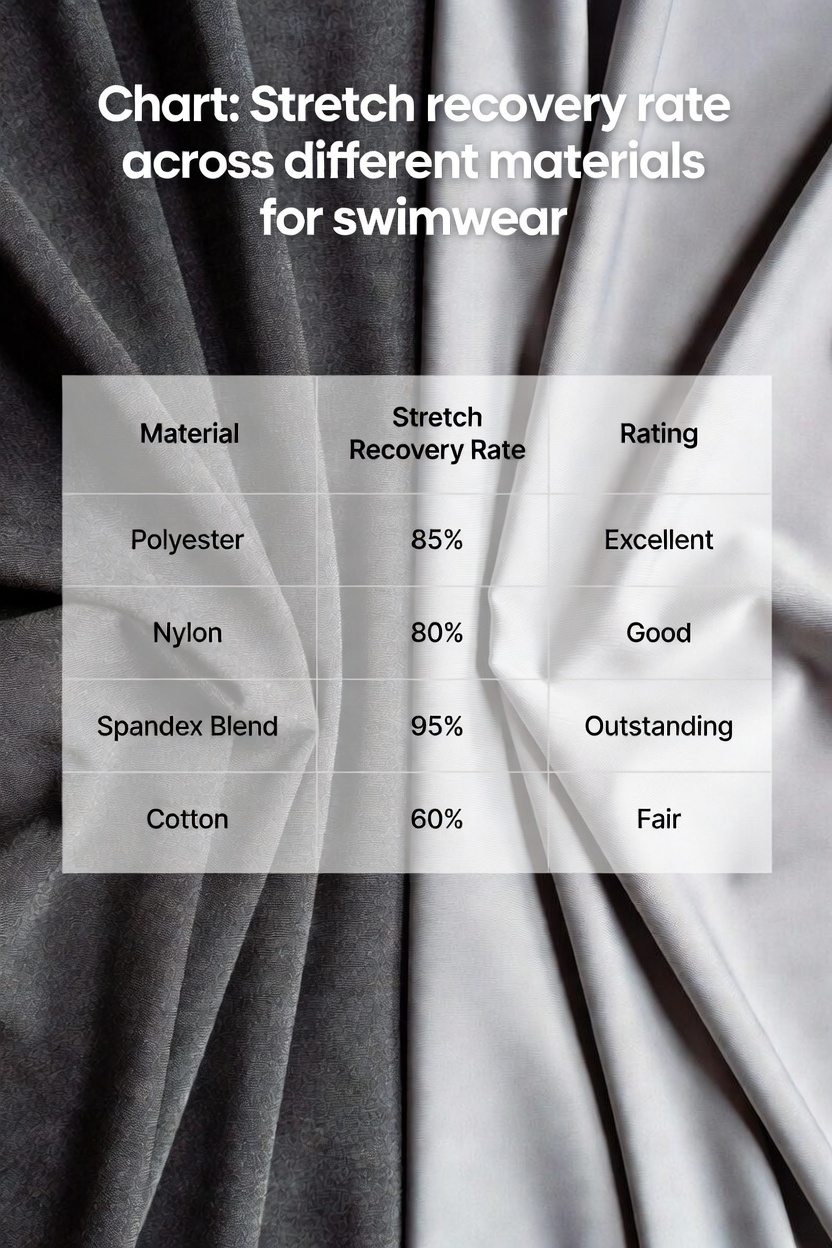
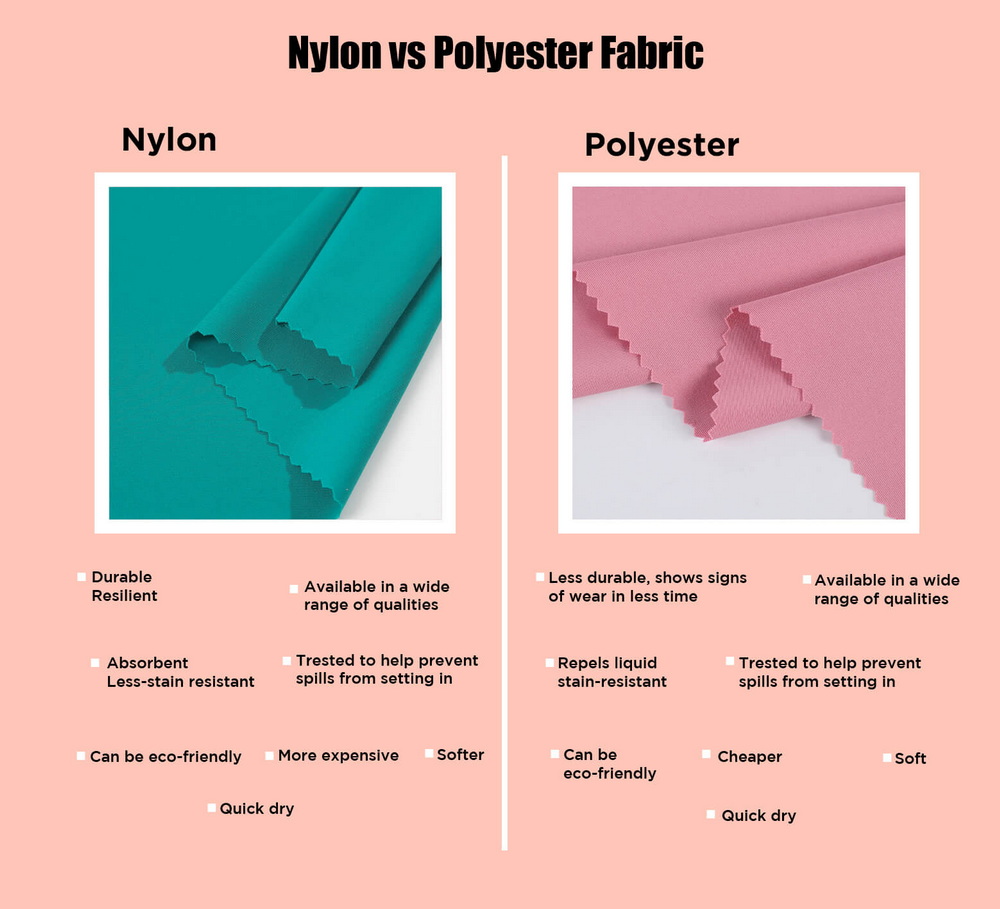
| Fabric Type | Composition | Best For | Key Properties |
| Nylon-Spandex | 80/20 blend | Sport, competition | High elasticity, durable, water-repellent |
| Polyester-Spandex | 85/15 blend | Training wear | Chlorine-resistant, slightly stiffer handfeel |
| Econyl® | 78/22 blend | Sustainable commercial lines | Eco-friendly, same stretch as nylon |
Our in-house testing shows nylon-spandex blends maintain 93% of their original elasticity after 100 wash cycles—significantly outperforming cheaper polyester-only fabrics.
Our OEM Swimwear Expertise for Global Brands
Today, we collaborate with over 30 international swimwear brands across North America, Europe, and Australia. Each brand's focus may differ—fitness, fashion, or competitive swimming—but all seek customized service and precise quality control.
Key clients leverage our:
- Private label production with MOQ flexibility.
- Custom printing and embroidery for brand identity.
- Rapid prototyping within 10–14 days.
- Dedicated export assistance and compliance support for CE and REACH.
For startups, our ODM customization packages are particularly effective in accelerating time-to-market without compromising brand uniqueness.
Enhancing Brand Value Through Manufacturing Excellence
When we partner with a client, our responsibility extends beyond making clothes—it's about helping your brand grow through quality assurance and innovation.
We advise every partner to:
- Select balanced fabric compositions for their target audience.
- Use UV-protective coatings for outdoor swimwear lines.
- Invest in functional design—compressive waistbands, ergonomic seams, and durable straps—to improve user satisfaction.
This is how we nurture long-term collaborations, building trust around consistent excellence.
Final Tip: Avoid the Common Swimwear Pitfalls
When buying or designing swimwear, remember these golden rules:
1. Never choose a larger size—slightly tight fits perform better.
2. Check the fabric label: 80% nylon + 20% spandex is ideal.
3. Inspect the stitching quality—flatlock seams last longer.
4. Ask about UV and chlorine resistance.
5. Avoid cotton blends—they absorb water and lose shape fast.
Call to Action: Start Your Swimwear Brand with Us
If you're a wholesaler or brand owner searching for a dependable OEM swimwear manufacturer in China, we'd be honored to collaborate.
At Dongguan Abely Fashion Co., Ltd., we turn your creative vision into high-performance swimwear, backed by modern equipment, skilled craftsmanship, and eco-conscious practices.
Contact us today to get your free sampling quote or customization consultation.
FAQs
1. What is the MOQ for OEM swimwear orders?
Our MOQ typically starts at 100 pieces per design, flexible for startup brands.
2. Can you use sustainable fabrics like recycled nylon?
Yes, we offer both Econyl® and REPREVE® as eco-friendly material options.
3. How long does sample production take?
Normally 7–14 working days depending on fabric availability and complexity.
4. Do you support custom labeling and packaging?
Absolutely. We provide fully private label swimwear solutions, including heat-transfer logos, woven labels, and biodegradable packaging.
5. Where are your main export markets?
We currently export to the USA, UK, Canada, Australia, and parts of Northern Europe.
References
1. [Econyl® Official: Regenerated Nylon by Aquafil]
2. [Textile World: Advances in Swimwear Fabric Technology]
3. [ISO 9001 Quality Management Standards – International Organization for Standardization]
4. [SwimOutlet Industry Report 2025 – Global Swimwear Market Growth]
5. [REPREVE® Sustainable Fiber Technology]