Content Menu
● Why "physical sun protection" wins for outdoor kid swim days
● 4 non-negotiables when choosing a long-coverage kids swimsuit
>> 1) Demand a real UPF rating (UPF 50+ is the target)
>> 2) Use safe, kid-appropriate fabric standards (avoid "plastic-feel" cheap materials)
>> 3) Keep it lightweight and breathable (sun protection shouldn't mean overheating)
>> 4) Pick bright, high-contrast colors (visibility is a safety feature)
● Common "information gaps" we see in competitor articles (and how we fix them)
● OEM-grade buying checklist (parents, brands, and wholesalers can use)
>> Spec suggestions for brand tech packs (what to tell your OEM)
● Work with our OEM swimwear factory
● FAQ (People Also Ask)
>> 1) What does UPF 50+ mean in kids swimwear?
>> 2) Is UPF clothing better than sunscreen for kids?
>> 3) Does UPF protection change when the swimsuit gets wet?
>> 4) Can tight swimwear reduce sun protection?
>> 5) What swimsuit colors are safest for kids to be seen in water?
● References
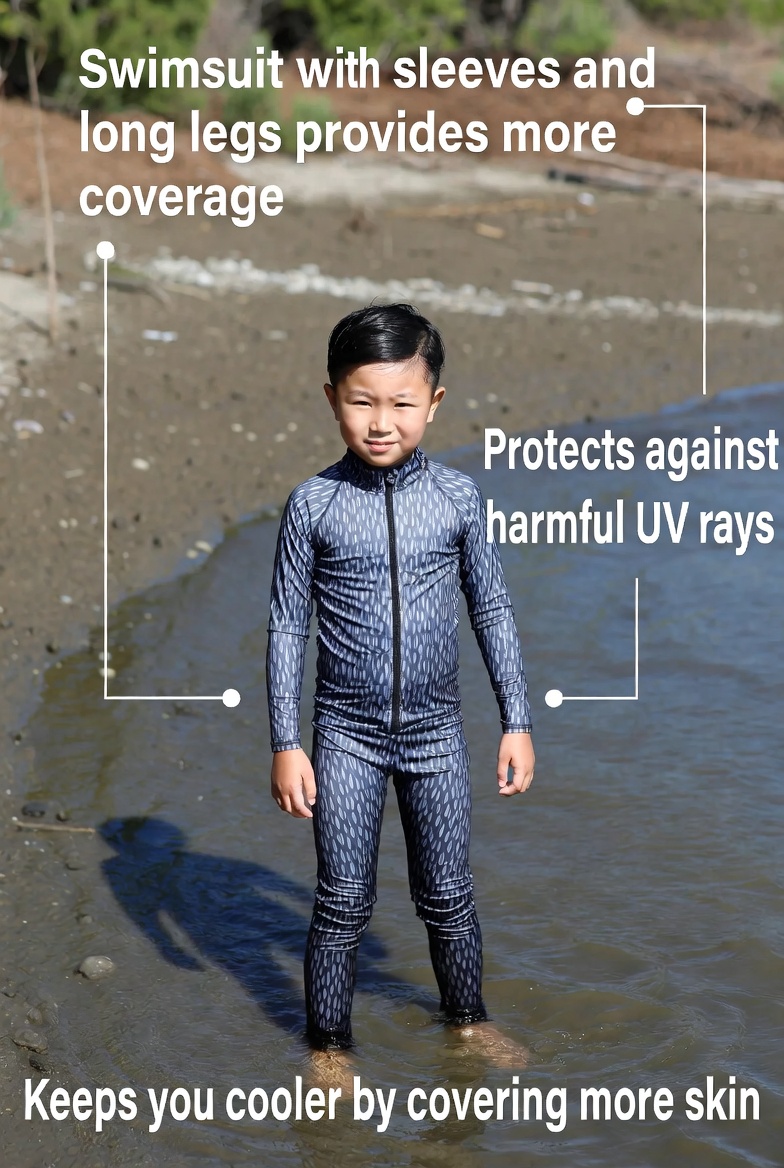
As an OEM swimwear manufacturer at Dongguan Abely Fashion Co., Ltd., we've learned one hard truth from brand clients and real parents: if you only rely on sunscreen during water play, you will lose that battle sooner or later—because water, friction, and reapplication reality don't always cooperate. That's why, when families ask us what actually works for outdoor summer swim time, we point them to physical sun protection: long-sleeve, long-leg coverage with a lab-tested UPF 50+ rating, paired with safe, breathable fabrics and smart color choices for visibility.
Why "physical sun protection" wins for outdoor kid swim days
In summer, kids don't "swim a little"—they soak, splash, rub towels, roll in sand, and repeat. From a product-design perspective, that matters because sun protection that depends on perfect adult behavior (apply, wait, reapply, don't miss spots) breaks down fast in real life.
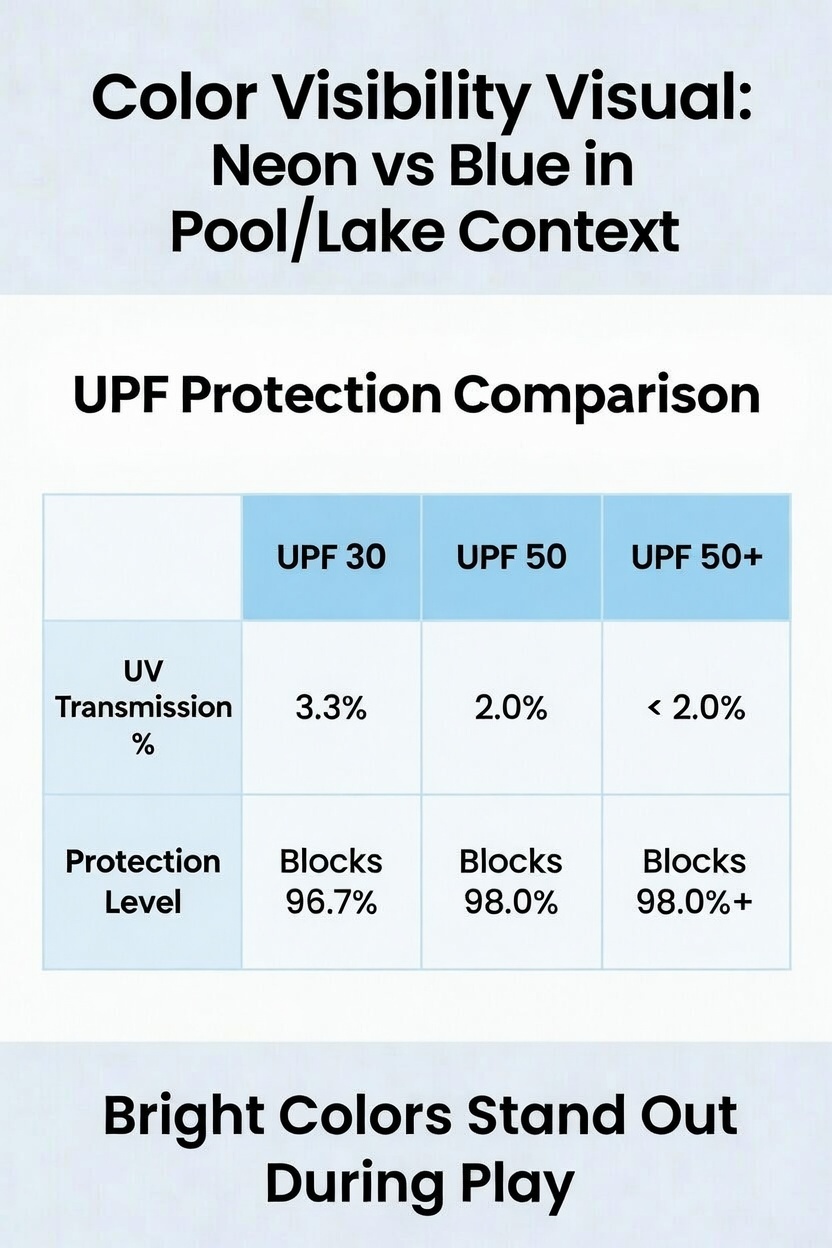
UPF-rated clothing gives parents a more controllable baseline because the protection is built into the garment's structure and coverage, not just a layer on skin. UPF measures how effectively fabric filters both UVA and UVB; a garment rated UPF 50 allows only 1/50th (~2%) of UV radiation through, and anything under 2% transmission is labeled UPF 50+.
OEM insight (what we see in production): most "sun-safe" complaints we receive are not about style—they're about heat, scratchy hand-feel, see-through fabric when wet, and fading after a few washes. Those issues are solvable, but only if the swimsuit is engineered like performance gear, not like a cheap fashion piece.
4 non-negotiables when choosing a long-coverage kids swimsuit
1) Demand a real UPF rating (UPF 50+ is the target)
From a brand compliance standpoint, "sun-protective," "UV-resistant," and "UV-protective" are often marketing words. What parents actually need is a lab-tested UPF rating on the label/hangtag.
Also note a nuance many shoppers miss: performance can drop if fabric is stretched too tight, and for many materials wetness can reduce UPF, so fit and fabric selection matter just as much as the printed UPF claim.
What we recommend as an OEM:
- Choose a fit that's secure but not overly tight (avoid excessive stretch loss of protection).
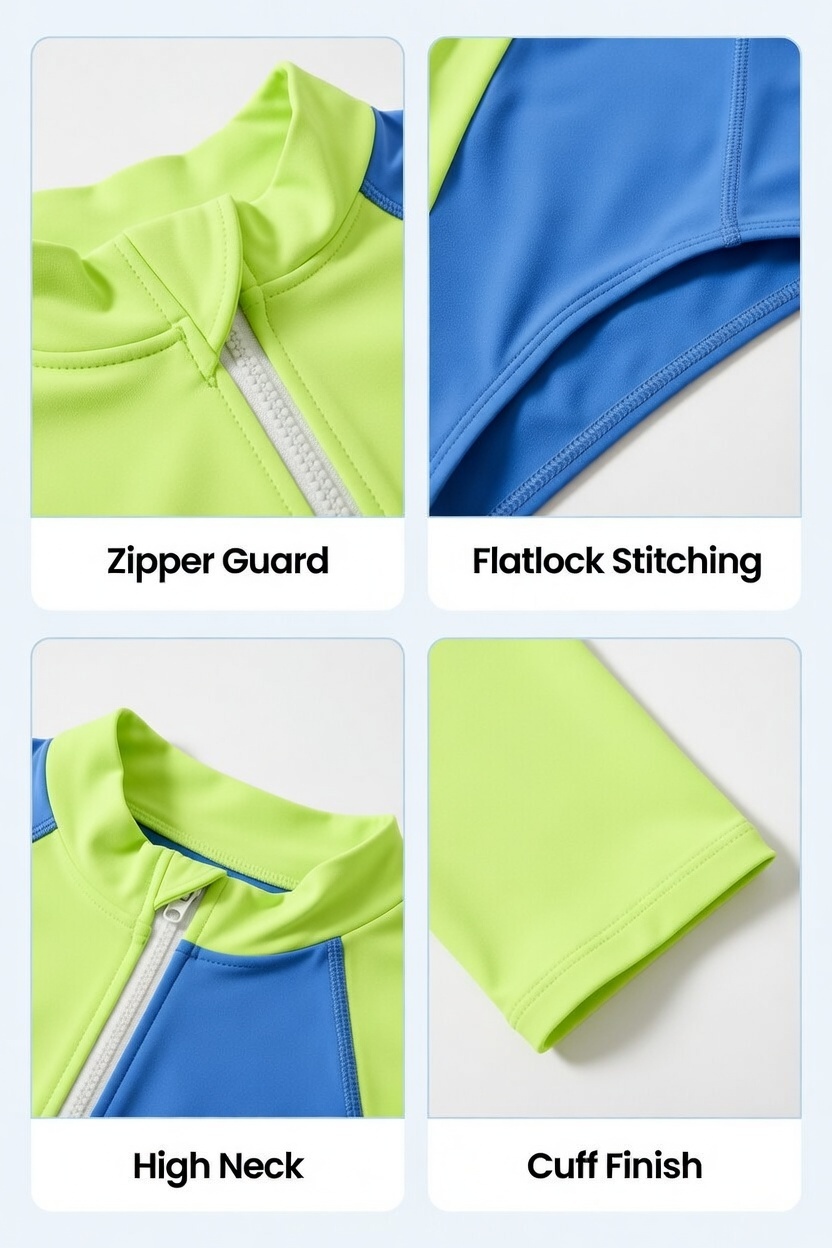
- Prioritize coverage: long sleeves + higher neck + long legs reduce exposed-skin "gaps" that sunscreen often misses.
2) Use safe, kid-appropriate fabric standards (avoid "plastic-feel" cheap materials)
Parents' reviews often describe low-end swimwear as "feels like plastic," "smells weird," "color bleeds," or "irritates skin." Those are quality red flags, especially for children with more sensitive skin.
In China's children's textile safety framework, GB 31701 categorizes safety requirements into Class A, B, C; it states infant textile products should meet Class A, and children's textiles that directly contact skin should meet at least Class B. [cirs-ck]
OEM buyer tip: if your brand is selling kids swimwear internationally, don't treat "fabric safety" as a vague promise—build it into your tech pack and testing plan (raw fabric → printing/dyeing → trims → final garment).
3) Keep it lightweight and breathable (sun protection shouldn't mean overheating)
In our sampling room, we balance three forces: coverage, UPF performance, and thermal comfort. Dense construction and added treatments can raise UPF, but too much thickness can trap heat; outdoor apparel guidance also emphasizes the tradeoff between tight weaves/thicker fabrics and breathability.
Practical feature choices we often develop for brands:
- Vent-friendly patterning (e.g., panel design that improves airflow without sacrificing coverage).
- Quick-drying synthetics (wet fabric can reduce UPF; quicker drying helps return to rated protection sooner).
4) Pick bright, high-contrast colors (visibility is a safety feature)
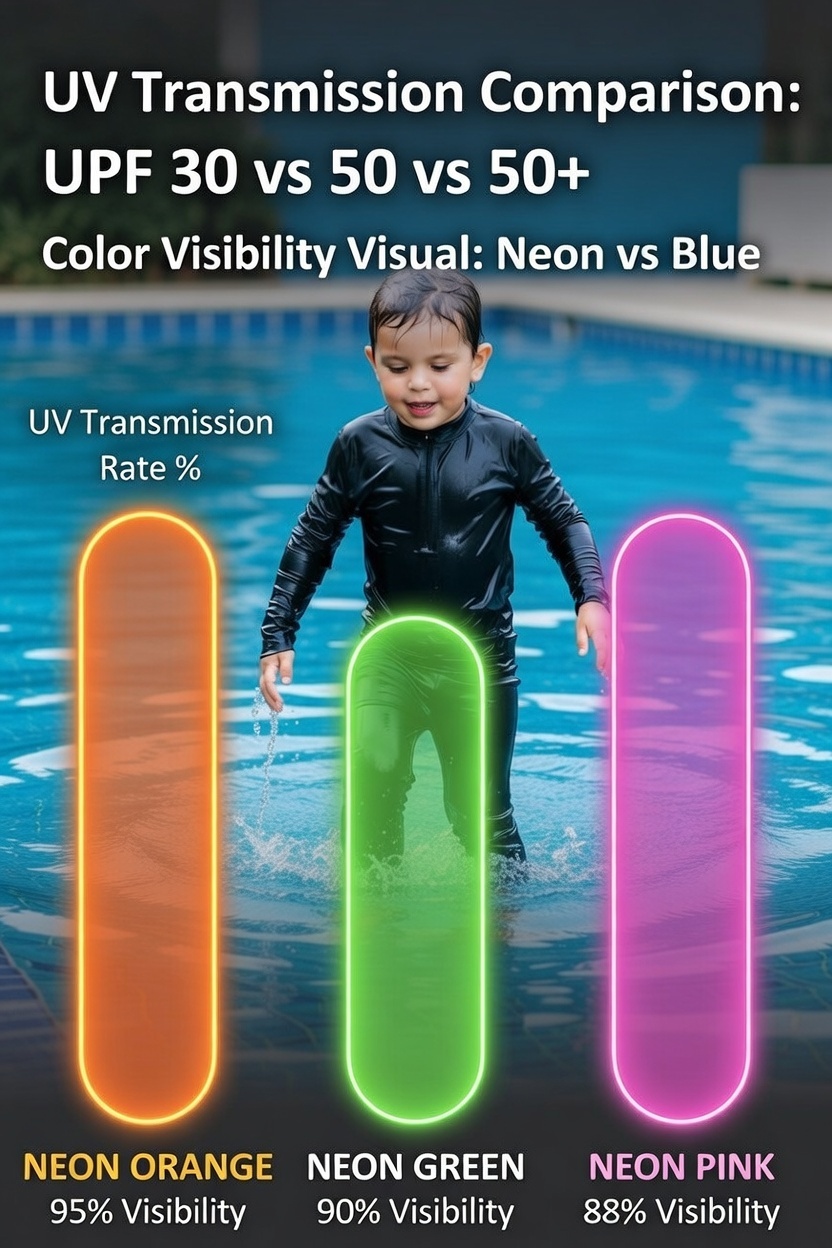
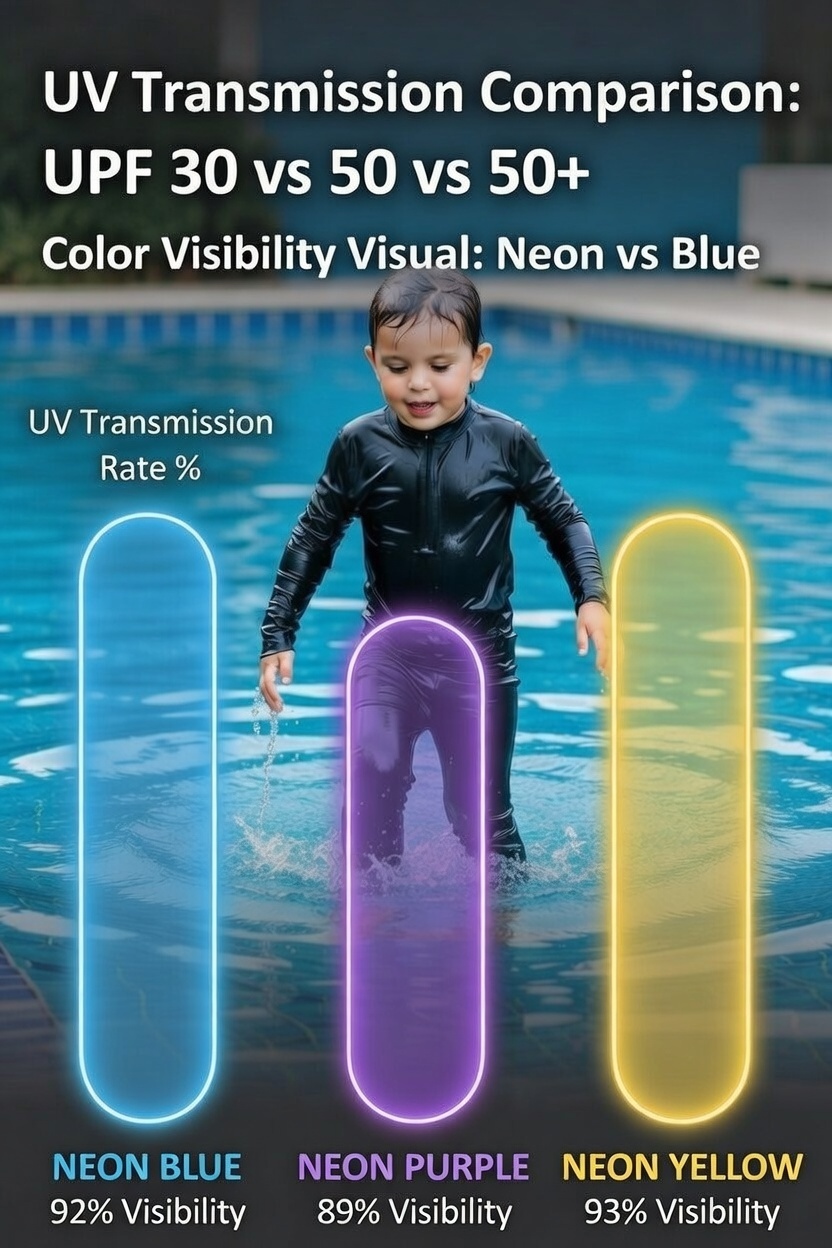
A point many parents now mention in reviews is water visibility—especially outdoors with waves, rivers, or crowded pools. Alive Solutions' visibility testing (reported by CBS) found bright solid neon colors like neon yellow, lime green, and orange were most visible at about 18 inches below the surface, while blues/greens/white could be nearly invisible in water. [itoko.com]
This doesn't replace supervision, but it can be an extra layer of safety thinking when selecting kids swimwear for beaches, lakes, or busy pools. [itoko.com]
Common "information gaps" we see in competitor articles (and how we fix them)
Many "how to choose kids sun swimsuits" posts repeat the same checklist (UPF, fabric, comfort, color) but skip the parts that actually decide satisfaction and returns.
Here are the missing pieces we add as an OEM factory:
- Wet + stretch reality: UPF can drop when fabric is wet and when garments are stretched too tightly, so sizing and pattern design matter—not just the UPF number.
- Label language clarity: "UV-protective" claims are weaker than lab-tested UPF-rated claims; shoppers should look for tested ratings when available.
- Safety color logic: visibility testing shows some colors disappear underwater quickly, especially in natural water environments. [itoko.com]
OEM-grade buying checklist (parents, brands, and wholesalers can use)
Use this quick checklist when evaluating a long-sleeve/long-leg kids swimsuit:
1. UPF label: Confirm it's lab-tested; target UPF 50+.
2. Fit check: Not overly tight; avoid heavy stretch across shoulders/thighs.
3. Material logic: Prefer performance synthetics like polyester/nylon for sun protection; many natural fibers score lower without treatments.
4. Wet-use performance: Look for quick-drying construction; wetness can reduce UPF for many materials.
5. Color visibility: Choose solid, bright neon or high-contrast colors; avoid "all-blue" for outdoor water. [itoko.com]
Spec suggestions for brand tech packs (what to tell your OEM)
- Require lab UPF testing for bulk fabric and/or finished garment (define the standard you want to test to in your compliance plan).
- Define colorfastness expectations because fading/wear can reduce effectiveness over time.
- Include warnings/education on hangtags: UPF works best with correct fit; stretched garments may reduce protection.
Work with our OEM swimwear factory
If you're a brand, wholesaler, or product developer sourcing kids sun-protective swimwear, we can help you build a long-coverage line that's UPF-focused, comfort-tested, and retail-ready—from fabric selection to sampling to bulk production.
Reply with your target market (EU/US/AU), your expected order quantity, and whether you want long-sleeve one-piece, two-piece rash guard set, or full suit with swim leggings, and we'll propose a spec direction and sampling plan.
FAQ (People Also Ask)
1) What does UPF 50+ mean in kids swimwear?
UPF 50 means the fabric allows only about 2% of UV radiation through (1/50th transmission), and fabrics that allow less than 2% are labeled UPF 50+.
2) Is UPF clothing better than sunscreen for kids?
UPF clothing provides built-in protection through fabric and coverage, while sunscreen performance drops over time and requires reapplication; many families use both as a layered approach.
3) Does UPF protection change when the swimsuit gets wet?
For many materials, wetness can reduce UPF effectiveness, which is why quick-drying design and correct fabric selection matter.
4) Can tight swimwear reduce sun protection?
Yes—fabric stretch can significantly reduce UPF, so avoid fits that overstretch the garment.
5) What swimsuit colors are safest for kids to be seen in water?
Testing highlighted by CBS found bright, solid neon colors (like neon yellow, lime green, orange) were most visible underwater, while blues/greens/white could be hard to see. [itoko.com]
References
- REI Expert Advice — "How to Choose Sun Protection UPF Clothing" (UPF definition, UPF 50 transmission, factors like wetness/stretch, fiber types)
https://www.rei.com/learn/expert-advice/sun-protection.html
- CBS News Boston — "Could the color of your child's swimsuit help save their life?" (Alive Solutions visibility experiment; bright neon vs blue/green/white)
https://www.cbsnews.com/boston/news/swimsuit-color-drowning-children/ [itoko.com]
- CIRS-CK (希科检测) — "中国儿童纺织品检测" (GB 31701 Class A/B/C overview; infant Class A; direct skin contact at least Class B)
https://www.cirs-ck.com/cn/zhong-guo-er-tong-fang-zhi-pin [cirs-ck]