Content Menu
● Why Standard Grading Often Fails in Plus-Size Swimwear
● 1. Start With Real Plus-Size Body Measurements
● 2. Design for Shape, Not Just Size
● 3. Build Support Into the Pattern
● 4. Use Fabric With the Right Stretch and Recovery
● 5. Improve Bikini Bottom and Swim Short Construction
● 6. Choose Necklines and Straps for Function
● 7. Use Fit Testing With More Than One Model
● 8. Add Functional Design Without Sacrificing Style
● 9. A More Efficient OEM Development Workflow
● Frequently Asked Questions
>> What is the most important measurement for plus-size one-piece swimwear?
>> Should plus-size bikinis be sold as sets?
>> Is compression necessary for supportive plus-size swimwear?
>> What fabric is best for plus-size swimsuits?
>> How can brands reduce plus-size swimwear returns?
>> How many fit samples should an OEM brand approve?
>> Can fashionable thong and bikini designs also provide good fit?
● Call to Action
● Article Word Count
● Conclusion
Designing plus-size swimwear that fits better requires more than simply enlarging a straight-size pattern. A successful swimsuit must follow the body, provide reliable support, stay comfortable when wet, and maintain its shape during movement. For brands, wholesalers, and manufacturers, the most effective approach combines accurate body measurements, size-specific pattern engineering, functional materials, inclusive fit testing, and customer feedback.
At Dongguan Abely Fashion Co., Ltd., we view plus-size swimwear as a technical product as much as a fashion product. Whether the style is a one-piece swimsuit, bikini, high-waisted bottom, swim short, or thong, the design should be developed around the wearer's real proportions—not an assumed "scaled-up" body shape.
Why Standard Grading Often Fails in Plus-Size Swimwear
Many fit problems begin when a brand grades a smaller-size pattern upward without changing its construction logic. Bodies do not increase proportionally in every direction. Bust, waist, hip, abdomen, torso length, thigh circumference, and back shape can vary independently.
Common problems include:
- Too-tight leg openings that dig into the body.
- Insufficient torso length in one-piece swimsuits.
- Bust spillage or inadequate coverage.
- Rolling waistbands on bikini bottoms and swim shorts.
- Sagging fabric caused by excessive width but insufficient vertical support.
- Straps that slip because the angle and placement are incorrect.
- Poor recovery after repeated stretching or swimming.
A better design process treats plus-size fit as its own engineering project. The goal is not to hide the body. The goal is to create proportionate support, freedom of movement, and confidence.
1. Start With Real Plus-Size Body Measurements
The first step in developing plus-size swimwear is building a measurement chart based on the target market. A generic size label such as 2X or 4X is not enough because sizing differs significantly between countries and brands.
At minimum, measure:
1. Full bust circumference
2. Underbust circumference
3. Natural waist
4. Full hip
5. High hip
6. Front and back rise
7. Torso length
8. Shoulder width
9. Upper-arm circumference
10. Thigh circumference
11. Body height
For swimwear, vertical measurements are especially important. A customer may have a larger bust and a longer torso but a moderate hip measurement. If only the circumference is graded, the garment may pull upward, create discomfort, or place bust support too low.
A strong size chart should therefore include:
| Measurement | Why it matters in swimwear |
| Bust and underbust | Determines cup volume and bust support |
| Torso length | Prevents pulling in one-piece styles |
| Waist and high hip | Controls waistband comfort and stability |
| Full hip | Prevents excessive tension across the seat |
| Rise | Improves bikini-bottom coverage |
| Thigh | Helps prevent leg openings from cutting in |
| Shoulder width | Supports strap placement and back comfort |
Expert recommendation: Build a measurement database from actual fit models, customer returns, and reviews. Do not rely only on a standard grading rule.
2. Design for Shape, Not Just Size
Two customers who wear the same numerical size may have completely different proportions. One may have a fuller bust, another a fuller abdomen, while another may require more room through the hips and seat.
For this reason, plus-size swimwear should be designed around body-shape variations as well as size ranges.
Useful approaches include:
- Separate bust and bottom sizing for bikinis.
- Adjustable straps for different torso lengths.
- Multiple hook positions on supportive bikini tops.
- High-rise bottoms with enough front and back rise.
- Long-torso options in one-piece designs.
- Different cup constructions for fuller busts.
- Side panels or power-mesh zones where additional support is required.
- Swim skirts or shorts with carefully controlled leg openings.
For a bikini brand, offering a top and bottom separately can improve fit more than adding many additional sizes to a fixed-size set. This also gives customers greater flexibility and helps reduce returns.
3. Build Support Into the Pattern
Support should not depend entirely on tightness. A swimsuit that holds the body in place only because it is painfully tight will usually become uncomfortable when wet or during extended wear.
Better support comes from a combination of:
- Strategic seam placement
- A stable underbust band
- Wide, adjustable straps
- Double-layer fabric
- Power mesh
- Internal shelf bras
- Removable or sewn-in cups
- A supportive back design
- Elastic with controlled tension
For fuller busts, the underbust area should remain stable without compressing breathing. The straps should be wide enough to distribute pressure and positioned so that they do not slide toward the neck.
A useful development test is to ask the fit model to:
- Raise both arms.
- Bend forward.
- Sit down.
- Walk quickly.
- Rotate the torso.
- Enter and exit water.
- Wear the garment for at least 30 minutes.
If the swimsuit shifts, rolls, pinches, or exposes areas that should remain covered, the pattern needs adjustment.
4. Use Fabric With the Right Stretch and Recovery
Fabric selection strongly affects the final fit. A fabric may feel comfortable in a fitting room but fail after repeated use if it stretches out and does not recover.
Important fabric characteristics include:
- Four-way stretch for movement and comfort.
- High shape recovery to maintain fit.
- Chlorine resistance for frequent pool use.
- UV resistance for outdoor wear.
- Colorfastness when exposed to salt water and sunlight.
- Adequate opacity when wet.
- Soft hand feel to reduce skin irritation.
The lining is equally important. A plus-size swimsuit often benefits from full lining or targeted lining, especially around the abdomen, bust, and seat. However, excessive compression or an overly rigid lining can restrict movement.
Manufacturers should test the complete garment—not just the fabric—for:
- Stretch in both directions.
- Recovery after repeated extension.
- Seam strength.
- Elastic performance.
- Opacity when wet.
- Color change after chlorine, salt water, and washing.
The right fabric is not necessarily the firmest fabric. It is the fabric that provides controlled support without creating unnecessary pressure.
5. Improve Bikini Bottom and Swim Short Construction
Bikini bottoms and swim shorts create some of the most frequent plus-size fit complaints. The waistband must stay in place while remaining comfortable across the abdomen.
Key construction details include:
- A wide waistband rather than a narrow elastic strip.
- A higher rise for improved coverage and stability.
- Soft, enclosed elastic to reduce irritation.
- A shaped front panel that follows the abdomen.
- Adequate back rise to prevent slipping.
- A gusset with sufficient width for comfort.
- Leg openings that follow the thigh curve instead of cutting horizontally across it.
For swim shorts, the inseam should be selected based on the intended activity. A short inseam may work for fashion-focused products, while a longer inseam can improve coverage during beach sports or active swimming.
For thong styles, comfort and stability are particularly important. The front panel must provide adequate coverage, while the waist and side seams should not create excessive tension. A thong should be secure without feeling restrictive.
6. Choose Necklines and Straps for Function
A fashionable neckline can still be functional. For fuller busts, designers should carefully evaluate how much support comes from the neckline, straps, back, and underbust structure.
Common options include:
| Design feature | Best use |
| Wide shoulder straps | Everyday comfort and fuller bust support |
| Cross-back straps | Improved stability during movement |
| Halter neckline | Fashion appeal, but requires pressure testing |
| Square neckline | Balanced coverage and modern styling |
| V-neckline | Creates visual length but needs secure bust control |
| Adjustable back closure | More flexible fit across the underbust |
| Longline bikini top | Added support and torso coverage |
Avoid placing decorative straps where they create pressure points. Decorative elements should not interfere with the bra structure or create a difficult fit adjustment.
7. Use Fit Testing With More Than One Model
One fit model cannot represent an entire plus-size customer base. Effective product development uses several models across the size range and includes different body proportions.
A practical fit-testing program should include:
1. Initial prototype fitting
2. Movement testing
3. Wet-wear testing
4. Wash and recovery testing
5. Wear trials
6. Feedback review
7. Pattern correction
8. Pre-production approval
Record feedback in specific categories:
- Pressure
- Coverage
- Support
- Mobility
- Strap stability
- Waistband behavior
- Leg-opening comfort
- Wet opacity
- Visual appearance
- Ease of dressing
Customer reviews are also valuable product-development evidence. Comments such as "the bust fits but the torso is short" or "the bottom rolls when sitting" identify pattern problems more clearly than a simple return reason.
8. Add Functional Design Without Sacrificing Style
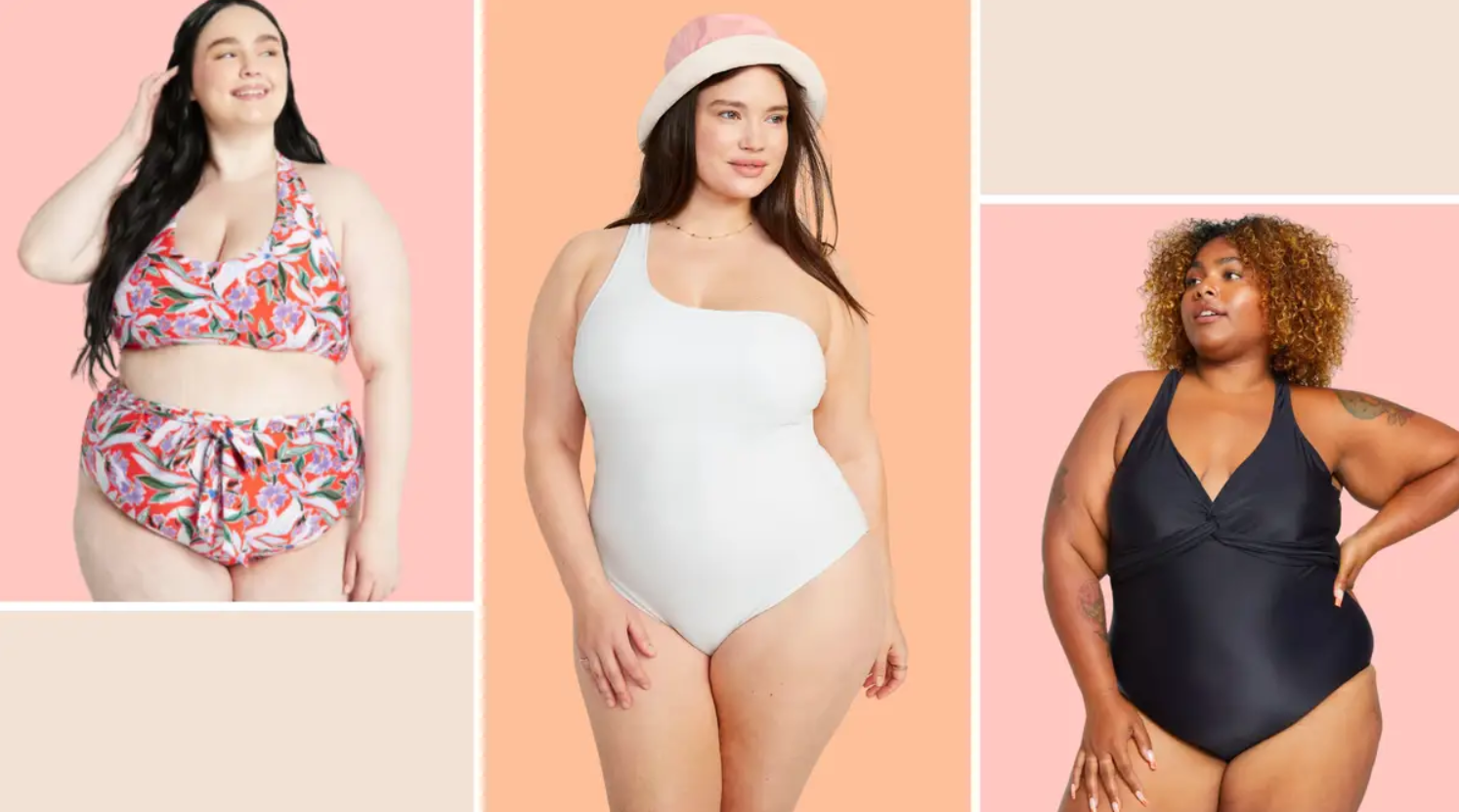
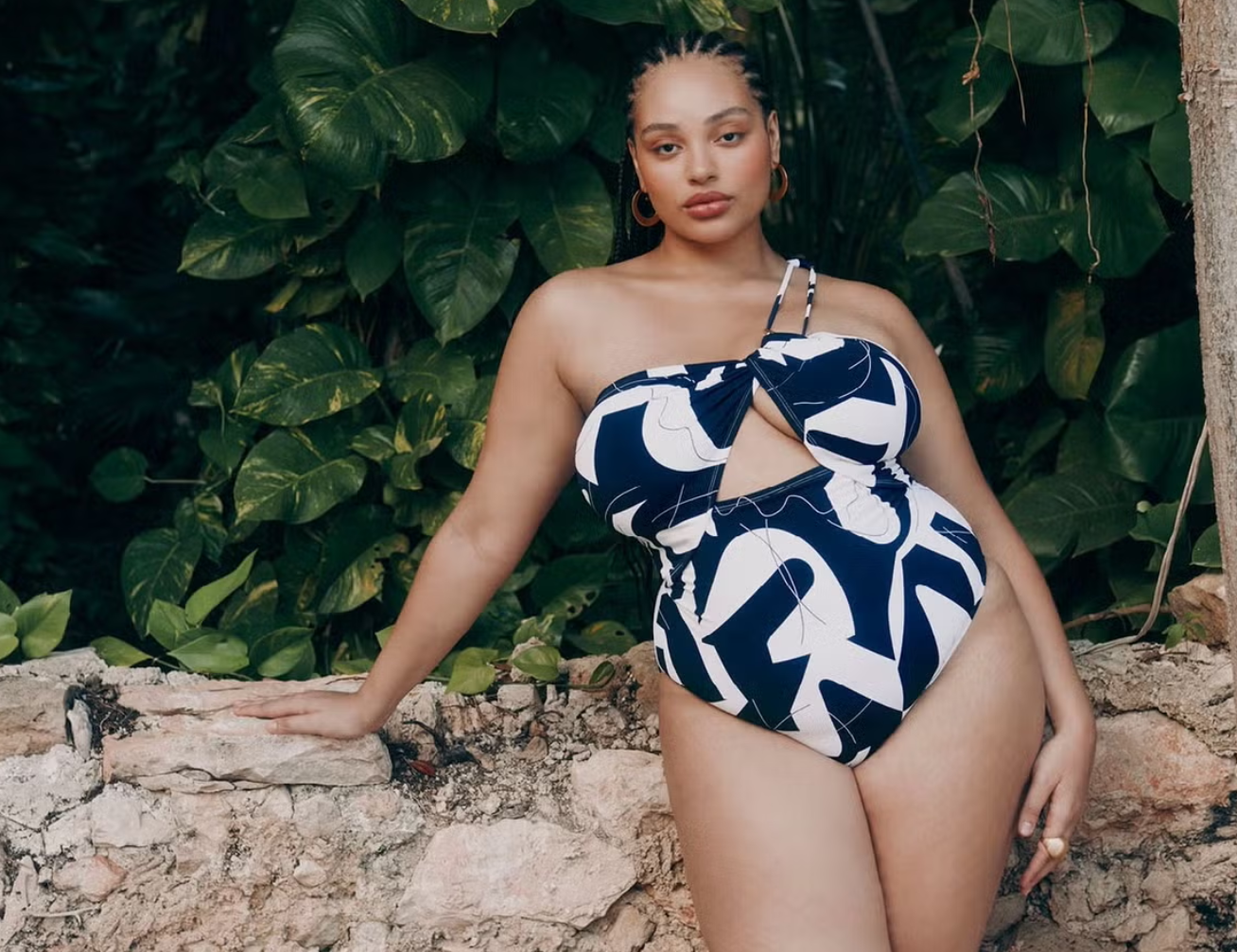
Plus-size swimwear should offer style variety—not only black, skirted, or highly covering designs. Customers may want bikinis, cut-outs, thongs, bright prints, minimal silhouettes, or sporty swim shorts.
Functional details can be integrated into fashionable designs:
- Color-blocking can emphasize seam lines and create visual balance.
- Ruched panels can add texture while improving flexibility.
- Asymmetrical straps can provide a distinctive appearance.
- High-waisted bottoms can be paired with modern crop tops.
- Mesh inserts can add ventilation and visual interest.
- Bold prints can be engineered around the body rather than simply enlarged.
The best result is not "concealing" swimwear. It is swimwear that gives customers choice, support, and confidence.
9. A More Efficient OEM Development Workflow
For brands working with an OEM swimwear manufacturer, early technical communication can prevent expensive revisions.
Provide the factory with:
- Target market and size range.
- Measurement chart and tolerance.
- Technical sketches.
- Fabric composition and weight.
- Lining requirements.
- Support level.
- Intended use: fashion, resort, fitness, or competition.
- Packaging and labeling requirements.
- Reference samples, if available.
A recommended workflow is:
1. Market and customer review analysis
2. Measurement-chart development
3. Pattern creation
4. First sample
5. Fit-model evaluation
6. Technical revision
7. Second sample
8. Wear and performance testing
9. Pre-production sample
10. Bulk production inspection
This process helps brands avoid a common mistake: approving a beautiful sample before testing how it performs in water and during movement.
Frequently Asked Questions
What is the most important measurement for plus-size one-piece swimwear?
Torso length is one of the most important measurements, together with bust, waist, and hip circumference. A swimsuit can fit around the body but still feel uncomfortable if the torso is too short.
Should plus-size bikinis be sold as sets?
Not always. Separate top-and-bottom sizing often creates a better fit because customers may have different bust and hip proportions.
Is compression necessary for supportive plus-size swimwear?
No. Controlled support is preferable to excessive compression. Fabric recovery, lining, seam placement, straps, and underbust construction should work together.
What fabric is best for plus-size swimsuits?
A suitable fabric generally offers four-way stretch, strong recovery, opacity when wet, colorfastness, and resistance to chlorine or salt water, depending on the product's intended use.
How can brands reduce plus-size swimwear returns?
Use an accurate size chart, provide body-shape guidance, test garments on multiple fit models, and analyze customer reviews for recurring issues such as short torsos, rolling waistbands, and insufficient bust support.
How many fit samples should an OEM brand approve?
At least one initial sample and one revised sample are recommended, followed by a pre-production sample after wear and performance testing. Complex styles may require additional rounds.
Can fashionable thong and bikini designs also provide good fit?
Yes. Coverage, support, and style are not mutually exclusive. Correct pattern shaping, stable elastic, appropriate fabric recovery, and accurate sizing can make even minimal designs more comfortable.
Call to Action
Are you developing a new plus-size bikini, one-piece swimsuit, swim short, or thong collection? Dongguan Abely Fashion Co., Ltd. provides OEM swimwear development and manufacturing services for overseas brands, wholesalers, and apparel companies.
Share your design concept, target market, size range, fabric requirements, and expected order quantity. Our team can help transform your idea into a more comfortable, functional, and commercially viable swimwear product.
## References
1. [ASTM International – Textile and Apparel Standards]
2. [ISO – Size Designation of Clothes: Body Measurement Standards]
3. [U.S. Consumer Product Safety Commission – Clothing and Textile Information]
4. [FTC – Care Labeling of Textile Wearing Apparel](https://www.ftc.gov/business-guidance/resources/ care-labeling-textile-wearing-apparel)
5. [Glamour – Plus-Size Swimwear Style Coverage]
6. [Reviewed – Plus-Size Swimsuit Buying Guidance]
Note: The technical recommendations in this article are based on established apparel-development practices, swimwear construction principles, and common fit issues reported by swimwear customers. Product-specific testing should always be completed before production.
Article Word Count
Conclusion
Better plus-size swimwear begins with better product development. Accurate measurements, body-shape-aware patterns, reliable support, performance fabrics, and multi-model fit testing are more effective than simply scaling up a standard pattern. For brands and OEM partners, this approach improves comfort, customer confidence, product quality, and long-term commercial performance.