Content Menu
● Quick Answer: One-Piece or Bikini?
● 1. For Swimming, Surfing, and Water Sports
● 2. For More Coverage and Confidence
● 3. For Tummy Support and Body Shaping
● 4. For Sun Protection
● 1. For Flexible Styling
● 2. For Adjustable Fit
● 3. For Tanning and Minimal Coverage
● 4. For Separating Top and Bottom Trends
● 1. What Will You Do in the Swimsuit?
● 2. How Much Coverage Do You Prefer?
● 3. Do You Need Bust Support?
● 4. Does the Torso Length Fit?
● 5. What Is Your Personal Style?
● Mistake 1: Choosing a Size Based Only on the Label
● Mistake 2: Ignoring Movement
● Mistake 3: Confusing Tightness with Support
● Mistake 4: Relying on Unverified UV Claims
● Mistake 5: Underestimating Care
● Is a one-piece swimsuit more flattering than a bikini?
● Is a bikini better for tanning?
● Which is better for swimming laps?
● Are one-piece swimsuits better for larger busts?
● What is the most versatile bikini style?
● How should a brand choose between one-piece and bikini production?
One-Piece Swimsuit vs. Bikini: Which Is More Suitable?
Choosing between a one-piece swimsuit and a bikini is not simply a question of fashion. The right option depends on fit, activity, body confidence, coverage, comfort, and personal style.
As a swimwear manufacturer working with international brands, wholesalers, and apparel companies, we have seen that successful swimwear design begins with one principle: the garment must suit the wearer's real lifestyle—not just look attractive in a product photograph.
This guide compares one-piece swimsuits and bikinis, explains who each style suits best, and provides practical advice for shoppers and swimwear brands.
Quick Answer: One-Piece or Bikini?
- Choose a one-piece swimsuit if you want more coverage, strong support, or a secure design for swimming and water sports.
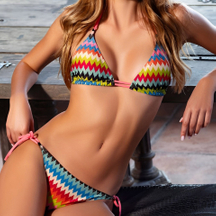
- Choose a bikini if you prefer flexible styling, easier tanning, adjustable coverage, or a two-piece silhouette.
- Choose a high-waisted bikini if you want the convenience of a bikini with additional midsection coverage.
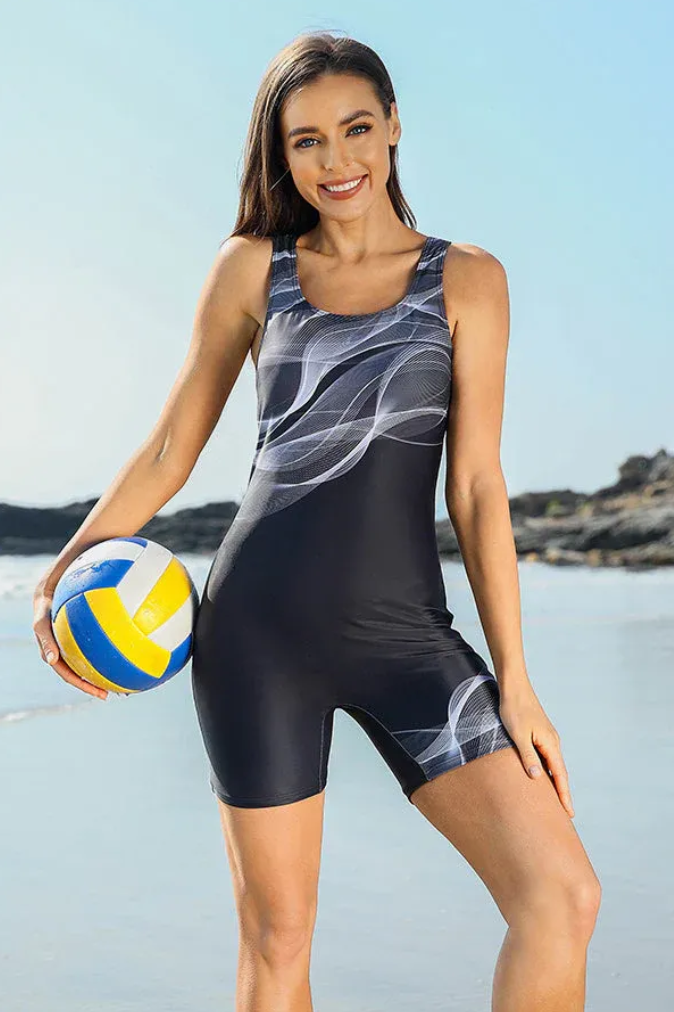
- Choose a sport swimsuit if performance, movement, and secure construction are your priorities.
There is no universally "better" option. The most suitable swimsuit is the one that fits correctly and supports the way you plan to wear it.
One-Piece Swimsuit vs. Bikini: Main Differences
| Feature | One-Piece Swimsuit | Bikini |
| Coverage | More torso coverage | Less coverage, depending on style |
| Support | Often provides stable bust and midsection support | Adjustable but may require careful fitting |
| Movement | Secure for swimming and active sports | Excellent when properly designed and secured |
| Tanning | Covers more skin | Exposes more skin |
| Styling | Usually worn as one complete look | Tops and bottoms can be mixed and matched |
| Fit flexibility | A single size must fit the torso and bust | Separate sizing can improve fit |
| Fashion variety | Cut-outs, straps, shaping, color-blocking | Triangle, bandeau, halter, high-waisted, cheeky, and thong styles |
When Is a One-Piece Swimsuit More Suitable?
1. For Swimming, Surfing, and Water Sports
A one-piece swimsuit generally offers better garment security during activities that involve jumping, stretching, or repeated water impact.
For active swimwear, pay attention to:
- Secure shoulder straps
- A supportive bust construction
- A comfortable leg opening
- Flatlock or coverstitched seams
- Adequate fabric recovery
- A lining that remains stable when wet
A fashionable one-piece is not automatically a performance swimsuit. For athletic use, design details matter more than appearance alone.
2. For More Coverage and Confidence
Many shoppers prefer one-piece swimsuits because they provide continuous coverage across the torso. This can feel more comfortable at family pools, resorts, cruises, and beach clubs.
Coverage does not have to mean a conservative look. Modern one-piece designs can include:
- Asymmetrical necklines
- Strategic cut-outs
- Low backs
- Plunging fronts
- Belted waists
- High-leg silhouettes
- Shaping panels
The best designs combine coverage with visual interest rather than treating coverage as a compromise.
3. For Tummy Support and Body Shaping
Some one-piece swimsuits use power mesh, double-layer fabric, princess seams, or gathered panels to create a smoother appearance. However, shoppers should distinguish between gentle shaping and uncomfortable compression.
A suitable shaping swimsuit should:
1. Lie flat without digging into the skin.
2. Allow normal breathing and movement.
3. Maintain recovery after stretching.
4. Avoid excessive fabric tension around the legs.
5. Remain comfortable when sitting and walking.
Manufacturers should communicate shaping claims carefully. A swimsuit can offer support and smoothing, but it should not make unrealistic promises about changing body shape.
4. For Sun Protection
A one-piece covers more skin than most bikinis, but coverage is not the same as certified ultraviolet protection. UPF performance depends on factors such as fabric construction, fiber, color, stretch, wetness, and garment condition.
Consumers who need meaningful sun protection should look for clearly stated UPF testing and care information, and should still use sunscreen on exposed areas.
When Is a Bikini More Suitable?
1. For Flexible Styling
A bikini gives the wearer more opportunities to create different outfits. A shopper can combine:
- A triangle top with a high-waisted bottom
- A supportive top with a classic brief
- A bandeau top with a skirted bottom
- A sporty top with swim shorts
- A reversible top with contrasting bottoms
This mix-and-match potential is also valuable for swimwear brands because it can support multiple product combinations from fewer base styles.
2. For Adjustable Fit
One of the biggest functional advantages of a bikini is separate sizing. A wearer may need a different size for the top and bottom, particularly when bust, waist, and hip measurements do not correspond to one standard size.
Useful adjustable features include:
- Tie-side bottoms
- Adjustable shoulder straps
- Removable cups
- Back-hook closures
- Multiple-position sliders
- High-stretch fabrics
However, adjustability is only effective when the hardware, straps, and elastic are properly engineered. A thin strap may look delicate but fail to provide sufficient support for larger bust sizes or active movement.
3. For Tanning and Minimal Coverage
Bikinis are often preferred by people who want more exposed skin for tanning or a lighter-feeling beach outfit. Styles range from full-coverage briefs to cheeky and thong bottoms.
The appropriate choice depends on personal comfort, local norms, and the intended setting. A thong bikini may work well for a private beach or fashion-focused resort, while a fuller brief may be more practical for family swimming or active use.
4. For Separating Top and Bottom Trends
Bikinis allow brands and consumers to respond quickly to different trends. A collection can include several bottom shapes while retaining a consistent fabric story and color palette.
For product developers, this creates opportunities to test:
- Classic briefs
- High-cut bottoms
- High-waisted bottoms
- Cheeky silhouettes
- Thong bottoms
- Swim shorts
The key is to maintain consistent quality across every component. Customers often judge a bikini by its least successful element—such as a rolling waistband, transparent lining, or unstable cup.
One-Piece vs. Bikini: A Practical Decision Framework
Instead of choosing based only on appearance, consider these five questions.
1. What Will You Do in the Swimsuit?
| Activity | Recommended Starting Point |
| Lap swimming | Sport one-piece or secure bikini |
| Surfing | Secure one-piece, rash guard, or performance bikini |
| Resort lounging | Bikini or fashion one-piece |
| Pool games | One-piece or sporty two-piece |
| Tanning | Bikini |
| Beach-to-street styling | One-piece, swim skirt, or coordinated set |
| Maternity wear | Adjustable one-piece or maternity bikini |
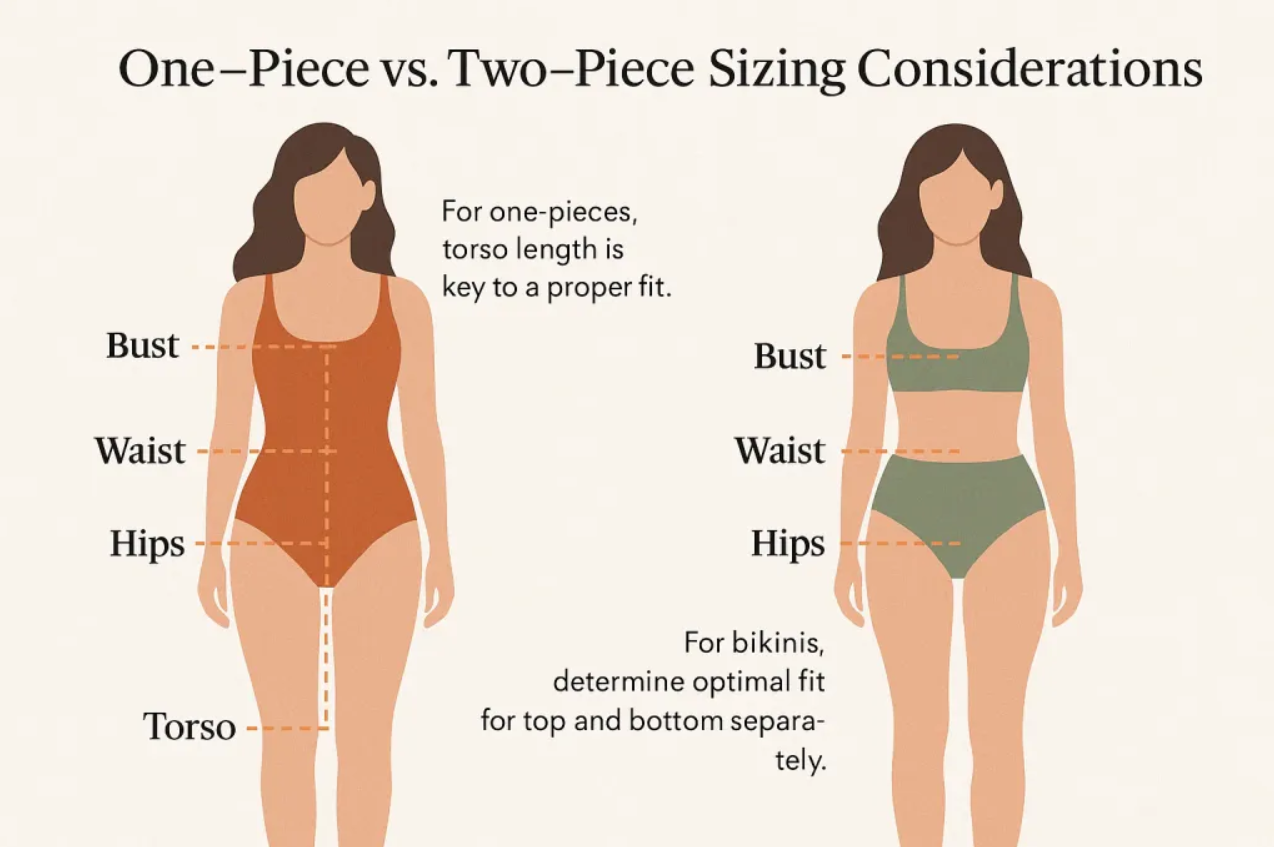
The recommendation is a starting point, not a rule. Construction quality and fit can make a greater difference than the category name.
2. How Much Coverage Do You Prefer?
Think about coverage while standing, sitting, bending, and moving through water. A swimsuit that feels adequate in a fitting room may shift when wet.
Check:
- Whether the bust remains covered when leaning forward
- Whether the bottom stays in place while walking
- Whether the leg opening cuts into the skin
- Whether the back coverage matches your comfort level
- Whether lining remains opaque when wet
3. Do You Need Bust Support?
For fuller busts, support often comes from engineering rather than the silhouette itself. Both one-pieces and bikinis can work well when they include appropriate construction.
Look for:
- Wide, stable straps
- Underbust elastic
- Molded or removable cups
- A supportive inner layer
- A higher center front
- Adjustable closures
A bikini may provide better bust-to-waist flexibility, while a one-piece may provide a more stable overall feel.
4. Does the Torso Length Fit?
Torso length is one of the most important—and frequently overlooked—fit factors for one-piece swimsuits. If the torso is too short, the garment may pull at the shoulders and legs. If it is too long, excess fabric may wrinkle or provide insufficient support.
A useful fitting test is to raise both arms, sit down, bend forward, and walk several steps. The swimsuit should move with the body without constant adjustment.
5. What Is Your Personal Style?
Style preferences are legitimate. Some people feel most confident in a minimal bikini; others prefer the clean lines of a one-piece.
A practical wardrobe may include both:
- One performance one-piece
- One classic bikini
- One high-waisted set
- One fashion style for resort wear
The goal is not to follow a body-type rule. It is to select a design that makes the wearer feel comfortable and confident.
New Expert Insight: Why Fabric and Construction Matter More Than Silhouette
From a manufacturing perspective, two swimsuits with the same silhouette can perform very differently.
Important quality indicators include:
- Fabric composition: Nylon-spandex and polyester-spandex blends offer different hand feel, recovery, chlorine resistance, and color performance.
- Fabric weight: Very light fabric may feel comfortable but can require stronger lining and careful opacity testing.
- Stretch recovery: A swimsuit should return to shape after repeated wear.
- Colorfastness: Swimwear is exposed to chlorine, saltwater, sunscreen, sweat, and sunlight.
- Seam construction: Poor seam quality can create irritation or premature failure.
- Lining: Proper lining improves opacity, comfort, and stability.
- Hardware: Rings, sliders, hooks, and adjusters should resist corrosion and skin irritation.
For brands developing private-label swimwear, product testing should include dry and wet fitting, repeated stretch testing, colorfastness checks, and hardware inspection.
How Swimwear Brands Can Choose the Right Product Mix
For brands, the question is not only "one-piece or bikini?" It is also which customer problem does each style solve?
A balanced collection might include:
1. A core one-piece for coverage, support, and broad appeal.
2. A classic bikini for reliable everyday demand.
3. A high-waisted bikini for retro styling and added coverage.
4. A performance style for active consumers.
5. A fashion-forward design using cut-outs, texture, or distinctive hardware.
Before production, brands should validate:
- Target customer measurements
- Expected activity level
- Regional coverage preferences
- Size range requirements
- Fabric and trim performance
- Packaging and care-label requirements
- Minimum order quantity and sampling process
A professional OEM partner can help translate a mood board into tech packs, graded patterns, sample rounds, fabric selections, and production specifications.
Common Mistakes to Avoid When Buying Swimwear
Mistake 1: Choosing a Size Based Only on the Label
Sizing differs between brands and regions. Use the actual measurement chart, especially for bust, waist, hip, and torso length.
Mistake 2: Ignoring Movement
Always test the swimsuit through movement. Walk, sit, bend, stretch, and raise your arms.
Mistake 3: Confusing Tightness with Support
A garment that feels excessively tight may restrict movement without providing meaningful support.
Mistake 4: Relying on Unverified UV Claims
Look for clear test-based information rather than assuming that dark or thick fabric automatically provides high UV protection.
Mistake 5: Underestimating Care
Rinse swimwear after exposure to chlorine or saltwater. Avoid harsh detergents, high heat, and rough surfaces that can damage fabric and elastic.
FAQ: One-Piece Swimsuit vs. Bikini
Is a one-piece swimsuit more flattering than a bikini?
Neither style is universally more flattering. Fit, proportion, fabric, and personal confidence usually matter more than whether the garment is one-piece or two-piece.
Is a bikini better for tanning?
Usually, yes. A bikini exposes more skin and may reduce tan lines. However, exposed skin still requires appropriate sun protection.
Which is better for swimming laps?
A well-fitted sport one-piece is often the simplest choice because it offers stable coverage. A secure performance bikini can also work well.
Are one-piece swimsuits better for larger busts?
Not automatically. Look for adjustable straps, underbust support, cups, lining, and a suitable neckline. Both categories can provide excellent support when properly engineered.
What is the most versatile bikini style?
A high-waisted bikini with an adjustable or supportive top is a versatile starting point because it combines mix-and-match styling with additional coverage.
How should a brand choose between one-piece and bikini production?
Use customer data, intended activity, price positioning, and regional preferences. A balanced collection often reduces dependence on a single silhouette.
Conclusion
The choice between a one-piece swimsuit and a bikini depends on the wearer's activity, desired coverage, support needs, fit, and personal style. One-pieces are strong options for coverage, stability, and active use. Bikinis offer flexibility, adjustable sizing, tanning exposure, and mix-and-match styling.
For consumers, the best approach is to evaluate movement, comfort, support, and construction—not appearance alone. For swimwear brands, a carefully balanced product range supported by reliable fabrics, testing, and professional OEM development can serve a broader customer base.
Dongguan Abely Fashion Co., Ltd. supports international brands, wholesalers, and apparel companies with OEM swimwear development, including bikinis, one-piece swimsuits, pants, thongs, and related beachwear. Contact our team to discuss your concept, fabric requirements, sampling plan, and production needs.
References
1. [World Health Organization — Ultraviolet radiation and sun protection])
2. [American Academy of Dermatology — How to select and use sunscreen]
3. [ASTM International — Textile and apparel performance standards]
4. [OEKO-TEX — STANDARD 100 textile safety certification]
5. [Federal Trade Commission — Care labeling rule]
6. [U.S. Consumer Product Safety Commission — Clothing and textile safety information]
Note: Product-specific claims such as UPF rating, recycled content, chlorine resistance, or sustainability certification should be supported by the relevant laboratory report or certification before publication.