Start Your Swimwear Business with One-stop Service, Custom, Low MOQ, Contact Us via sales@abelyfashion.com
BLOG
You are here:Home » Blog » Knowledge » Swimwear Knowledge » The Anatomy of Quality: Why Double-Layered Cups Are Essential in Premium Swimwear Engineering
The Anatomy of Quality: Why Double-Layered Cups Are Essential in Premium Swimwear Engineering
In the competitive world of swimwear manufacturing, the difference between a mass-produced "fast fashion" item and a premium,
high-performance garment often lies in the invisible details. As manufacturers at Dongguan Abely Fashion Co., Ltd., we have observed that one of the most critical structural choices in bikini top and swimsuit design is the implementation of dual-layered fabric cups.
While a single layer of fabric might seem like a cost-effective design choice during the initial prototyping phase, the rigorous demands of aquatic environments—constant movement, water saturation, and high-intensity physical activity—render single-layer construction inadequate for quality apparel. For brand owners, wholesale buyers, and emerging fashion labels, understanding why the industry standard dictates dual-layered construction is essential for maintaining brand reputation, reducing return rates, and ensuring long-term customer loyalty.
1. The Physics of Opacity and Modesty
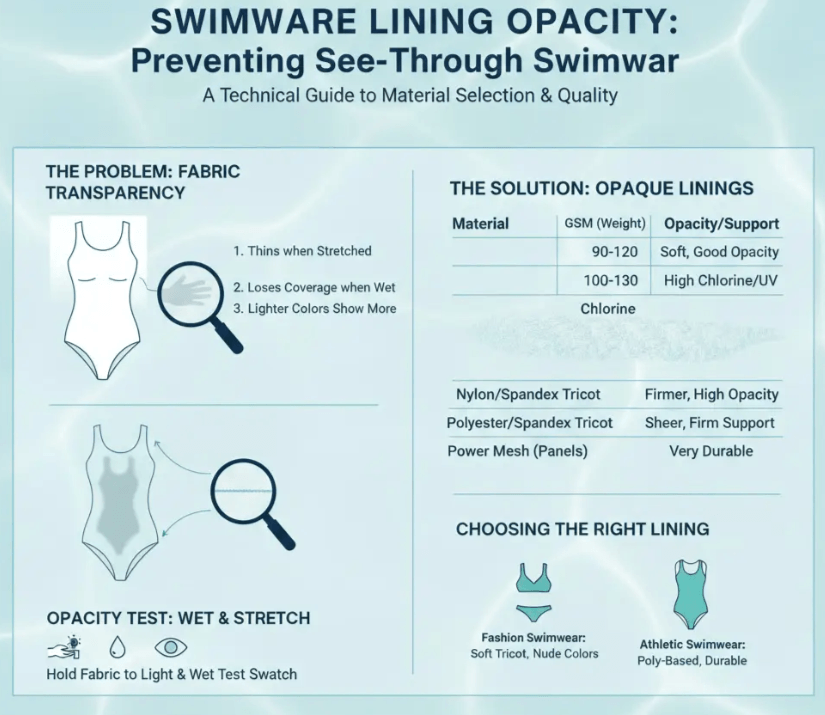
The primary function of swimwear is to provide confidence, yet synthetic fabrics like nylon-spandex blends are inherently prone to transparency when subjected to stress.
The Stretching Variable: When a swimsuit is worn, the fabric must conform to the contours of the body. This mechanical stretching pulls the weave of the fabric apart, creating microscopic gaps that allow light to penetrate.
The "Wet Effect" (Refractive Index): Water drastically alters light transmission. As the fabric becomes saturated, the index of refraction changes, effectively turning a previously opaque garment into one that is uncomfortably translucent.
The Dual-Layer Shield: A secondary lining layer acts as a physical "light break." By layering a second fabric behind the shell, manufacturers disrupt light transmission. This ensures that the garment maintains complete opacity regardless of how much the fabric is stretched or soaked, providing the wearer with necessary peace of mind [1, 2].
2. Engineering Structural Integrity and Shaping
Unlike traditional lingerie, which relies on rigid underwires and thick molded foam, swimwear requires a balance of flexibility and form. Dual-layering is the "unsung hero" of structural engineering in swimwear.
Internal Stabilization: The inner lining layer frequently acts as a stabilizing base, essentially creating an internal shelf bra. This layer provides the necessary compression to hold and shape the bust without requiring uncomfortable, heavy internal structures [1, 3].
Pad Retention Engineering: Many quality swimwear pieces incorporate removable soft cup padding. A dual-layered construction forms an internal "pocket" or sleeve. Without this secure lining, padding would inevitably shift, fold, or slide out of place during active swimming, leading to a compromised silhouette and a frustrating user experience [3].
Preventing "Bubbling": When linings are properly matched in stretch percentage to the outer shell, they prevent the "bubbling" or rippling effects common in poorly constructed swimwear, ensuring a smooth, sleek silhouette on the body [1, 3].
3. The Professional Perspective: Durability and Longevity
From a manufacturing standpoint, the lining is an investment in the garment's lifespan. Our experience at Abely Fashion shows that customers equate quality with longevity.
Friction Reduction: The constant movement of swimming causes significant friction between the skin and the fabric. A quality inner lining acts as a sacrificial barrier, protecting the delicate outer shell from direct friction, which prevents premature pilling, thinning, and loss of shape [3].
Salt and Chlorine Resilience: Constant exposure to salt water and chlorine degrades elastic fibers (elastane/spandex) over time. Dual-layering provides a secondary level of defense, helping the swimsuit retain its original fit and elasticity long after purchase [2].
4. Comfort: The Unseen Quality Metric
The breast area is exceptionally sensitive. Direct contact with certain synthetic outer shell fabrics can cause irritation or chafing, especially when wet or exposed to sand.
Skin-Friendly Finishes: We recommend using the inner lining layer to select softer, more breathable materials that prioritize comfort against the skin, shielding it from the sometimes coarser or more textured outer shell fabric.
Thermal Buffer: The air or water pocket between the two layers provides a mild thermal buffer, adding a layer of comfort that elevates the product from a generic garment to a luxury item [1].
5. Strategic Comparison: Single vs. Dual-Layer Construction
Feature
Single-Layer
Dual-Layer (Industry Standard)
Wet Opacity
Poor; prone to transparency
Excellent; maintains coverage
Structural Support
Minimal; lacks lift/stability
Enhanced; stabilizes and lifts
Pad Positioning
Unstable; prone to shifting
Secure; holds pads in place
Comfort
Risk of chafing/irritation
Smooth, soft, skin-friendly
Longevity
Rapid wear and shape loss
Protective lining extends life
Visualizing the Quality Difference
To better understand the construction, designers should visualize the internal mechanics of a high-quality bikini cup.
Frequently Asked Questions (FAQ)
1. Can I use the same fabric for both layers? While possible, it is rarely recommended. Industry best practice is to use a specific, lightweight, high-stretch lining fabric that complements the outer shell's weight without adding unnecessary bulk.
2. Does dual-layering make the swimsuit too hot? Properly selected, modern lining fabrics are highly breathable and moisture-wicking. They enhance comfort rather than trapping heat.
3. Why do some brands use mesh lining instead of full fabric? Mesh lining is often used when a brand wants to provide structure (like "power mesh" for tummy control), whereas full fabric lining is preferred for maximum opacity and a luxurious feel.
4. How can I ensure my manufacturer is using the right lining? Request a "Tech Pack" review. Ensure your technical specifications indicate the lining material, its stretch percentage, and how it should be attached to the shell to ensure both layers move together.
5. Does dual-layering significantly increase production costs? While it adds a small amount to material and labor, the reduction in return rates and the increase in customer loyalty far outweigh the initial investment. Quality is the foundation of a brand that scales.
20 years of swimwear manufacturing experience, we not only sell products but also solve marketing problems for our clients. Contact us to receive a free product plan and a one-stop solution for your own swimwear line.
Are you a plus size swimwear brand, wholesaler, or manufacturer looking for a reliable OEM partner for plus size swimwear? Look no further! Our state-of-the-art manufacturing facility in China specializes in creating high-quality, trendy, and comfortable plus size swimwear that meets the diverse needs of your curvy customers.
Are you a European or American swimwear brand, wholesaler, or manufacturer looking for high-quality, eye-catching swimwear to enhance your product lineup? Look no further! Our Chinese swimwear manufacturing facility specializes in providing top-tier OEM services for printed three-piece women's swimsuits that will captivate your customers and boost your sales.
Are you a swimwear brand, wholesaler, or manufacturer looking for high-quality, eye-catching bikinis to elevate your product line? Look no further than our Wave Print Bikini, a versatile and stylish swimwear piece designed to captivate your customers and boost your sales. As a leading Chinese swimwear manufacturer specializing in OEM services, we pride ourselves on delivering premium quality bikinis and swimsuits that meet the exacting standards of European and American markets. Our Wave Print Bikini Back is a perfect example of our commitment to excellence in swimwear design and production.
Introducing our Cute Minion Bikini, the perfect swimwear choice for those who want to make a splash this summer! This vibrant bikini set features an adorable Minion print that is sure to turn heads at the beach or pool. Made from high-quality polyester and spandex, this bikini offers both comfort and style, ensuring you feel confident while enjoying the sun.
The Abely Women's Underwired Bikini Set is designed to combine style, comfort, and functionality. Made from high-quality materials, this two-piece swimwear set offers a chic and sexy look, perfect for any beach or poolside occasion. The underwire bikini top with push-up cups and adjustable shoulder straps provides a customizable and supportive fit, while the secure hook closure ensures ease of wear. The decorative stitching strap along the waist adds a touch of elegance, making this bikini set a must-have for any fashion-forward swimwear collection. Whether you're planning an active day in the water or a relaxing sunbathing session, the WB18-279a bikini set promises to deliver both style and comfort.
Discover the allure of our Brazilian Bikini Swimsuits, made from a premium blend of Spandex and Nylon. These swimsuits are available in a diverse range of patterns including plaid, leopard, animal, patchwork, paisley, checkered, letter, print, solid, floral, geometric, gingham, striped, dot, cartoon, and bordered, ensuring a style for every preference. Designed to provide both comfort and a flattering fit, our Brazilian Bikini Swimsuits are perfect for any water-related activity or beachwear. With customizable colors and logo printing options, these bikinis can be tailored to your exact needs, whether for personal use or branding purposes. Ideal for beach parties, vacations, and swimming pools, our Brazilian Bikini Swimsuits are available in sizes S, M, L, and XL, as well as custom sizes to accommodate all body types. Embrace the latest in swimwear fashion with our stylish and versatile bikinis, and enjoy the perfect combination of comfort and style.
2021 Designers Fashion Swimwear Women Bikini Set.Triangle Tankini Top With Ruffles Detail At Nekline.Complete With Removable Cups To Shape The Bust With Halter neck.Match A Solid Blue Basic Bottom.
Our sexy bikini sets are made from 82% nylon and 18% spandex, offering smooth, stretchy, and durable fabric that feels great against the skin. The stylish two-piece design features sliding halter triangle bikini tops with removable soft push-up padding, and adjustable tie straps at the neck and back for a custom fit, making it ultra-chic and adorable. The Brazilian cheeky scrunch tie side bikini bottoms enhance your curves, providing the best butt look and maximum glamour. Available in a variety of bright, eye-catching colors, these sets are perfect for beach parties, summer beachwear, swimming pools, Hawaii vacations, honeymoons, SPA days, and more. We offer multiple colors and sizes: S (US 4-6), M (US 8-10), L (US 12-14), XL (US 16-18). This makes a perfect gift for lovers, friends, or yourself. Please refer to the size chart for detailed sizing information.
Plus Size Tankini Swimsuits are designed specifically for curvy women, combining style and comfort. A tankini consists of a top and a bottom, offering more coverage than traditional bikinis while being more flexible than one-piece swimsuits. They come in a variety of styles, colors, and patterns, catering to different body shapes and personal tastes.
New Arrivals 2024 Designers Fashion Swimwear Women Split Wire Bra Bikini Set.Top With Crochet Lace and Tassels Detail At Nekline.Complete With Removable Cups To Shape The Bust With Adjusted Strap.Match A High Leg Cross Side Strap Bottom.
Custom Good Quality Wholesale Fashion Swimwear Women Ruffles One Piece Swimsuit.Ruched Front Panel With Ruffles At Side.Infinity Moulded Cup With Wire Give You Good Support.Sexy Neck Tie Straps Design Swimwear.
Our proud collection of Bikini Swimsuits for Women is dedicated to offering modern women the finest selection of swimwear. Combining fashionable designs, comfortable fabrics, and impeccable cuts, these swimsuits ensure you radiate confidence and charm at the beach, pool, or resort.
Welcome to beachwear bikini, your trusted destination for superior OEM beachwear bikini manufacturing services. As a leading Chinese beachwear bikini factory catering to the discerning needs of European and American clientele, we specialize in bringing your beachwear bikini visions to life with precision, quality, and style.
Introducing our high-quality women sporty swimwear, designed and manufactured in China to meet the latest trends and highest standards. Made from a blend of 82% Nylon and 18% Spandex, these sporty two-piece bikinis are smooth, soft, breathable, and incredibly comfortable. Featuring a high-waisted design with a sporty crop top, adjustable straps, removable padding, and cheeky high-cut bottoms, this swimwear provides excellent tummy control while enhancing your natural curves. The athletic color block design with contrasting bright colors adds a touch of femininity, while the ultra-stretch fabric adapts to almost all body types. Perfect for swimming, beach outings, pool parties, vacations, honeymoons, cruises, and various sports activities like surfing, this versatile bikini set is a must-have for active women. Available in multiple colors and sizes, please refer to our size chart for the perfect fit. Experience style, comfort, and performance with our women sporty swimwear collection.
A plus size swimsuit is a swimsuit designed specifically for women who wear larger clothing sizes. Plus size swimsuits are typically available in sizes 14 and up, and are designed to provide comfort, support, and style for women of all body types. These swimsuits come in a wide variety of styles, including one-piece swimsuits, tankinis, bikinis, and swim dresses, and are often made with additional features such as tummy control panels, underwire bras, and adjustable straps to provide a flattering fit and extra support.
Code: WB21-23. Orange tropical leaf placement print bikini set. Bunny tie front padded cup placement print bikini top and gold ring tie band bikini bottom.