Content Menu
● Design Details That Should Be Specified
● Evaluate the Full Material Package
● 1. Prepare a Product Brief
● 2. Confirm Feasibility and Open Questions
● 3. Review and Approve the Sample
● 4. Freeze the Production Specification
● 5. Agree on Inspection and Delivery Requirements
● Unclear Fit Expectations
● Choosing Fabric Without Testing the Garment
● Changing Details After Sample Approval
● Treating the Lowest Quote as the Full Cost
● 1. Can I request a custom bikini design from a sketch?
● 2. Which fabric is best for bikini swimwear?
● 3. What should I include in a bikini OEM inquiry?
● 4. How can I reduce sample revisions?
● 5. What should I confirm before bulk production?
● 6. Does a manufacturer's website guarantee a specific service or lead time?
Choosing a bikini swimwear OEM manufacturer is about more than finding a factory that can sew a design. For overseas swimwear brands, wholesalers, and apparel producers, a successful program depends on clear specifications, suitable fabrics, reliable sample approval, and consistent production controls. Dongguan Abely Fashion Co., Ltd. provides OEM swimwear services from China, including custom bikini development for business customers. [References: Abely Swimwear Knowledge; OEM Swimwear Manufacturer]
This guide explains how to select custom bikini styles and materials, prepare a production-ready brief, assess samples, and reduce avoidable risks before placing a bulk order. It is written for buyers who need a practical framework—not just a catalogue of silhouettes.
What Does Bikini Swimwear OEM Include?
In an OEM arrangement, a buyer provides a design, specification, or product concept, and a manufacturer develops and produces the garment to the agreed requirements. The exact scope varies by factory and project. It may include:
- Style development: Turning sketches, reference images, or technical packs into a sample.
- Material selection: Reviewing fabric, lining, elastic, thread, and trims for the intended use.
- Sampling: Producing a prototype for fit, construction, and appearance review.
- Bulk production: Manufacturing approved styles and sizes to the confirmed specification.
- Quality checks: Inspecting workmanship and measurable details against agreed standards.
Some buyers already have a complete tech pack. Others bring a concept and need support converting it into specifications. Before requesting a quotation, clarify which development services are available, what is included, and what will be charged separately.
Custom Bikini Styles for Different Brand Positions
The right silhouette depends on the customer, price point, market, and intended use. A style that works for a fashion-led collection may not provide the support or coverage needed for active swimming.
| Bikini style | Common design considerations | Questions to settle before sampling |
| Triangle bikini | Adjustable ties, cup coverage, removable pads | How much adjustment and support should the top provide? |
| Bandeau bikini | Clean strapless look, grip, optional detachable straps | How will the top stay secure during wear? |
| Halter bikini | Neck ties or fixed straps, support and pressure points | Is the strap construction comfortable in the target size range? |
| Underwire bikini | Cup structure, wire channel, support, and fit grading | Has the wire shape been tested across sizes? |
| High-waisted bikini | Rise, waist tension, leg opening, and lining | Does the rise match the brand’s fit preference? |
| Sport bikini | Secure straps, stable coverage, durable construction | Is the garment intended for active movement or leisure? |
| String bikini | Tie placement, adjustability, and seam security | Are tie lengths and attachment points clearly specified? |
These are starting points rather than universal performance claims. A finished garment's fit and support depend on its pattern, materials, construction, and size range. Define the intended wearer and use case before selecting a style.
Design Details That Should Be Specified
A reference photo rarely contains enough information for repeatable production. Include clear instructions for:
- Top and bottom coverage
- Strap width, placement, and adjustability
- Cup shape, padding, or wire requirements
- Waist rise and leg opening
- Lining coverage and color
- Print placement and color references
- Hardware, ties, and decorative trims
- Size range and grading expectations
- Brand labels, care labels, and packaging
The more measurable the brief, the less room there is for differing interpretations between sampling and bulk production.
Choosing Fabric for Custom Bikini Swimwear
Fabric affects appearance, stretch, recovery, opacity, hand feel, drying behavior, and cost. A fabric should be chosen for the product's purpose and tested as part of the complete garment—not selected by composition name alone.
Common swimwear fabric options include nylon-spandex and polyester-spandex blends. The appropriate option depends on the buyer's priorities, supplier specifications, color and print requirements, and performance expectations. Abely's swimwear information describes its use of nylon-spandex materials; ask the manufacturer to confirm the exact composition and available options for your project. [Reference: Abely Swimwear Knowledge]
Evaluate the Full Material Package
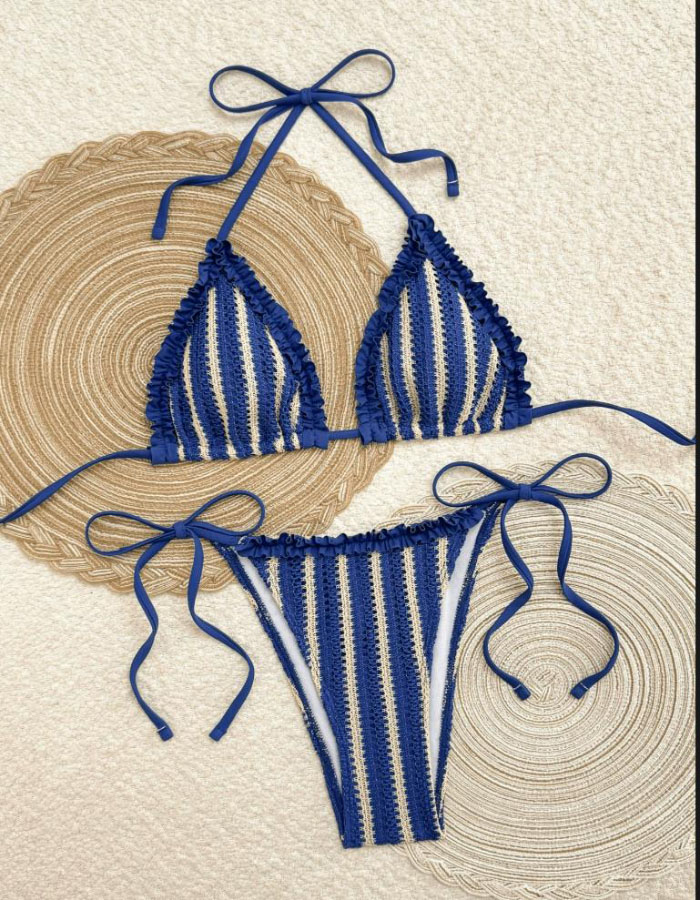
When comparing fabric proposals, ask for details on:
1. Fiber composition and weight: Confirm the stated blend and fabric weight in writing.
2. Stretch and recovery: Request sample yardage or garment testing relevant to the intended fit.
3. Opacity: Check the fabric when wet and under bright light, especially for pale colors.
4. Color and print: Confirm color references, print scale, placement, and any limitations.
5. Lining compatibility: Make sure lining weight, stretch, and color work with the shell fabric.
6. Care and compliance documentation: Identify any market-specific testing or documentation your business requires.
Avoid assuming that two fabrics with a similar composition will behave identically. Construction, dyeing, finishing, lining, and pattern design can all affect the finished product.
From Design Brief to Bulk Order: A Practical Workflow
A structured development process helps both the buyer and manufacturer identify open questions before production begins.
1. Prepare a Product Brief
Send the manufacturer your sketches or reference images, target customer, intended retail position, size range, target materials, colors, trims, labeling needs, and estimated order quantity. If you have a technical pack, include measurement points and tolerances.
2. Confirm Feasibility and Open Questions
Ask the factory to review the design and identify missing specifications. Confirm which materials and trims are available, whether special components require sourcing, and which development or sampling charges apply.
3. Review and Approve the Sample
Evaluate the sample for fit, coverage, stretch, construction, lining, color, and finishing. Try it on the intended fit model or compare it with the brand's established fit standard. Record requested changes clearly and keep an approved reference sample where practical.
4. Freeze the Production Specification
Before bulk production, confirm the final version of the artwork, measurements, material composition, color, labels, trims, packaging, and quality requirements. Changes made after approval can affect cost, timing, or consistency; ask the supplier to explain the consequences before authorizing them.
5. Agree on Inspection and Delivery Requirements
Set out the inspection method, acceptable tolerances, packaging instructions, shipping terms, delivery destination, and required documents in the purchase agreement. Do not rely on assumptions where requirements can be written down.
Quality Checks That Matter for Bikini Production
Swimwear is worn close to the body and is often exposed to water, movement, and repeated care. Buyers should agree on practical checks that match the garment and selling market.
A project-specific inspection plan may include:
- Measurement checks against the approved size specification.
- Seam and attachment inspection at straps, ties, elastic, and stress points.
- Visual review for defects, shade variation, print placement, and finishing.
- Fit review on selected sizes or fit samples, where agreed.
- Material and care review against the buyer's stated requirements.
This list is a planning aid, not a claim that every factory performs every test automatically. Ask the manufacturer which checks are included, which require a third-party laboratory, and how nonconforming products are handled.
Common Sourcing Risks—and How to Reduce Them
Unclear Fit Expectations
A phrase such as "standard coverage" can mean different things to different teams. Share reference garments, measurement diagrams, and fit comments. Specify where measurements are taken and what tolerances are acceptable.
Choosing Fabric Without Testing the Garment
A fabric swatch cannot show the complete fit or opacity of a lined bikini. Review a sewn sample and test it under conditions relevant to your product brief.
Changing Details After Sample Approval
Late changes to color, hardware, pattern placement, or construction can lead to rework. Keep a written approval record and confirm the impact of any revision before it enters production.
Treating the Lowest Quote as the Full Cost
A quotation should be reviewed alongside sampling charges, material assumptions, packaging, inspection, shipping terms, and any other agreed costs. Ask suppliers to identify what is included and excluded so proposals can be compared fairly.
How to Evaluate a Bikini OEM Manufacturer
A useful supplier discussion should cover more than price. Ask for evidence and clear answers about the services relevant to your order.
- Product experience: Has the supplier made comparable bikini styles and construction types?
- Development process: How are design questions, samples, and revisions managed?
- Material clarity: Can the factory identify fabric composition and available options?
- Quality process: Which checks are performed, and what is documented?
- Communication: Who handles approvals, changes, and production updates?
- Commercial terms: What are the minimum quantities, payment terms, lead times, and sample charges for this specific project?
- References and verification: Can the supplier provide suitable company information or references for your due diligence?
Abely describes itself as an OEM swimwear manufacturer serving brands and wholesalers and presents custom swimwear services on its website. Buyers should confirm the current scope, terms, and production details directly with the company before making a sourcing decision. [References: Abely OEM Swimwear; Abely Bikini Swimsuit]
Image and Graphic Recommendations
Use original, accurate visuals that help buyers understand design and production—not generic lifestyle imagery alone.
1. Custom bikini style overview
- Placement: After "Custom Bikini Styles for Different Brand Positions."
- Visual: Clearly labeled silhouettes of triangle, bandeau, halter, underwire, and high-waisted bikinis.
- AI image prompt: "Create a clean professional swimwear design-board illustration showing five distinct women's bikini silhouettes: triangle, bandeau, halter, underwire, and high-waisted. Front view, consistent proportions, neutral studio background, tasteful product-development presentation, no logos, no text, no watermark."
2. Fabric and lining comparison
- Placement: After "Choosing Fabric for Custom Bikini Swimwear."
- Visual: Close-up swatches of shell fabric and lining with labels added separately in page design.
- AI image prompt: "Create a realistic flat-lay product-development image of assorted swimwear fabric swatches in navy, coral, black, and a subtle print, with coordinating lining samples and elastic trims. Soft even lighting, neutral background, clear fabric texture, no logos, no text, no watermark."
3. OEM development workflow
- Placement: Before "From Design Brief to Bulk Order."
- Visual: A simple diagram from brief to sample approval to bulk production to inspection.
- AI image prompt: "Create a minimal horizontal manufacturing workflow infographic for custom bikini OEM: design brief, sample development, buyer approval, bulk production, quality inspection, shipment. Modern B2B editorial style, simple icons, plenty of whitespace, no brand logos, no embedded text."
4. Construction detail photography
- Placement: Near "Quality Checks That Matter."
- Visual: Close-up of lining, elastic, seams, strap attachment, and finishing on an actual product sample.
- AI image prompt: "Create a high-resolution macro product photograph of a professionally constructed bikini sample showing neat stitching, lining, elastic, and strap attachment. Neutral studio light, realistic textile detail, no model, no logos, no text."
Publishing note: For technical or quality claims, prioritize real product and factory images over AI-generated visuals. AI images should be labeled or used as illustrative concepts where appropriate.
Frequently Asked Questions
1. Can I request a custom bikini design from a sketch?
Many OEM projects begin with a sketch, reference image, or product concept. Confirm with the manufacturer what information is needed to develop a sample and whether pattern development or technical-pack support is available.
2. Which fabric is best for bikini swimwear?
There is no single best fabric for every product. Compare the supplier's material specifications and test the complete garment for fit, recovery, opacity, color, and compatibility with the lining.
3. What should I include in a bikini OEM inquiry?
Include your design references, intended market, target customer, size range, colors, material expectations, trims, labels, packaging, estimated quantity, and required delivery destination.
4. How can I reduce sample revisions?
Provide a detailed specification, measurements, reference garments, and consolidated fit comments. Approve changes in writing and keep the final sample and specification aligned.
5. What should I confirm before bulk production?
Confirm the approved sample, final artwork, materials, measurements, trims, labels, packaging, inspection expectations, price, lead time, and shipping terms in writing.
6. Does a manufacturer's website guarantee a specific service or lead time?
No. Website descriptions are a starting point. Confirm current capabilities, minimum order quantities, timelines, testing, and commercial terms directly for your specific order.
Request a Custom Bikini OEM Quote
If you are developing a new swimwear collection or sourcing a private-label bikini program, prepare a concise product brief and share it with Dongguan Abely Fashion Co., Ltd. Include your design references, target materials, size range, estimated quantity, and delivery requirements. Contact the team to discuss feasibility, sampling, and a project-specific quotation. [Reference: Abely OEM Swimwear]
References
- — Company and material information.
- — OEM service overview.
- — Bikini manufacturing and product information.
- — Company-published industry overview.