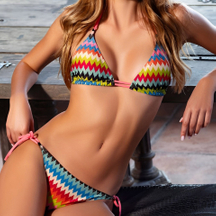
Content Menu
● What Is Printed Swimwear?
● Why the Right Print Matters in Swimwear Design
>> 1. Prints Create Instant Brand Recognition
>> 2. Prints Influence Perceived Quality
>> 3. Prints Affect Production Complexity
● How to Choose the Best Printed Swimwear Fabric
>> Polyamide and Elastane
>> Polyester and Elastane
>> Choosing According to Product Type
● Which Printing Method Is Best for Swimwear?
>> Digital Sublimation Printing
>> Screen Printing
>> Digital Textile Printing
● Five Steps for Choosing a High-Quality Printed Swimsuit
>> Step 1: Define the Customer and Use Case
>> Step 2: Check the Artwork at Full Size
>> Step 3: Approve a Physical Strike-Off or Sample
>> Step 4: Test Colorfastness and Durability
>> Step 5: Review Bulk-Production Consistency
● Common Printed Swimwear Problems and How to Prevent Them
>> Problem 1: Color Looks Different from the Approved Sample
>> Problem 2: The Pattern Looks Distorted When Stretched
>> Problem 3: Seams Interrupt an Important Graphic
>> Problem 4: The Garment Becomes Transparent When Wet
>> Problem 5: Print Quality Does Not Match the Price Position
● A Factory-Based Quality Checklist for Printed Swimwear
>> Design and Artwork
>> Materials
>> Sample Approval
>> Bulk Production
● How Brands Can Make Printed Swimwear More Sustainable
● How to Choose an OEM Printed Swimwear Manufacturer
● Expert Recommendation: Choose the Print After Testing the Product
● Frequently Asked Questions About Printed Swimwear
>> 1. What is the best fabric for printed swimwear?
>> 2. Which printing method is best for bikinis?
>> 3. How can I prevent swimwear prints from fading?
>> 4. Can a factory match the print across bikini panels?
>> 5. How do I avoid transparent printed swimwear?
>> 6. What should I request before placing an OEM order?
>> 7. Can Dongguan Abely Fashion produce custom printed swimwear?
● Call to Action
● References
Choosing printed swimwear is not simply a matter of selecting an attractive pattern. For fashion brands, wholesalers, and garment manufacturers, the right decision must balance visual appeal, fabric performance, print quality, fit, production cost, and customer expectations.
As a Chinese swimwear manufacturer specializing in bikinis, swimsuits, swim shorts, thongs, and OEM production, Dongguan Abely Fashion Co., Ltd. has seen how small design and sourcing decisions can affect an entire collection. A beautiful print may fail if it fades after several washes. A low-cost fabric may create fit problems. A technically accurate sample may still disappoint if the print placement is inconsistent.
This guide explains how to choose printed swimwear from both a brand buyer's perspective and a factory production perspective.
> Important note: This article focuses on printed swimwear and does not include video content.
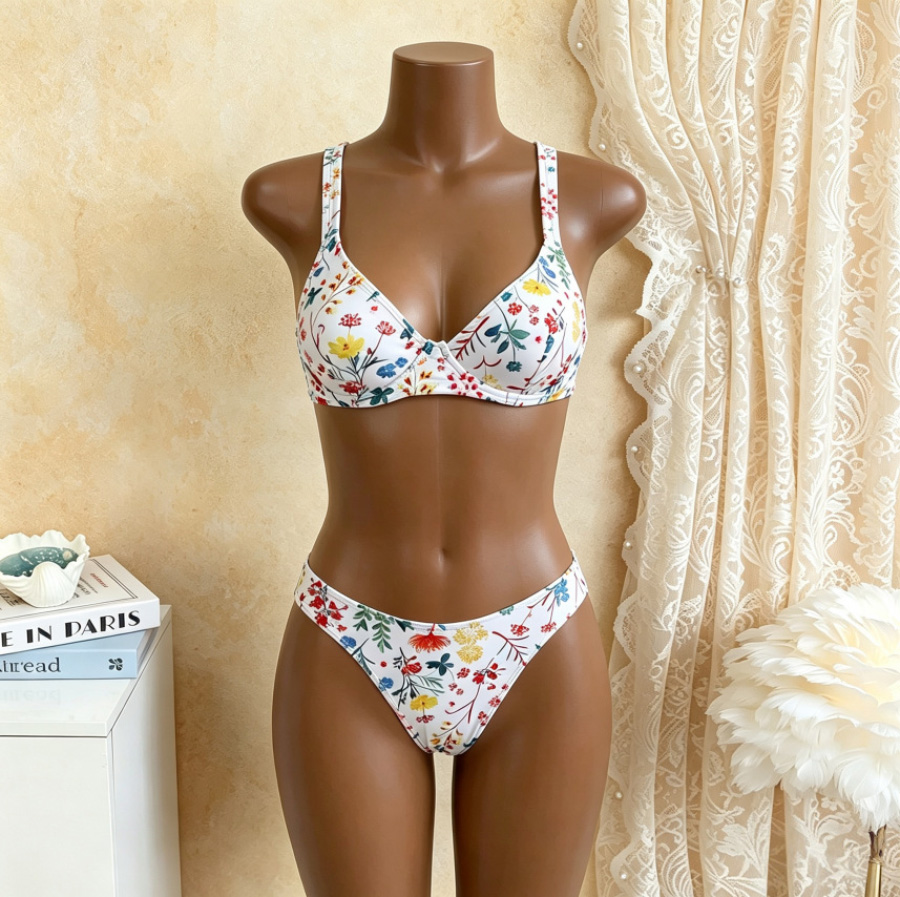
What Is Printed Swimwear?
Printed swimwear is swim apparel decorated with a pattern, graphic, logo, illustration, or repeat design. Common products include:
- Printed bikinis
- One-piece swimsuits
- High-waisted swim bottoms
- Swim shorts
- Beach cover-ups
- Printed thongs and fashion swim bottoms
- Private-label and OEM swimwear collections
Printed designs may be applied using digital sublimation printing, heat transfer, screen printing, rotary printing, or other textile-printing methods. The most suitable method depends on the fabric composition, artwork, order quantity, color requirements, and target price.
For international brands, printed swimwear must do more than look attractive. It should also support consistent bulk production and reliable customer wear.
---
Why the Right Print Matters in Swimwear Design
Printed swimwear has a direct effect on how customers perceive a brand. A strong print can make a basic silhouette look distinctive, while a poorly selected print can make an otherwise well-made garment appear inexpensive.
1. Prints Create Instant Brand Recognition
A recognizable color palette or signature pattern can help a collection stand out on e-commerce websites, social media, and retail displays. For example, a resortwear brand may use tropical botanicals, while a contemporary label may prefer geometric shapes or abstract monochrome graphics.
2. Prints Influence Perceived Quality
Customers often judge quality through visual details before touching the garment. They may notice:
- Whether the pattern is sharp
- Whether colors appear balanced
- Whether seams align correctly
- Whether the print stretches naturally
- Whether the reverse side looks clean
- Whether the design appears faded or uneven
3. Prints Affect Production Complexity
Large-scale patterns, engineered artwork, border prints, and matching panels require more planning than simple all-over repeats. Pattern placement can also influence fabric consumption and cutting efficiency.
A successful print is therefore both creative and technical.
---
How to Choose the Best Printed Swimwear Fabric
The fabric should be selected before finalizing the print technique. Most swimwear fabrics contain polyamide, nylon, polyester, and elastane, although the exact composition varies by product and market.
| Fabric consideration | Why it matters |
| Stretch and recovery | Helps the swimsuit retain its shape |
| Fabric weight | Influences coverage, structure, and comfort |
| Opacity | Reduces unwanted transparency when wet |
| Chlorine and saltwater resistance | Supports regular pool and beach use |
| Colorfastness | Helps the print remain attractive |
| Hand feel | Affects comfort and perceived value |
| Lining compatibility | Influences support and coverage |
Polyamide and Elastane
Polyamide blended with elastane is widely used for fashion swimwear because it offers a soft hand feel, good stretch, and close fit. It is often suitable for bikinis and one-piece swimsuits where comfort and body contouring are important.
Polyester and Elastane
Polyester blends can be useful for designs requiring strong color reproduction and durable sublimation printing. They are often considered for sports swimwear, swim shorts, and performance-oriented products.
Choosing According to Product Type
- Bikini tops: Prioritize stretch recovery, lining, and support.
- Bikini bottoms: Consider opacity, secure recovery, and seam comfort.
- One-piece swimsuits: Evaluate four-way stretch and panel alignment.
- Swim shorts: Check quick-drying performance, lining, and print durability.
- Thongs and high-cut bottoms: Test edge finishing and stretch behavior carefully.
A professional factory should confirm fabric composition and test the material before bulk production.
Which Printing Method Is Best for Swimwear?
There is no single printing process that is ideal for every printed swimsuit. The correct choice depends on the fabric, artwork, quantity, and performance requirements.
Digital Sublimation Printing
Digital sublimation is commonly used for polyester-based fabrics. The artwork is transferred into the fibers through heat.
Advantages:
- Suitable for detailed artwork
- Supports many colors and gradients
- Useful for all-over prints
- Creates a relatively smooth surface
- Works well for small and medium custom collections
Limitations:
- Best suited to compatible synthetic fabrics
- Results depend on color profiles and fabric preparation
- Dark base fabrics may limit the final color effect
Screen Printing
Screen printing can be suitable for selected logos, graphics, and limited-color artwork.
Advantages:
- Strong visual impact
- Useful for bold graphics
- Can be cost-effective for larger quantities
Limitations:
- Less suitable for photographic artwork
- May feel heavier on lightweight fabric
- Requires careful testing on highly elastic garments
Digital Textile Printing
Digital textile printing can support complex artwork and custom designs. It may be appropriate for brands seeking flexible pattern development without creating multiple physical screens.
The factory should still test stretch recovery, crocking, wash performance, and color consistency before approving production.
---
Five Steps for Choosing a High-Quality Printed Swimsuit
Step 1: Define the Customer and Use Case
Before choosing a print, identify who will wear the product and where it will be used.
Ask:
1. Is the collection for fashion, resortwear, sport, or everyday beach use?
2. Is the customer buying for occasional vacations or frequent swimming?
3. Does the market prefer bold patterns or subtle colors?
4. Will the garment be sold online, in boutiques, or through wholesalers?
A luxury resortwear brand may need an exclusive engineered print. A mass-market retailer may require a scalable all-over pattern with efficient production.
Step 2: Check the Artwork at Full Size
A print that looks attractive on a computer screen may not work on a garment. Review:
- Repeat size
- Color contrast
- Scale on different body areas
- Seam interruption
- Logo placement
- Pattern direction
- Potential transparency when stretched
Always inspect the artwork on a realistic garment mockup.
Step 3: Approve a Physical Strike-Off or Sample
Do not approve a large order based only on a digital file. Request a printed strike-off or sample to evaluate:
- Actual color
- Print sharpness
- Stretch behavior
- Fabric hand feel
- Coverage
- Placement accuracy
- Compatibility with lining and trims
Screen colors and printed fabric colors can differ. Physical approval reduces avoidable production risk.
Step 4: Test Colorfastness and Durability
Printed swimwear may be exposed to sunlight, chlorine, saltwater, sunscreen, body oils, and repeated washing. Testing should be discussed with the factory before production.
Depending on the product and destination market, brands may request checks for:
- Wash colorfastness
- Water colorfastness
- Crocking
- Lightfastness
- Chlorine resistance
- Stretch and recovery
- Seam strength
- Color migration
The exact test method should match the buyer's technical pack and compliance requirements.
Step 5: Review Bulk-Production Consistency
Even an approved sample is not enough. Bulk production should be monitored for:
- Color variation between rolls
- Pattern registration
- Panel matching
- Cutting direction
- Print placement
- Size grading
- Sewing quality
- Final inspection results
For engineered prints, include clear tolerance requirements in the production documents.
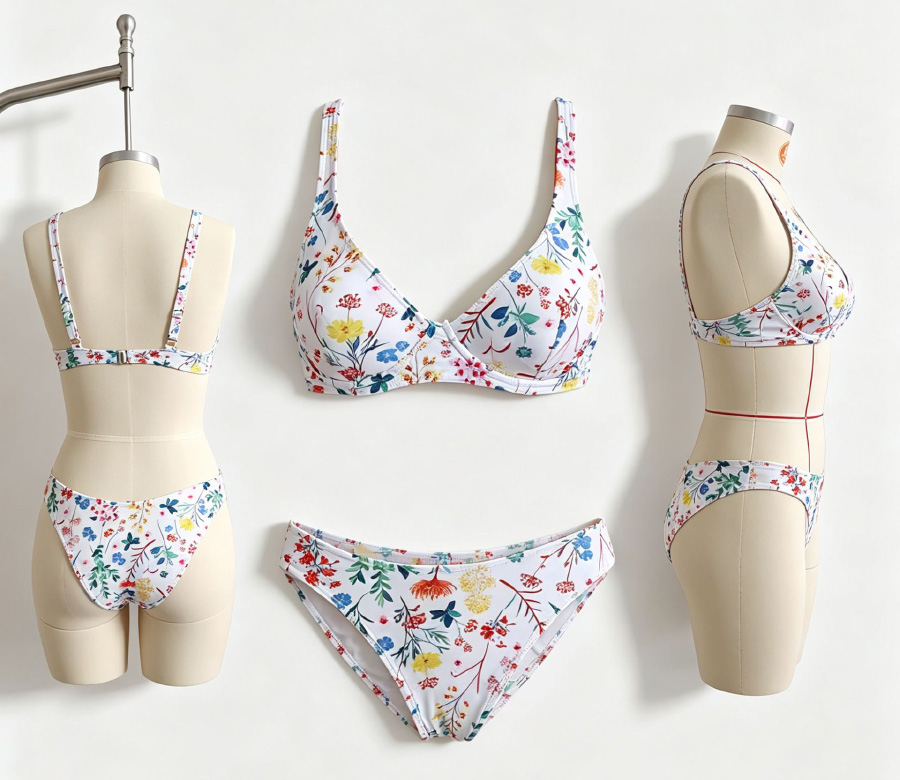
Common Printed Swimwear Problems and How to Prevent Them
Problem 1: Color Looks Different from the Approved Sample
Possible causes:
- Different fabric batches
- Incorrect color profile
- Printing-machine variation
- Inconsistent heat or pressure
Prevention: Approve a physical standard and retain a reference sample for bulk comparison.
Problem 2: The Pattern Looks Distorted When Stretched
Stretch changes the visual appearance of a print. A small geometric design may appear wider, while a face or logo may become visibly distorted.
Prevention: Test the print on the actual fabric and evaluate it on a finished garment, not only on a flat swatch.
Problem 3: Seams Interrupt an Important Graphic
A large flower, logo, or illustration may be cut through the bust, center front, or side seam.
Prevention: Use pattern placement plans and identify critical artwork zones before cutting.
Problem 4: The Garment Becomes Transparent When Wet
Light colors and lightweight fabrics require special attention.
Prevention:
- Select a suitable fabric weight.
- Test wet opacity.
- Add lining where necessary.
- Evaluate the garment under strong light.
- Check the fabric after stretching.
Problem 5: Print Quality Does Not Match the Price Position
A premium product requires more than attractive artwork. Customers may notice rough finishing, poor lining, uneven stitching, or weak elastic.
Prevention: Match the print technique, fabric, trims, packaging, and inspection standard to the intended retail price.
---
A Factory-Based Quality Checklist for Printed Swimwear
Before confirming production, an OEM buyer should review the following checklist:
Design and Artwork
- Is the artwork original or properly licensed?
- Are repeat dimensions clearly defined?
- Are print colors specified?
- Are logos and graphics placed correctly?
- Has artwork distortion been considered?
Materials
- Is the fabric composition confirmed?
- Is the lining suitable?
- Does the elastic recover correctly?
- Are trims resistant to water and body oils?
- Has the fabric passed the required tests?
Sample Approval
- Was a physical printed sample approved?
- Was the garment tested while stretched?
- Was wet opacity checked?
- Were fit and comfort evaluated?
- Are comments recorded in a technical file?
Bulk Production
- Are shade bands or color standards available?
- Are panel-matching tolerances documented?
- Is inspection performed during and after production?
- Are finished garments measured against the approved size chart?
- Are packing and labeling requirements confirmed?
This process helps reduce returns, inconsistent inventory, and customer complaints.
---
How Brands Can Make Printed Swimwear More Sustainable
Sustainability should be treated as a measurable production topic rather than a marketing slogan.
Brands can consider:
- Producing closer to confirmed demand
- Reducing unnecessary sampling
- Using digital printing where it suits the design and quantity
- Selecting durable fabrics that support longer wear
- Avoiding excessive packaging
- Requesting transparent fiber and testing information
- Designing versatile pieces that can be worn in multiple settings
Buyers should ask suppliers for specific documentation rather than relying on vague environmental claims. Relevant documentation may include fabric composition records, restricted-substance declarations, testing reports, and certifications where applicable.
---
How to Choose an OEM Printed Swimwear Manufacturer
A reliable OEM partner should be able to support the full development process, not only sewing.
Evaluate whether the manufacturer can provide:
- Pattern development
- Fabric sourcing
- Custom printing
- Private-label production
- Sample development
- Size grading
- Quality inspection
- Packaging and labeling
- Export experience
- Clear communication in English
Ask for evidence of practical experience with the product category. Useful questions include:
1. Which fabrics are recommended for this print?
2. Can you provide a physical strike-off?
3. What testing is available?
4. How do you control bulk color consistency?
5. How do you manage pattern matching?
6. What is the minimum order quantity?
7. What are the sample and production lead times?
8. How are quality issues handled?
At Dongguan Abely Fashion Co., Ltd., brands and wholesalers can discuss custom bikinis, swimsuits, swim shorts, thongs, and related OEM requirements with a factory team familiar with the development and production process.
---
Expert Recommendation: Choose the Print After Testing the Product
From a production perspective, the best printed swimwear is not necessarily the most complex design. It is the design that performs well on the selected fabric, suits the target customer, and can be reproduced consistently at the required quantity.
My recommended order is:
1. Define the customer and price position.
2. Select a fabric suitable for the product.
3. Choose the printing method.
4. Test the artwork on a physical fabric sample.
5. Approve fit, coverage, color, and durability.
6. Document bulk-production tolerances.
7. Inspect production before shipment.
This sequence protects both the creative concept and the commercial result.
---
Frequently Asked Questions About Printed Swimwear
1. What is the best fabric for printed swimwear?
There is no universal best fabric. Polyamide-elastane is often selected for a soft, comfortable fit, while polyester-elastane may be suitable for certain sublimation and performance applications. The final decision should depend on the product, print method, stretch, coverage, and target market.
2. Which printing method is best for bikinis?
The best method depends on the fabric and artwork. Digital sublimation is suitable for compatible synthetic fabrics and detailed all-over designs. Screen printing may work better for bold, limited-color graphics. A physical sample test is essential.
3. How can I prevent swimwear prints from fading?
Choose appropriate fabric and ink systems, then request testing for wash, water, light, chlorine, and rubbing colorfastness where relevant. Customers should also follow the care label and avoid harsh washing methods.
4. Can a factory match the print across bikini panels?
Yes, but matching requires advance planning. The buyer should provide clear artwork, placement instructions, and acceptable tolerances. Engineered designs may require additional fabric and cutting controls.
5. How do I avoid transparent printed swimwear?
Test the actual garment when stretched and wet. Select an appropriate fabric weight, use lining where necessary, and review light-colored designs carefully before bulk production.
6. What should I request before placing an OEM order?
Request a physical sample, fabric details, artwork confirmation, testing information, size chart, production timeline, packaging requirements, and a clear inspection standard.
7. Can Dongguan Abely Fashion produce custom printed swimwear?
Dongguan Abely Fashion Co., Ltd. provides OEM services for products including bikinis, swimsuits, swim shorts, thongs, and related swimwear styles. Buyers should contact the factory with their design, target quantity, fabric preference, market, and technical requirements for an accurate evaluation.
---
Call to Action
Planning a custom printed swimwear collection? Send Dongguan Abely Fashion Co., Ltd. your artwork, product type, target quantity, size range, and delivery market. Our team can help evaluate the fabric, printing method, sampling requirements, and OEM production process before you place a bulk order.
References
1. Google Search Central, "Creating Helpful, Reliable, People-First Content." Google explains that helpful content should demonstrate originality, completeness, expertise, clear sourcing, and trustworthiness. [Read the guidance](https://developers.google.com/search/docs/fundamentals/creating-helpful-content). [google](https://developers.google.com/search/docs/fundamentals/creating-helpful-content?authuser=3)
2. Google Search Central, "Creating Helpful, Reliable, People-First Content — People-First Content." This guidance emphasizes creating content primarily for users rather than manipulating search rankings. [Read the guidance](https://developers.google.com/search/docs/fundamentals/creating-helpful-content#people-first). [google](https://developers.google.com/search/docs/fundamentals/creating-helpful-content#people-first)
3. OEKO-TEX®, "STANDARD 100 by OEKO-TEX®." This is a widely recognized textile-safety certification framework that can help buyers evaluate harmful-substance testing claims. [Visit OEKO-TEX®](https://www.oeko-tex.com/en/our-standards/standard-100-by-oeko-tex). [google](https://developers.google.com/search/docs/fundamentals/creating-helpful-content?authuser=3)
4. Textile Exchange, "Materials Market Report." This resource provides industry context concerning textile fibers, material choices, and sustainability discussions. [Visit Textile Exchange](https://textileexchange.org/knowledge-center/reports/materials-market-report/).
5. Dongguan Abely Fashion Co., Ltd., company-provided product and OEM information. This source supports the description of the company's focus on bikinis, swimwear, swim shorts, thongs, and OEM manufacturing. Add the company's official About Us or OEM service URL before publication.