Content Menu
● Quick answer: when should you replace a bikini?
● How long does a bikini last?
● Why bikinis wear out: chlorine, sunlight, salt, and friction
● A simple 60-second bikini condition check
● How to make a bikini last longer
● Choosing a more durable bikini: what to look for
● For swimwear brands: turn care guidance into better product experience
● Recommended visuals for this article
● Frequently asked questions about bikini replacement
>> How often should I replace a bikini I wear to the pool?
>> Can I keep wearing a faded bikini?
>> Does rinsing a bikini after swimming help?
>> Is a chlorine-resistant bikini chlorine-proof?
>> Should I replace a bikini if its elastic feels loose?
>> Is it better to hang or lay a bikini flat to dry?
● Conclusion
A bikini does not have a fixed expiry date. How often to replace a bikini depends on how often you wear it, where you swim, how you wash and dry it, and whether it still fits and performs properly. A swimsuit worn occasionally at the beach may last much longer than one used for daily pool training. As a practical rule, judge each bikini by its condition—not by a calendar alone.
*Editorial note: No existing article copy or customer comments were included in the request, so this draft is based on general swimwear-care guidance and does not attribute opinions to customers.*
Quick answer: when should you replace a bikini?
Replace your bikini when it no longer provides reliable coverage, support, fit, or fabric recovery. Look for these signs:
- The fabric stays stretched out after washing and drying.
- The lining is thin, transparent, torn, or separating.
- The elastic has lost its snap or the straps no longer stay in place.
- The swimsuit has persistent damage such as holes, broken seams, or severe pilling.
- Color or print has faded so much that the garment no longer meets your expectations.
- The fit has changed enough to cause slipping, digging, or unwanted exposure.
Fading alone does not always mean a bikini is unsafe to wear. But if the fabric is also weak, see-through, or unable to stay in place, replacement is sensible.
How long does a bikini last?
There is no dependable lifespan that applies to every bikini. Usage and care make a substantial difference. A suit worn for occasional holidays faces fewer pool chemicals and wash cycles than one used several times each week.
| Use pattern |
What to expect |
| Occasional beach or holiday wear |
It may remain wearable across multiple seasons if stored and cared for well. |
| Frequent pool swimming |
Chlorine exposure and repeated washing can make loss of stretch or fit appear sooner. |
| Regular training or daily use |
Inspect it often; consider rotating between suits to reduce wear on each one. |
| Mixed pool and beach use |
Pay attention to both chemical exposure and sun-related fading or weakening. |
These are general expectations, not guaranteed replacement schedules. A fabric supplier reports that chlorine resistance varies considerably by fabric and care routine, and that rinsing after swimming is relevant to durability. A textile-science article also identifies chlorine, sunlight, salt water, and sweat as factors that can affect swimwear fibres.

Why bikinis wear out: chlorine, sunlight, salt, and friction
Most stretch swimwear relies on elastane—also called spandex—combined with a base fibre such as nylon (polyamide) or polyester. That stretch helps the bikini fit closely and recover after movement. The blend and its construction affect feel, appearance, and how the garment responds to use.
Pool chemicals can contribute to loss of elasticity, especially with repeated exposure. Rinse your suit promptly after swimming rather than leaving it wet in a bag. Some fabrics are designed to resist chlorine better than others, but "chlorine-resistant" should not be treated as "chlorine-proof."
Sun exposure can fade colours, while heat and prolonged exposure may add stress to swimwear fibres. Salt, sweat, sunscreen, and body oils can also leave residues on the fabric. Repeated rubbing from sand, rough pool edges, and abrasive surfaces may cause pilling or thinning.
Wear patterns can also reveal how a bikini is being used. A suit worn under tight clothing, repeatedly pulled by straps, or used on rough surfaces may show damage at stress points before the rest of the garment looks worn.
A simple 60-second bikini condition check
Before packing a bikini for a trip—or continuing to use it for training—check these four areas:
1. Stretch and recovery: Gently stretch a fabric panel and release it. Does it return smoothly, or does it feel loose and baggy?
2. Opacity: Hold the fabric up to the light, especially across the seat and bust. Is it noticeably thinner or see-through?
3. Construction: Check seams, lining, straps, hardware, and elastic for fraying, separation, or breakage.
4. Fit while moving: Try the bikini on and raise your arms, bend, and walk. Does it stay comfortably in place?
Replace it if it fails a functional check, even if it still looks attractive when laid flat. For minor seam damage, a repair may be possible; damaged lining, weak elastic, and persistent loss of fit are harder to fix reliably.
How to make a bikini last longer
Good care will not make a bikini last forever, but it can reduce avoidable wear. Always follow the garment's care label first. Swimwear labels are an important source of washing and fabric-composition instructions.
After swimming
- Rinse the bikini as soon as practical in cool, clean water.
- Gently press out water; do not twist or wring the fabric.
- Avoid leaving a wet suit sealed in a bag for a long time.
When washing
- Hand-wash gently, or use a delicate machine cycle only if the care label allows it.
- Use mild detergent and avoid bleach or harsh stain treatments.
- Wash dark and bright colours carefully to reduce colour transfer.
When drying and storing
- Lay the bikini flat in a shaded, well-ventilated place.
- Keep it away from radiators and other direct heat.
- Do not store it until it is completely dry.
- Avoid rough surfaces that can snag or abrade the fabric.
A fabric-care guide recommends reshaping swimwear and drying it flat in shade, and warns that direct sun and hanging a wet garment can contribute to damage or distortion.
Choosing a more durable bikini: what to look for
If you swim frequently, choose swimwear according to your actual conditions—not just its colour or style. Read the composition and care label, and ask the brand or supplier about intended use.
- For regular pool use: Ask whether the fabric and elastane are specified for chlorine exposure.
- For beach holidays: Consider colourfastness, lining, and coverage, especially for bright or dark prints.
- For frequent wear: Look for secure seams, stable straps, and fabric that recovers after stretching.
- For a brand or product developer: Request fabric specifications and test garments under realistic use and care conditions before making broad durability claims.
Polyester and PBT are described as more chlorine-resistant than nylon or conventional elastane in a swimwear-fabric overview, but the performance of a finished bikini depends on the whole fabric blend and garment construction—not fibre name alone. As a manufacturer or buyer, avoid claiming a specific lifespan unless it is supported by testing for the exact fabric, construction, and care instructions.
For swimwear brands: turn care guidance into better product experience
Replacement questions are useful signals for product teams. If customers repeatedly report stretched straps, faded prints, or thin lining, investigate the component and the use conditions rather than assuming all wear is caused by poor care.
A practical product-development process can include:
1. Define the intended use—fashion beachwear, resort wear, or frequent pool swimming.
2. Confirm fabric and trim specifications with suppliers, including lining, elastic, thread, and hardware.
3. Test representative samples after repeated exposure and care cycles that reflect the product's intended use.
4. Review fit and construction at stress points such as strap attachments, seams, and openings.
5. Write specific care instructions that match the tested garment.
This is a useful way to connect product claims with product evidence. A "long-lasting" or "chlorine-resistant" claim should be precise and supportable; customers benefit more from clear intended-use and care guidance than from an unsupported promise.
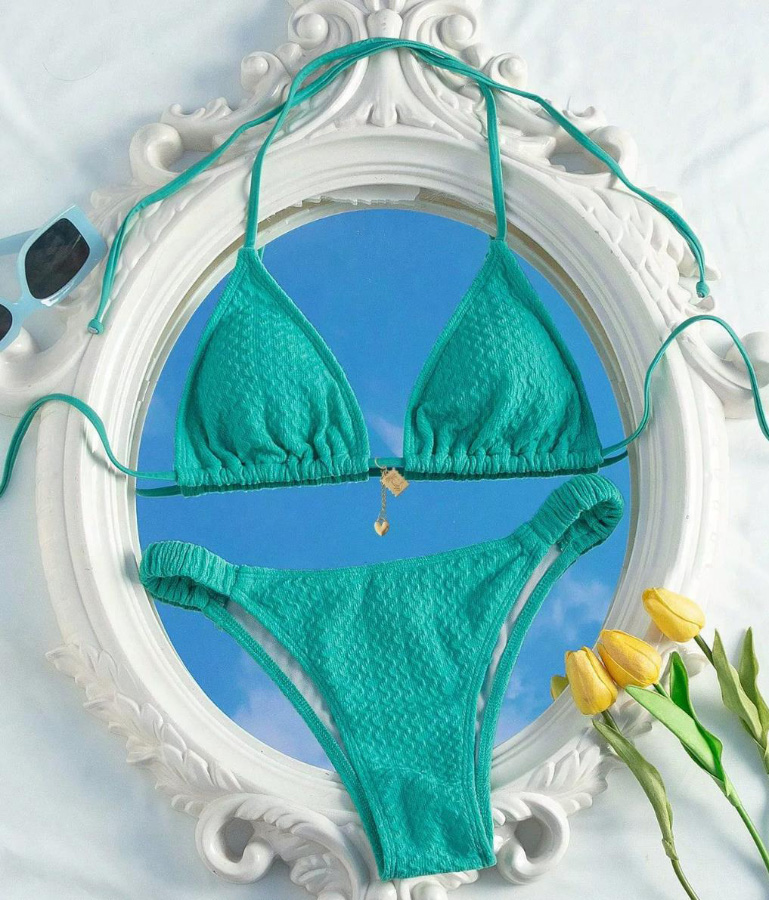
Recommended visuals for this article
- Image 1 — Bikini wear signs: Close-up comparison of a new bikini and one with stretched elastic, faded fabric, and thinning lining.
AI prompt: "Editorial product photography, two women's bikinis displayed side by side on a neutral studio background, one new and vibrant, one visibly faded with gently stretched elastic and thin lining, realistic textile detail, no logos, no text, soft natural lighting."
- Image 2 — Care steps: A simple flat-lay showing a bikini being rinsed, gently pressed in a towel, and laid flat to dry in shade.
AI prompt: "Clean instructional lifestyle photograph showing a colorful bikini being rinsed in cool water, gently pressed in a white towel, then laid flat to dry in a shaded airy space, realistic hands, no logos, no text, natural light."
- Graphic — Replace or keep checklist: A four-icon decision chart covering stretch recovery, opacity, seams, and fit.
AI prompt: "Minimal modern infographic for a swimwear care guide, four clear illustrated checks: stretch recovery, fabric opacity, seam condition, and fit, elegant navy and coral palette, high contrast, simple icons, no brand marks."
- Optional video: The brief requests no video content, so this article does not include a video recommendation.
Frequently asked questions about bikini replacement
How often should I replace a bikini I wear to the pool?
There is no universal interval. Inspect it regularly and replace it when the stretch, lining, seams, or fit no longer perform properly. Frequent pool exposure may accelerate wear.
Can I keep wearing a faded bikini?
Usually, fading alone is a cosmetic issue. Replace the bikini if fading comes with thin or transparent fabric, weak elastic, damaged seams, or unreliable coverage.
Does rinsing a bikini after swimming help?
Rinsing removes residues left by pool water, salt water, sweat, and other substances. It is a simple care step recommended in swimwear-care guidance.
Is a chlorine-resistant bikini chlorine-proof?
No. "Chlorine-resistant" indicates a fabric is intended to better withstand chlorine exposure; it does not mean unlimited resistance. Follow the care label and rinse after use.
Should I replace a bikini if its elastic feels loose?
If the bikini no longer stays securely in place or the elastic does not recover, replacement is generally the safer choice—particularly for swimming and active movement.
Is it better to hang or lay a bikini flat to dry?
Follow the care label. A fabric-care guide recommends reshaping the garment and drying it flat in a shaded, ventilated area to help limit distortion.
Conclusion
Replace a bikini when it stops fitting securely, recovering its shape, or providing dependable coverage—not simply because a set amount of time has passed. Rinsing after swimming, gentle washing, and shaded flat drying can help reduce avoidable wear. For brands, clear care instructions and tested product claims help customers make informed choices.
CTA: Looking for custom bikinis or swimwear for your brand? Contact Dongguan Abely Fashion Co., Ltd. to discuss your OEM requirements, product design, and production needs.