Content Menu
● Common strappy bikini design features
● Design flexibility for different collections
● Match the design to the intended use
● A practical fit-review checklist
● Questions to settle before sampling
● 1. Prepare a clear tech pack
● 2. Define coverage and fit intent
● 3. Confirm materials and components
● 4. Review samples and record revisions
● 5. Approve the pre-production standard
● 6. Plan quality checks around the design
● Straps twist or sit unevenly
● A decorative detail feels uncomfortable
● The fit changes too much between sizes
● The garment looks different when wet
● What makes a bikini a strappy bikini?
● Are strappy bikinis adjustable?
● Can a strappy bikini be made with different bottom coverage?
● What should a brand include in an OEM bikini tech pack?
● How should a brand assess the fit of a strappy bikini?
● How can a brand avoid unsupported product claims?
● Can Dongguan Abely Fashion provide OEM strappy swimwear?
Strappy bikini swimwear combines the familiar shape of a bikini with decorative or functional straps that frame the neckline, waist, back, or hips. For fashion brands, wholesalers, and swimwear labels, a well-designed strappy bikini can create a distinctive look while offering opportunities to customize coverage, fit, fabric, and trim. The key is to treat every strap as part of the garment's fit and construction—not just as decoration.
Dongguan Abely Fashion Co., Ltd. is a China-based swimwear factory providing OEM services for international brands, wholesalers, and manufacturers. This guide explains the main strappy bikini design options, how to develop a more reliable fit, what to review during sampling, and how to prepare an OEM brief.
What Is Strappy Bikini Swimwear?
A strappy bikini is a two-piece swimsuit that uses one or more narrow straps as a visible design feature or a structural element. Straps may connect the cups, wrap around the torso, form a multi-line back, or adjust the waistband and side coverage.
Unlike a simple triangle bikini with only neck and back ties, strappy designs often create a more graphic silhouette. Depending on their placement and adjustability, they can provide a closer fit, add visual detail, or allow the wearer to change how the garment sits.
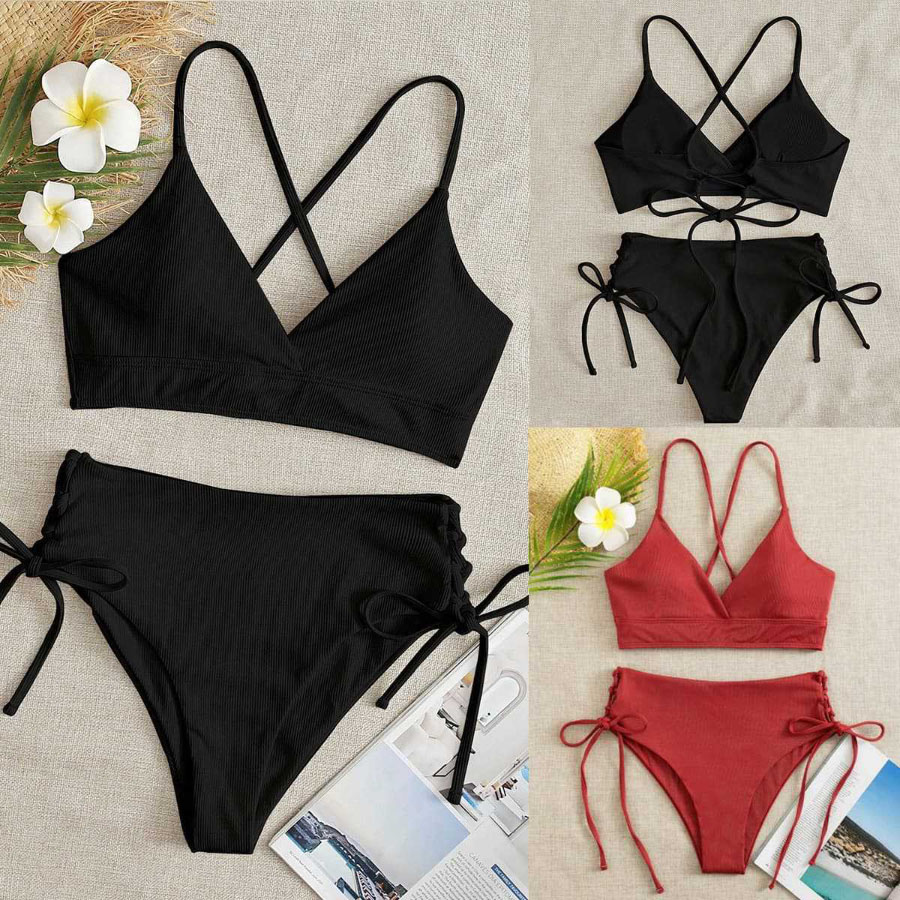
Common strappy bikini design features
- Multi-strap tops: Additional straps cross the chest, shoulders, or back.
- Lace-up details: Ties or cords thread through loops to create adjustable shaping.
- Strappy bottoms: Narrow side bands, wraparound ties, or decorative hip straps.
- Connector details: Rings, sliders, and other hardware join straps to cups or bands.
- Adjustable components: Sliders or tie ends let the wearer fine-tune strap length.
These features can be combined with triangle, bralette, bandeau, or underwire-inspired tops and with brief, high-rise, cheeky, or thong-style bottoms. The best combination depends on the brand's customer, intended use, and desired coverage.
Why Brands Choose Strappy Bikinis
Strappy swimwear gives a collection a recognizable visual detail without requiring a completely new garment category. A brand can use one base pattern and develop multiple options through strap placement, color, print, hardware, and bottom coverage.
Design flexibility for different collections
Strappy details can support several product directions:
- Minimal resortwear: Fine straps and clean lines create a light, understated look.
- Statement fashion: Contrast straps, color blocking, or decorative connectors make the design more prominent.
- Adjustable fit: Ties and sliders can offer more flexibility than fixed-length straps.
- Coordinated collections: A shared strap detail can connect bikini tops, bottoms, and matching cover-ups.
However, more straps do not automatically mean better support or fit. Strap width, elasticity, attachment points, and garment tension all affect comfort and stability. These details should be assessed on the sample, not assumed from a sketch.
Choosing the Right Strappy Bikini Silhouette
The silhouette determines how the garment looks and how its straps work. Start with the intended wearer and use case, then select the top and bottom shapes.
| Design choice | Common options | Development consideration |
| Top shape | Triangle, bralette, bandeau, underwire-inspired | Check cup coverage, strap placement, and support needs |
| Strap arrangement | Halter, shoulder straps, cross-front, multi-strap back | Confirm that straps lie flat and do not twist |
| Bottom rise | Low-rise, mid-rise, high-rise | Match rise and leg opening to the collection’s fit direction |
| Bottom coverage | Brief, cheeky, thong | State coverage clearly in the tech pack and product copy |
| Adjustment | Fixed, slider-adjustable, tie-side | Check whether adjustment remains secure when wet |
| Hardware | Metal or plastic rings and sliders, or no hardware | Review skin contact, corrosion resistance, and care requirements |
Match the design to the intended use
A fashion-led strappy bikini may prioritize distinctive lines and a minimal appearance. A swim style intended for movement may need more secure strap placement and coverage. For each design, define whether the intended use is lounging, resort wear, light swimming, or more active use. This makes product development decisions more specific.
Avoid promising that a style is "supportive," "secure," or "suitable for swimming" unless the construction and sample have been evaluated for that purpose.
Fit and Comfort: Details That Matter
A strappy bikini can look balanced on a flat sketch but feel different on a real body. Narrow straps may concentrate pressure, while a complicated strap arrangement can create twisting or uneven tension. Fit review should therefore cover the full garment—not only the cup shape.
A practical fit-review checklist
During a fitting, assess:
1. Strap length: Are the straps adjustable enough for the intended size range?
2. Strap position: Do they sit comfortably without digging in or slipping?
3. Cup coverage: Does the cup stay aligned during movement?
4. Band tension: Is the underbust or back band stable without feeling overly tight?
5. Bottom stability: Do the side straps stay in place when walking, sitting, or bending?
6. Hardware contact: Do rings or sliders rub, pull hair, or feel uncomfortable?
7. Wet behavior: Does the garment remain aligned after exposure to water?
8. Opacity and lining: Does the fabric provide the intended coverage when wet?
Test the design on representative fit models across the intended size range. A fit that works in one sample size may not scale evenly: strap angles, cup proportions, and attachment points can all change as the garment is graded.
Fabric and Construction for Swimwear
Fabric selection affects stretch, recovery, opacity, hand feel, and color appearance. The right material depends on the design, the brand's requirements, and the results of sample testing.
Questions to settle before sampling
- What fiber composition and fabric weight does the brand require?
- How much stretch and recovery are needed for the pattern?
- Will the garment be fully lined, partially lined, or unlined?
- Does the selected fabric maintain the desired opacity when wet?
- How will color, print, and trim be approved?
- Are there specific care, labeling, or testing requirements for the destination market?
Strappy styles also need careful finishing at the strap ends and attachment points. Where straps connect to cups or bands, the construction should be assessed for secure stitching, clean edges, and consistent alignment. If the design uses rings or sliders, specify the material, finish, size, and placement in the technical documentation.
No single fabric or construction method is ideal for every bikini. Confirm performance through the relevant sample and quality-control process, and document agreed specifications before bulk production.
OEM Development: From Design Brief to Production
A complete brief helps an OEM factory understand what the brand expects and reduces avoidable revisions. For a strappy bikini, the brief should cover both the visible design and the hidden construction details.
1. Prepare a clear tech pack
Include front and back flats, measurement points, size range, fabric and lining details, color references, print artwork, trim specifications, and construction notes. Show strap routes clearly. If a strap crosses another strap, mark which one sits on top.
2. Define coverage and fit intent
Describe the desired fit in plain language: cup coverage, bottom coverage, rise, strap adjustability, and intended use. Include reference photos only when you have permission to use them, and label which details are for inspiration versus exact replication.
3. Confirm materials and components
List fabric composition, lining, elastic, thread, straps, rings, sliders, and labels. Identify any preferred or restricted materials. If a component's performance is important, state how it should be reviewed or tested.
4. Review samples and record revisions
Try the sample on the intended fit model or approved mannequin. Record measurements, fit observations, and changes in one revision log. Use dated comments and clear photos to reduce ambiguity between design, sourcing, and production teams.
5. Approve the pre-production standard
Before bulk production, confirm the approved sample, color and print references, measurement tolerances, packaging, labeling, and inspection criteria. A signed-off reference sample can help keep later production aligned with the approved design.
6. Plan quality checks around the design
For strappy swimwear, inspection can focus on strap symmetry, attachment strength, stitch quality, hardware finish, seam appearance, and measurement consistency. Agree on the inspection scope and acceptance criteria before production begins.
## Common Development Problems—and How to Prevent Them
Straps twist or sit unevenly
Possible cause: Strap paths or attachment points are unclear, or the sample has inconsistent tension.
Prevention: Mark strap routing on the tech pack and compare left and right sides during fitting.
A decorative detail feels uncomfortable
Possible cause: Hardware edges, strap width, or placement create friction or pressure.
Prevention: Evaluate the sample through wear and movement checks; revise component size or placement as needed.
The fit changes too much between sizes
Possible cause: Grading does not account for changes in cup proportions or strap angles.
Prevention: Review fit across representative sizes and define grading rules for key points.
The garment looks different when wet
Possible cause: Fabric, lining, or color behavior differs from the dry sample appearance.
Prevention: Check opacity, color, stretch, and alignment under the conditions relevant to the product.
These are development risks to investigate—not a claim that every strappy bikini will experience them. Sample review helps determine which controls are appropriate for a specific design.
How to Write Product Copy Customers Can Trust
Clear product descriptions help customers understand what they are buying and help brands avoid vague claims. Describe observable features rather than making unsupported performance promises.
Useful details include:
- Top style: For example, triangle, bralette, or bandeau.
- Strap design: Fixed, adjustable, lace-up, cross-back, or multi-strap.
- Bottom shape: Brief, cheeky, high-rise, or thong.
- Coverage: Explain the intended coverage in simple, consistent terms.
- Materials and care: Use the approved product specification.
- Fit guidance: Provide size-chart information and model measurements where available.
Do not invent customer reviews or imply that a garment has been tested if it has not. When publishing customer feedback, use genuine, permissioned comments and represent them accurately. For a new product without review data, provide verified fit information and invite buyers to share feedback after purchase.
## How Abely Fashion Can Support a Strappy Bikini OEM Project
Dongguan Abely Fashion Co., Ltd. works with overseas brands, wholesalers, and manufacturers on OEM swimwear projects. For a strappy bikini inquiry, share your design concept, target market, size range, expected materials, order requirements, and development timeline. The factory can then review the brief and discuss what information is needed for sampling and production planning.
To start a project, prepare:
- A sketch or reference image
- Your target fabric, lining, and trim requirements
- Size chart and fit expectations
- Color, print, and branding details
- Packaging, labeling, and destination-market requirements
- Target quantities and delivery schedule
Request an OEM discussion with Dongguan Abely Fashion Co., Ltd. Share your tech pack or initial concept to begin a review of the design, materials, sampling needs, and production requirements.
FAQ: Strappy Bikini Swimwear
What makes a bikini a strappy bikini?
A strappy bikini uses visible narrow straps as a design feature or functional part of the top, bottom, or both. The straps may be decorative, adjustable, or structural.
Are strappy bikinis adjustable?
Some are. Tie-side designs and styles with sliders can offer adjustment, while fixed-strap styles may not. Check the product specification before choosing a design.
Can a strappy bikini be made with different bottom coverage?
Yes. A collection can pair a strappy top with different bottom shapes, such as brief, cheeky, high-rise, or thong styles. Coverage should be specified clearly during development.
What should a brand include in an OEM bikini tech pack?
Include garment flats, measurements, size range, fabrics, lining, trims, strap routing, color references, labels, packaging, and construction notes. Clearly identify any requirements that need sample evaluation.
How should a brand assess the fit of a strappy bikini?
Review the sample on representative fit models. Check strap length and placement, cup coverage, band tension, bottom stability, hardware comfort, and appearance when wet.
How can a brand avoid unsupported product claims?
Use verified specifications and test results. Do not claim a style is supportive, secure, or tested unless the design has been evaluated and the claim can be substantiated.
Can Dongguan Abely Fashion provide OEM strappy swimwear?
Dongguan Abely Fashion Co., Ltd. offers OEM services for international brands, wholesalers, and manufacturers. Share your design brief and requirements to discuss the next development steps.
References
- Bikini variants and top-style overview:
- Swimwear style and bottom-coverage terminology:
- Bikini bottom-style overview:
- Examples of support-focused strap and top design considerations:
- Brand examples of swimwear category organization:
*References above support general style terminology and examples. Fit, materials, construction, testing, and OEM process details in this article are practical development guidance and should be confirmed against each project's specifications and applicable requirements.*