Content Menu
● Ready-Made Private Label Designs
● Semi-Custom Swimwear
● Fully Custom OEM Swimwear
● Nylon and Elastane
● Polyester and Elastane
● Recycled Fabrics
● How much money is needed to start a private label swimwear brand?
● What is the MOQ for private label swimwear?
● Should a new brand start with bikinis or one-piece swimsuits?
● Do I need a swimwear tech pack?
● How long does it take to launch a private label swimwear brand?
● Can I use existing factory designs?
● Can a private label factory produce matching beachwear?
The previous version did not use the exact word "top-level" in the article body, but some phrases may still sound overly promotional, such as "high-quality," "premium," "stronger foundation," or "reliable." The following version uses a more neutral, informative tone and removes exaggerated promotional wording.
Starting a private label swimwear brand can be an opportunity for fashion entrepreneurs, online retailers, resorts, fitness companies, and established apparel businesses. Common product categories include bikinis, one-piece swimsuits, swim shorts, rash guards, cover-ups, and coordinated resortwear.
Launching a swimwear brand involves more than placing a logo on an existing garment. You need to define a target customer, establish a product direction, select suitable fabrics, develop patterns, review samples, calculate total costs, manage production, and prepare a marketing plan.
Dongguan Abely Fashion Co., Ltd. is a China-based manufacturer of bikinis, swimwear, shorts, and thongs. This guide explains the main steps involved in developing a private label swimwear collection.
1. Choose a Private Label Swimwear Production Model
Private label swimwear can be developed through several production models. The most suitable option depends on your budget, product requirements, launch schedule, and desired level of customization.
Ready-Made Private Label Designs
The manufacturer provides existing designs. You select the styles and customize elements such as:
- Brand labels
- Colors
- Prints
- Packaging
- Hangtags
- Size labels
This model may help new businesses reduce development time and initial design work.
Semi-Custom Swimwear
You select an existing design and modify specific elements, including:
- Fabric
- Color
- Print
- Coverage
- Strap construction
- Hardware
- Waist height
- Lining
- Logo placement
Semi-custom production provides some design flexibility while using an existing pattern or construction method.
Fully Custom OEM Swimwear
For fully custom OEM production, the buyer provides original designs, technical drawings, measurements, fabric requirements, brand information, and packaging specifications.
The manufacturer then develops the pattern, produces samples, makes revisions, and manufactures the approved product.
This model provides more control over the final garment but usually requires additional development time and communication.
| Production model | Development speed | Customization | Development cost | Suitable for |
| Ready-made private label | Fast | Limited | Lower | Initial market testing |
| Semi-custom | Medium | Moderate | Medium | Developing brands |
| Fully custom OEM | Slower | Extensive | Higher | Design-focused brands |
2. Define Your Target Customer and Product Direction
to design swimwear for every customer can make product decisions difficult. A specific target audience helps guide product design, pricing, photography, and marketing.
Potential market segments include:
- Fashion-focused women
- Plus-size customers
- Modest swimwear buyers
- Swimming and fitness customers
- Surfers and water-sports users
- Consumers interested in recycled materials
- Resort and vacation shoppers
- Boutique customers
- Men's or children's swimwear buyers
Consider the following questions:
- Who is the intended customer?
- What product need are you addressing?
- What price range is appropriate?
- Where does the customer usually shop?
- What level of coverage and support is expected?
- Which sizes or body types are not well served by existing products?
For example, a product designed for water sports may require secure straps, stable construction, and suitable resistance to chlorine. A resort collection may place more emphasis on printed fabrics, decorative details, and matching cover-ups.
A clear product statement could be:
We develop supportive bikini styles for customers who want comfortable swimwear for holidays and water activities."
A statement like this can help guide later choices about materials, fit, and marketing.
3. Research Competitors and Customer Feedback
Before developing products, study comparable swimwear brands. Review:
- Product categories
- Retail prices
- Size ranges
- Fabric descriptions
- Customer reviews
- Product photography
- Packaging
- Delivery times
- Return policies
- Social media content
Customer reviews may reveal recurring product issues that are not clearly shown in product descriptions. Look for comments about:
- Tight leg openings
- Loose or unstable straps
- Limited bust support
- Inconsistent sizing
- Transparency when wet
- Color fading
- Delivery delays
- Difficult returns
Create a competitor research table to organize the information.
| Research area | Questions |
| Product | Which styles are frequently promoted or reviewed? |
| Price | What is the usual retail range? |
| Fit | What problems appear in customer reviews? |
| Size | What sizes are available? |
| Branding | What visual elements are used? |
| Marketing | Which platforms are active? |
| Product gap | What customer needs are not addressed? |
The purpose of competitor research is to understand customer expectations and identify possible product improvements. It should not be used to copy another company's designs or brand materials.
4. Plan the First Swimwear Collection
A new brand does not necessarily need a large number of products at launch. A smaller collection can make sampling, production, photography, inventory, and product evaluation easier.
A first collection may include:
- Two bikini tops
- Two bikini bottoms
- One one-piece swimsuit
- One swim short or cover-up
- One matching resortwear item
Mix-and-match products can create different combinations without requiring a large number of patterns.
Possible product types include:
- Triangle tops
- Bandeau tops
- Sport tops
- Underwire tops
- High-waisted bottoms
- Classic briefs
- Full-coverage bottoms
- Adjustable side-tie bottoms
The collection can be connected through a shared color palette, print, fabric texture, hardware design, or logo treatment.
5. Select Suitable Swimwear Fabrics
Fabric selection affects comfort, appearance, drying time, stretch, durability, and production cost.
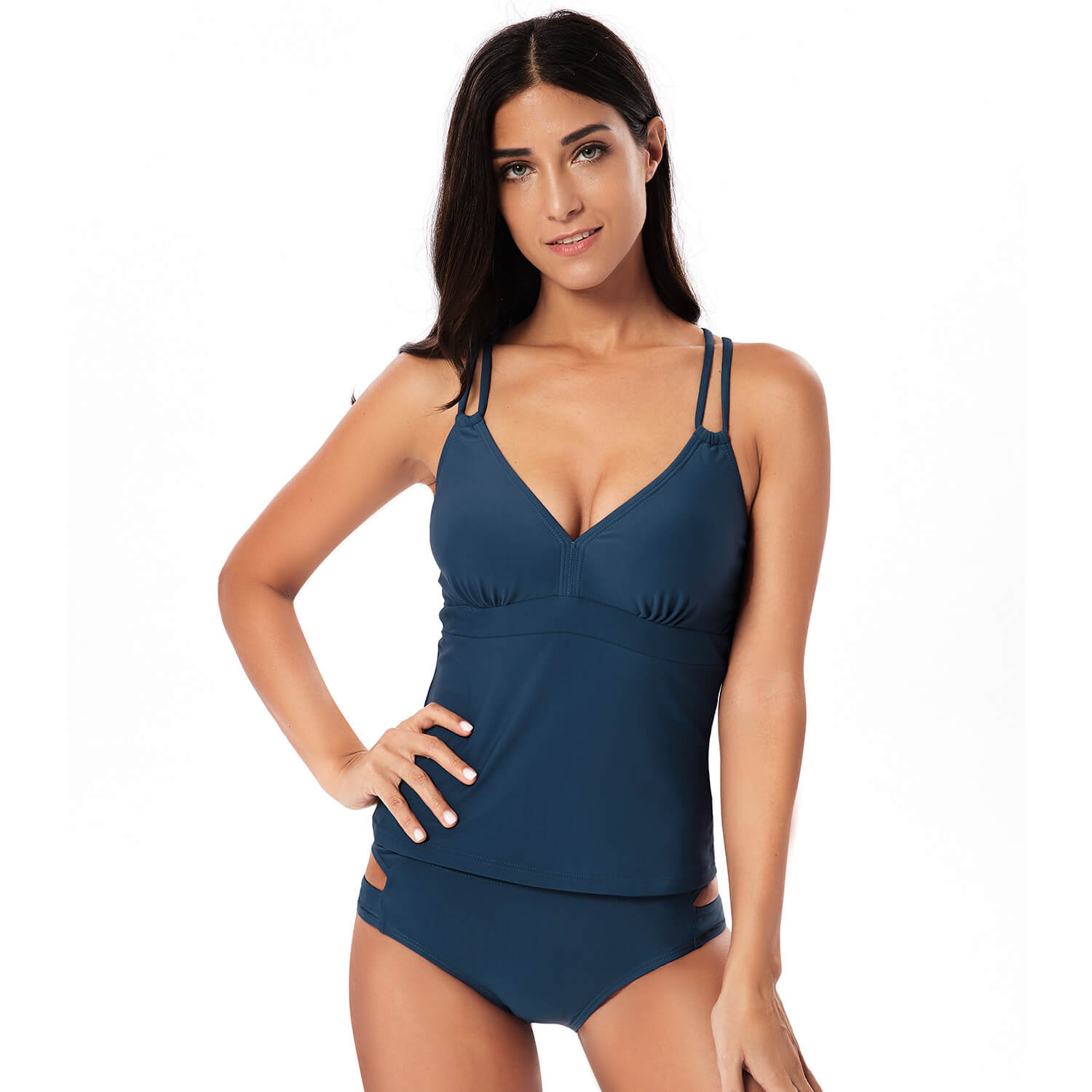
Nylon and Elastane
Nylon-elastane fabrics are commonly used for fashion swimwear because they offer a smooth surface, soft hand feel, and flexibility.
Polyester and Elastane
Polyester-elastane fabrics are often considered for products exposed to chlorine, sunlight, and repeated use. They may be suitable for training or active swimwear.
Recycled Fabrics
Recycled polyester and recycled nylon may be used by brands developing products with recycled content. Any environmental statement should be supported by accurate composition information and relevant documentation.
Before approving a fabric, review:
- Stretch percentage
- Elastic recovery
- Fabric weight
- Dry and wet opacity
- Colorfastness
- Chlorine and salt-water performance
- Pilling and abrasion
- Hand feel
- Lining compatibility
A fabric swatch does not always represent the behavior of a finished swimsuit. Test the fabric in the intended garment construction, especially when using pale colors, lightweight materials, metallic finishes, or printed fabrics.
6. Evaluate a Private Label Swimwear Manufacturer
A manufacturer should be assessed according to its product-development and production capabilities, not only its price.
Ask the factory:
- Does it specialize in swimwear?
- Can it develop patterns and samples?
- Does it provide private label services?
- What is the MOQ for each style and color?
- What size range can it produce?
- Can it provide custom packaging?
- Are fabric test documents available?
- What quality-control procedures are used?
- What are the sample and production lead times?
- Can the factory support repeat orders?
A manufacturer may also identify technical limitations. For example, it may explain that a fabric is too thin for a specific design, a strap requires reinforcement, or a printed fabric has a minimum order requirement.
Before making a production decision, review:
1. Company registration information
2. Business license
3. Factory address
4. Current production photographs
5. Video factory tour
6. Sample quality
7. Written quotation and contract
Dongguan Abely Fashion Co., Ltd. provides OEM and private label production services for bikinis, swimwear, shorts, and thongs for overseas brands, wholesalers, and production companies.
7. Develop Samples and Review Fit
A physical sample should be reviewed before placing a bulk order. Digital images alone cannot show all aspects of fit, comfort, construction, and wet-state performance.
A typical sample process includes:
1. Design confirmation
2. Fabric and trim selection
3. Pattern development
4. First sample
5. Fit review
6. Pattern revision
7. Corrected sample
8. Pre-production sample approval
Review the following points:
- Bust support
- Underband comfort
- Strap adjustment
- Waist fit
- Leg-opening pressure
- Front and back coverage
- Lining position
- Wet opacity
- Stretch recovery
- Movement stability
Ask the fit model to walk, sit, bend, stretch, and simulate swimming movements.
For an extended-size collection, avoid simply enlarging one base size. Body proportions can change between sizes, so grading should be reviewed across the full size range.
8. Prepare a Swimwear Tech Pack
A swimwear tech pack records product requirements for the manufacturer. It can also help maintain consistency during repeat production.
A tech pack may contain:
- Flat sketches
- Construction details
- Measurement chart
- Fabric composition
- Fabric weight
- Stretch requirements
- Lining specifications
- Color references
- Print artwork
- Label placement
- Hardware details
- Packaging requirements
- Stitching instructions
- Quality standards
Before production, confirm:
- Final sample
- Measurement chart
- Fabric and color
- Logo artwork
- Labels and hangtags
- Packaging
- Quantities by size and color
- Production schedule
- Defect standards
Important approvals should be recorded in formal documents rather than relying only on informal messages.
9. Calculate Pricing and Landed Cost
The factory unit price is only one part of the total cost.
Your cost calculation may include:
- Product cost
- Sample and development fees
- Labels and packaging
- Quality inspection
- Freight
- Import duties and taxes
- Website and payment fees
- Photography
- Advertising
- Warehousing
- Returns and exchanges
- Business operating costs
The landed cost reflects the cost of bringing the product into the target sales market.
When comparing factories, consider the complete cost rather than selecting the lowest unit price. Material quality, product returns, sample revisions, inspection fees, and shipping can affect the final margin.
The retail price should be based on product cost, target customer, competitor pricing, brand position, and operating expenses.
10. Develop Labels, Packaging, and Brand Materials
Private label products use brand details to create a consistent customer experience.
Possible brand components include:
- Woven labels
- Printed care labels
- Hangtags
- Custom packaging bags
- Recyclable packaging
- Branded boxes
- Thank-you cards
- Size stickers
- Care instruction cards
Labels should provide accurate information about:
- Fiber composition
- Care instructions
- Size
- Country of origin
- Brand name
- Applicable market requirements
Packaging should be selected according to the product price and brand position. Additional materials may improve presentation but can also increase costs and environmental impact.
Keep logo design, typography, colors, photography, website content, and social media visuals consistent.
11. Manage Production and Quality Control
Confirm the production schedule in writing before bulk manufacturing begins.
A typical process includes:
1. Product approval
2. Material ordering
3. Fabric inspection
4. Cutting
5. Sewing
6. In-line inspection
7. Final inspection
8. Packing
9. Shipment
Quality checks may cover:
- Measurements
- Fabric shade
- Print placement
- Seam quality
- Elastic tension
- Lining coverage
- Hardware installation
- Label placement
- Packaging accuracy
For larger orders, an independent inspection company may be used. Agree on inspection procedures, acceptable defect levels, and correction requirements before production.
New brands may reduce inventory risk by launching with fewer styles and tracking sales before placing repeat orders.
Track sales by:
- Style
- Size
- Color
- Sales channel
- Return reason
This information can support future product decisions and inventory planning.
12. Plan Marketing and Product Launch
Swimwear is a visual product category. Customers need clear information about fit, coverage, color, fabric, and styling.
Useful content includes:
- Front, side, and back product views
- Fabric and seam close-ups
- Model photographs
- Size and fit videos
- Wet and dry product demonstrations
- Cover-up styling
- Customer-generated content
- Factory production content
Your website should include:
- Size chart
- Model measurements
- Fabric composition
- Care instructions
- Shipping policy
- Returns policy
- Coverage information
- Customer reviews
Choose marketing channels based on your target customer. Options may include Instagram, TikTok, Pinterest, email marketing, search engine content, and creator collaborations.
Avoid excessive image editing. Accurate product photography can help customers make informed purchasing decisions and may reduce returns.
13. Prepare for Common Challenges
Private label swimwear brands may encounter:
- High MOQs
- Seasonal demand
- Complex sizing
- Multiple sample revisions
- Fabric shortages
- Color variation
- Shipping delays
- Product returns
- Wet transparency complaints
- Unsold inventory
Possible ways to manage these issues include:
- Starting with fewer styles
- Requesting a written production schedule
- Testing samples before approval
- Ordering basic colors first
- Reviewing size data
- Documenting all approvals
- Conducting final inspections
- Maintaining a sales-based inventory plan
A product launch requires both design work and production planning.
Frequently Asked Questions
How much money is needed to start a private label swimwear brand?
The budget depends on style count, order quantity, fabric customization, packaging, marketing, photography, shipping, and website costs. A smaller launch generally requires less capital than a large seasonal collection.
What is the MOQ for private label swimwear?
MOQ varies by manufacturer, style, fabric, color, and packaging. Ask whether the minimum quantity applies per style, color, size, or total order.
Should a new brand start with bikinis or one-piece swimsuits?
Bikinis allow mix-and-match combinations. One-piece swimsuits provide more coverage and may simplify the purchase decision. The appropriate option depends on your customer profile and product direction.
Do I need a swimwear tech pack?
A tech pack is recommended for custom products because it communicates measurements, materials, construction details, labels, and packaging requirements.
How long does it take to launch a private label swimwear brand?
The schedule depends on design development, sample revisions, fabric availability, production quantity, shipping, and marketing preparation. Plan the entire process rather than considering sewing time alone.
Can I use existing factory designs?
Many manufacturers provide existing designs that can be customized with colors, labels, prints, and packaging. Confirm whether the design is exclusive or available to other customers.
Can a private label factory produce matching beachwear?
Some swimwear factories can also produce matching shorts, cover-ups, pants, thongs, and resortwear. Confirm the factory's product categories and material capabilities before development.
Conclusion
Starting a private label swimwear brand requires planning across market research, product positioning, fabric selection, manufacturing, sampling, cost calculation, packaging, quality control, and marketing.
A small and focused first collection can make it easier to manage development, production, inventory, and customer feedback. The initial goal should be to create products that meet the intended customer's requirements and can be reproduced consistently.
If you are developing bikinis, one-piece swimsuits, shorts, thongs, or coordinated beachwear, Dongguan Abely Fashion Co., Ltd. can provide OEM and private label production services.
Send your reference images, tech pack, sample, target quantity, or brand concept to discuss your swimwear project.
References
1. AATCC Textile Testing and Standards
AATCC provides textile test methods relating to colorfastness, fiber analysis, UV protection, and physical fabric performance.
[View AATCC testing information]
2. AATCC TM162: Colorfastness to Chlorinated Pool Water
This test method evaluates the resistance of colored textile yarns and fabrics to chlorinated pool water.
[View AATCC TM162]
3. ASTM International — AATCC Textile Standards Information
Provides information about textile testing standards and related resources.
[View ASTM textile standards information]
4. Dongguan Abely Fashion Co., Ltd. — Company Information
Information about the company's bikini, swimwear, shorts, thong, OEM, and private-label capabilities is based on the business details supplied in the brief.