Content Menu
● Low-activity bikini tops
● Active bikini tops
● Nylon and elastane
● Polyester and elastane
● Fabric characteristics to evaluate
● Triangle cups
● Molded cups
● Multi-panel cups
● Bandeau cups
● Coverage considerations
● Strap width
● Strap adjustability
● Strap placement
● Back construction
● Removable padding
● Using fabric with poor recovery
● Making the underband too narrow
● Ignoring wet-state performance
● Using straps without reinforcement
● Relying on one sample size
● Adding excessive padding
● Approving samples without movement testing
● What makes a bikini top supportive?
● What fabric is suitable for a supportive bikini top?
● Are underwire bikini tops more supportive?
● How can I make a bikini top more comfortable?
● How should a bikini top be tested?
● Should bikini tops include removable pads?
● Can a factory develop a custom supportive bikini top?
● SEO Summary
Designing a comfortable and supportive bikini top requires more than choosing an attractive shape. A successful bikini top must balance support, fit, stretch, comfort, coverage, appearance, and movement stability.
The design process involves fabric selection, pattern engineering, cup construction, strap placement, underband development, lining, elastic recovery, hardware, sewing, and fit testing. A bikini top that looks good on a mannequin may not remain comfortable when the wearer walks, bends, swims, or moves on the beach.
For brands, retailers, and OEM buyers, understanding these technical factors can reduce fit problems, improve customer satisfaction, and lower return rates. As a manufacturer specializing in bikinis and swimwear, Dongguan Abely Fashion Co., Ltd. uses a structured development process to help brands create bikini tops for fashion, leisure, and water activities.
1. Define the Intended Use Before Designing
The first step is to determine how the bikini top will be used. A design for sunbathing does not need the same support as one intended for swimming, surfing, or beach volleyball.
Low-activity bikini tops
These styles may focus on:
- Lightweight construction
- Minimal coverage
- Decorative straps
- Adjustable ties
- Fashion-oriented details
- Soft and flexible fabrics
Triangle tops, string bikinis, and bandeau styles are common in this category.
Active bikini tops
Active styles require:
- Secure strap placement
- Wider shoulder straps
- Stronger underbands
- More bust coverage
- Stable back construction
- Reliable lining
- Reduced movement during activity
Suitable designs may include sport tops, cross-back tops, high-neck styles, and bra-inspired bikini tops.
Before developing the product, define:
- Target activity level
- Intended customer
- Coverage requirement
- Size range
- Support requirement
- Retail price
- Expected wear frequency
This decision will influence every later construction choice.
2. Choose the Right Fabric
Fabric is one of the most important factors in bikini-top performance. The material must stretch comfortably while returning to its original shape after use.
Nylon and elastane
Nylon-elastane fabric is soft, smooth, and flexible. It is often used for fashion bikinis because it provides a comfortable hand feel and a close fit.
Polyester and elastane
Polyester-elastane fabric is often considered for products exposed to chlorine, sunlight, and repeated use. It may be suitable for active swimwear and pool-related products.
Fabric characteristics to evaluate
Before approving a material, assess:
- Stretch percentage
- Elastic recovery
- Fabric weight
- Wet opacity
- Colorfastness
- Chlorine resistance
- Salt-water performance
- Pilling resistance
- Hand feel
- Lining compatibility
A fabric that stretches well but has poor recovery may become loose after repeated wear. A fabric that is too firm may provide support but create pressure and restrict movement.
The correct fabric should balance flexibility and stability.
3. Design the Cup Shape and Coverage
The cup is responsible for shaping, coverage, and part of the support system. Different cup constructions create different wearing experiences.
Triangle cups
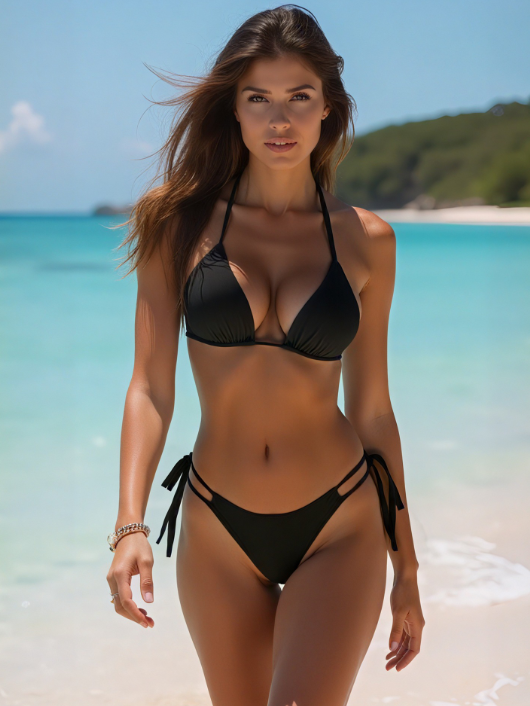
Triangle cups are lightweight and visually simple. They can be suitable for small to medium bust sizes and low-impact activities, especially when the straps and underband are properly designed.
Molded cups
Molded cups provide a more consistent shape and may improve coverage. They can also reduce visible seam lines. However, the mold must match the intended size range and body shape.
Multi-panel cups
Two-piece, three-piece, or multi-panel cups can provide better shaping and support. Panel seams can help guide the bust into a more stable position.
Bandeau cups
Bandeau designs create a clean, strapless appearance. Their stability depends heavily on the underband, internal elastic, anti-slip treatment, and accurate fit.
Coverage considerations
Coverage should be appropriate for the target customer. Check:
- Center-front height
- Side coverage
- Underbust coverage
- Neckline position
- Bust separation
- Potential gaping
- Potential spillage
- Wet-state transparency
A cup that is too small may create pressure and overflow. A cup that is too large may wrinkle, gap, or fail to support the body.
4. Engineer the Underband for Stability
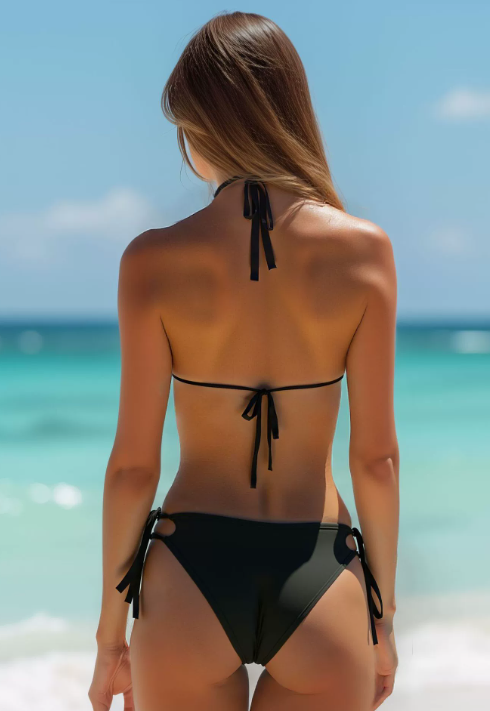
The underband is one of the main support components of a bikini top. It helps hold the garment against the torso and prevents the top from moving upward.
A well-designed underband should:
- Sit horizontally around the body
- Maintain consistent tension
- Avoid excessive pressure
- Recover after stretching
- Remain stable during movement
- Work with the cup and back closure
If the band is too loose, the bikini top may ride up or shift. If it is too tight, it may cause discomfort, skin marks, or restricted breathing.
Important underband factors include:
- Band width
- Elastic width
- Elastic strength
- Seam placement
- Back closure
- Fabric recovery
- Size grading
A wider band can distribute pressure over a larger area and may be suitable for larger cup sizes or active styles.
The band should be tested in dry and wet conditions because water can change the garment's weight and behavior.
5. Position and Adjust the Straps Correctly
Shoulder straps influence both comfort and support. Their placement affects how the garment sits on the shoulders and how pressure is distributed.
Strap width
Thin straps can create a delicate appearance, but they may concentrate pressure. Wider straps usually provide greater comfort for larger bust sizes or active garments.
Strap adjustability
Adjustable sliders allow the wearer to change the length. This is useful because body proportions vary even among customers with the same bust measurement.
Strap placement
Straps positioned too far apart may fall off the shoulders. Straps placed too close together may cause pressure around the neck or create uncomfortable pulling.
Back construction
Common back structures include:
- Straight back
- Halter neck
- Cross-back
- Racerback
- Tie-back
- Hook closure
Halter styles can provide support but may place more pressure on the neck. Cross-back designs can distribute tension across the shoulders but require careful strap length and attachment.
All strap attachment points should be reinforced because they are exposed to repeated pulling and movement.
6. Select Suitable Lining and Padding
Lining improves comfort, coverage, and garment stability. It may also help prevent transparency when the fabric is stretched or wet.
A bikini top lining should be:
- Soft against the skin
- Compatible with the outer fabric
- Stretchable
- Lightweight
- Stable after washing
- Appropriate for wet use
Light-colored or thin fabrics may require additional lining or double-layer construction.
Removable padding
Removable pads can provide shaping and coverage flexibility. They are useful for customers who want to adjust the appearance or support level.
However, padding should not be unnecessarily thick. Thick pads may:
- Absorb or retain water
- Increase drying time
- Add weight
- Shift inside the cup
- Create unnatural shaping
The pad pocket should hold the insert securely while allowing the customer to remove it for washing.
7. Consider Body Shape and Size Grading
A bikini top should be developed for the target size range rather than one sample size only.
Important measurements may include:
- Bust circumference
- Underbust circumference
- Cup depth
- Center-front height
- Side seam height
- Shoulder strap length
- Back width
- Neckline width
Body proportions can change between sizes. Simply enlarging a small-size pattern may create problems such as:
- Insufficient cup depth
- Weak underband support
- Excessive strap tension
- Poor side coverage
- Unbalanced proportions
For larger bust sizes, consider:
- Wider underbands
- Wider shoulder straps
- Multi-panel cups
- Side support panels
- Stronger lining
- Adjustable closures
- Higher center-front coverage
For smaller bust sizes, designers may focus on:
- Light shaping
- Removable pads
- Adjustable ties
- Ruching
- Draped cup construction
- Moderate gathering
The goal is not to force every body into one shape, but to create a structure that supports the intended customer group.
8. Apply Negative Ease Carefully
Swimwear patterns commonly use negative ease, meaning the finished garment is smaller than the body measurement because the fabric stretches over the body.
Negative ease should be carefully calculated. Too much reduction may cause:
- Excessive pressure
- Distorted cups
- Pulled seams
- Reduced coverage
- Restricted movement
- Faster fabric fatigue
Too little reduction may lead to:
- Gaping
- Wrinkling
- Slippage
- Poor support
- An untidy appearance
The appropriate amount depends on the fabric's stretch, construction, intended activity, and size range.
A technical measurement chart should be reviewed alongside actual fit testing.
9. Choose Appropriate Sewing and Construction Methods
Bikini fabrics are elastic, so the sewing method must allow the garment to stretch without damaging the fabric.
Common methods include:
- Four-thread overlock stitching
- Coverstitching
- Elastic insertion
- Binding
- Double-needle stitching
- Bar-tacking
- Reinforced strap attachment
- Double-layer construction
Potential defects include:
- Skipped stitches
- Broken thread
- Wavy seams
- Fabric holes
- Uneven elastic
- Loose threads
- Seam puckering
The stitch length, thread tension, needle size, and machine settings should be adjusted for the fabric.
Stress points require special attention, including:
- Strap attachment
- Underband ends
- Back closures
- Tie points
- Side seams
- Cup seams
Heat-bonded or bonded seams may reduce bulk and improve appearance, but they require accurate control of temperature, pressure, and bonding time.
10. Test Comfort, Support, and Movement
Fit testing should be conducted before bulk production. A practical test should include both dry and wet conditions.
Ask the wearer to:
1. Stand naturally.
2. Raise both arms.
3. Walk.
4. Sit down.
5. Bend forward.
6. Stretch.
7. Rotate the upper body.
8. Simulate swimming movements.
9. Wear the garment in water if appropriate.
10. Wash and dry it before a second review.
Check whether:
- The cups stay in place
- The underband rides upward
- The straps dig into the skin
- The back closure remains secure
- The neckline gaps
- The garment becomes transparent
- The fabric loses recovery
- The seams remain flat
- The padding shifts
Record specific problems instead of using general comments such as "make it tighter." More useful feedback would be:
- Reduce the underband length by a specified amount.
- Increase center-front coverage.
- Move the strap attachment inward.
- Use a wider elastic.
- Increase cup depth.
- Add side support.
- Adjust the back closure position.
Specific comments make pattern revisions more efficient.
11. Balance Support with Appearance
Support does not have to make a bikini top look heavy or overly functional. Designers can integrate technical elements into the visual design.
Examples include:
- Wider straps with decorative stitching
- Support panels hidden inside printed fabric
- Functional underbands with clean finishing
- Adjustable hardware that matches the brand identity
- Shaping seams used as design lines
- Double-layer fabric in contrasting colors
- Sport-inspired details in fashion silhouettes
The best result is a product where support features are considered part of the design rather than added afterward.
12. Common Design Mistakes to Avoid
Using fabric with poor recovery
The top may look acceptable at first but become loose after repeated use.
Making the underband too narrow
Pressure becomes concentrated and may cause discomfort.
Ignoring wet-state performance
A garment can become transparent or heavy after entering water.
Using straps without reinforcement
Strap attachment points may fail after repeated movement.
Relying on one sample size
A design that fits one model may not work across the full size range.
Adding excessive padding
Thick inserts may increase weight and drying time.
Approving samples without movement testing
Static fitting does not reveal all stability problems.
Why Work With Dongguan Abely Fashion Co., Ltd.?
Dongguan Abely Fashion Co., Ltd. specializes in bikinis, swimwear, shorts, and thongs for overseas brands, wholesalers, and production companies.
Bikini-top development may include:
- Fabric and lining selection
- Pattern development
- Cup and strap construction
- Size grading
- Sample production
- Fit revisions
- Private labeling
- Quality inspection
- Bulk production support
The product requirements should be confirmed before sampling, including target activity, size range, coverage, fabric, support level, branding, and packaging.
Frequently Asked Questions
What makes a bikini top supportive?
Support comes from the combined performance of the cup, underband, straps, lining, side panels, closures, and fabric recovery. No single component works independently.
What fabric is suitable for a supportive bikini top?
A suitable fabric should have reliable stretch and recovery, appropriate weight, wet opacity, and resistance to the intended use environment. Nylon-elastane and polyester-elastane are common options.
Are underwire bikini tops more supportive?
Underwire can provide additional shaping and support, but the result depends on accurate cup construction, wire placement, underband fit, and comfort testing.
How can I make a bikini top more comfortable?
Use appropriate negative ease, distribute pressure through wider bands or straps, select soft lining, adjust strap placement, and test the garment during movement.
How should a bikini top be tested?
Test it in dry and wet conditions through walking, bending, stretching, raising the arms, and simulated swimming movements. Check stability, pressure, coverage, and seam performance.
Should bikini tops include removable pads?
Removable pads can provide flexible shaping and coverage, but the pocket must hold them securely and the inserts should not retain excessive water.
Can a factory develop a custom supportive bikini top?
A swimwear OEM factory can assist with fabric selection, pattern development, cup construction, fit testing, size grading, sampling, labels, and bulk production, depending on its capabilities.
Conclusion
Designing a comfortable and supportive bikini top requires a combination of fabric engineering, pattern development, body-fit analysis, construction technology, and practical wear testing.
The most important areas are:
- Choosing fabric with suitable stretch and recovery
- Designing the cup for the intended level of coverage
- Developing a stable but comfortable underband
- Positioning and reinforcing the straps
- Using suitable lining and padding
- Adjusting patterns for different body proportions
- Testing the garment in both dry and wet conditions
- Reviewing construction at stress points
A successful bikini top should support the wearer without creating unnecessary pressure. It should remain stable during movement while maintaining the appearance and style expected by the target market.
For custom bikini-top development, private-label swimwear, or OEM production, Dongguan Abely Fashion Co., Ltd. can support the process from material selection and pattern development to sampling, fit revision, quality control, and bulk manufacturing.
Send your design sketch, reference sample, size range, fabric requirements, or product concept to discuss your next bikini-top project.
## References
1. AATCC Textile Testing and Standards
AATCC provides textile testing methods relating to colorfastness, fiber analysis, UV protection, and physical fabric performance.
[View AATCC testing information]
2. AATCC TM162: Colorfastness to Chlorinated Pool Water
This method evaluates the resistance of colored textile yarns and fabrics to chlorinated pool water.
[View AATCC TM162]
3. ASTM International — AATCC Textile Standards Information
Provides information about textile testing standards and related resources.
[View ASTM textile standards information]
4. Dongguan Abely Fashion Co., Ltd. — Company Information
Company capabilities relating to bikini, swimwear, shorts, thong, OEM, and private-label production are based on the business information supplied in the brief.