Content Menu
● Check the band and straps
● 1. How do I know if a bikini fits correctly?
● 2. Should I choose a bikini based on my body shape?
● 3. What bikini style is best for swimming?
● 4. How should I choose between bikini sizes?
● 5. Are high-waisted bikini bottoms more comfortable?
● 6. What should I check before buying a bikini online?
Choosing a bikini swimsuit is easier when you start with how you want it to feel and function, rather than trying to dress for a so-called "perfect" body shape. The best bikini for you should fit securely, feel comfortable when you move, and suit the activities you have planned—whether that means relaxing by the pool, swimming laps, or spending a full day at the beach.
This guide explains how to choose a bikini style, find a more reliable fit, compare coverage and support, and care for your swimwear. It also includes practical fit checks and advice for brands sourcing custom swimwear.
## How to Choose a Bikini Swimsuit Based on Your Needs
Before comparing colors and prints, consider where, how, and how often you will wear your bikini. A swimsuit for sunbathing may prioritize a different combination of coverage and support than one for active swimming.
Ask yourself:
- What will I do in it? Relaxing, swimming, surfing, and beach sports can call for different levels of hold and coverage.
- What feels comfortable? Consider neckline, strap placement, leg opening, and how much skin you prefer to show.
- What support do I want? Look at cup construction, adjustable straps, lining, and band security.
- How should it fit when wet? Fabric and design should feel secure without digging in or restricting movement.
- How often will I wear it? Regular swimmers may want to pay particular attention to fabric resilience and care instructions.
There is no single bikini style that is right for everyone. Your preferences, the garment's construction, and the intended use all matter.
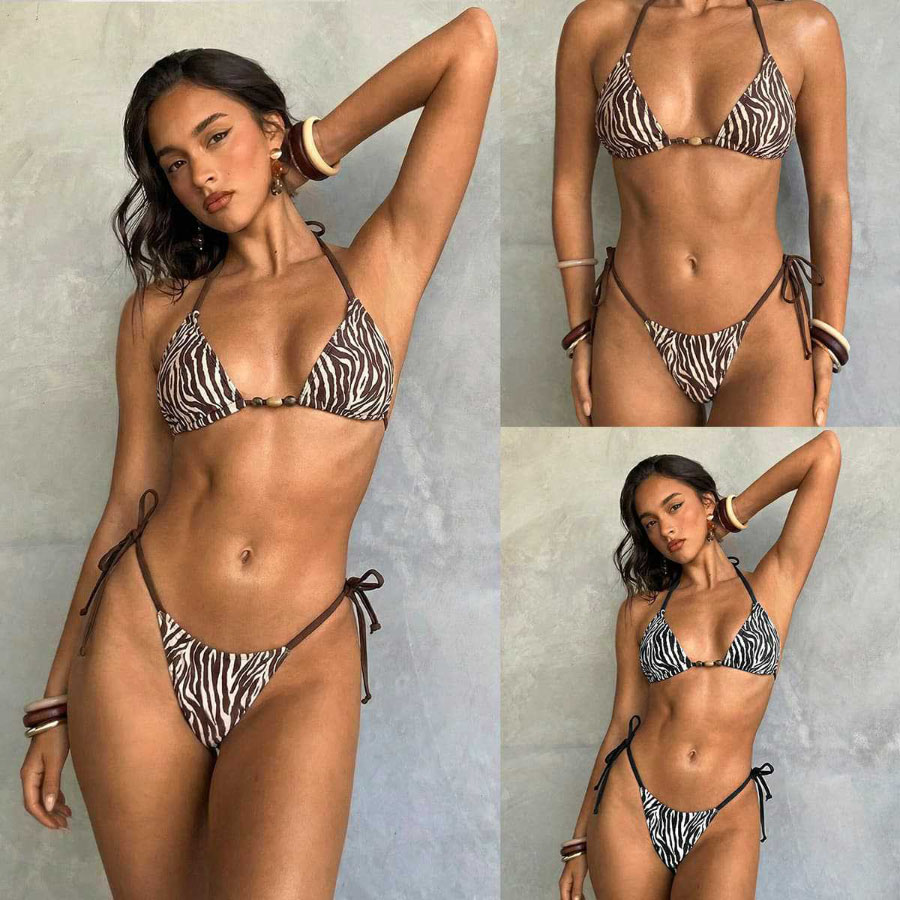
## Choose a Bikini Top for Support, Coverage, and Comfort
A bikini top should stay in place without creating uncomfortable pressure. The right design depends on your personal fit preferences and the support you want.
| Bikini top style | What to look for | May suit |
| Triangle | Adjustable ties or straps; secure band | Those who prefer a minimal, adjustable look |
| Bralette | Comfortable underband; optional lining | Those seeking a soft, simple fit |
| Underwire | Stable band; well-positioned cups | Those who prefer more structured support |
| Halter | Secure neck ties and a comfortable fit | Those who like adjustable neck support |
| Bandeau | Firm fit; optional removable straps | Those who prefer strap-free styling |
| Sport-style | Secure straps and a stable neckline | Active swimming and beach activities |
These descriptions are starting points, not rules. A style that works well for one person may not work for another, even when their measurements are similar.
Check the band and straps
The band should feel secure without painfully squeezing or riding up. Straps should stay on your shoulders without digging in. If the top has adjustable ties, test them gently and check that they remain secure during movement.
If a bikini top has cups, check whether they sit smoothly and whether the center and edges feel comfortable. Do not rely on the label alone: sizing and fit can differ between brands and designs.
## Pick Bikini Bottoms for the Coverage You Prefer
Bikini bottoms vary in rise, leg opening, and back coverage. Choose based on comfort and the activities you have planned—not on rules about which shape you "should" wear.
- High-waisted bottoms: Offer more waist coverage and a higher rise.
- Classic or mid-rise bottoms: Provide a familiar, moderate-rise option.
- Boyshorts: Offer more coverage across the hips and upper thighs.
- Cheeky bottoms: Provide less back coverage than many classic cuts.
- Thong bottoms: Offer minimal back coverage.
- Tie-side bottoms: Allow some adjustment at the hips, though ties should be secured before swimming.
When trying on bottoms, check that the waistband stays in place and that the leg openings feel comfortable while standing, sitting, and walking. For active use, try a few gentle movements to see whether the suit shifts.
## Choose a Bikini by Proportion Without Body-Shape Rules
Style advice often groups people into body-shape categories. That can offer ideas, but it should never be treated as a sizing system or a set of restrictions. A more useful approach is to decide what you would like a bikini to do for you.
For example:
- If you want more bust coverage, look for a higher neckline, fuller cups, or wider straps.
- If you want adjustable coverage, consider tie details or adjustable straps.
- If you want a higher waistline, compare high-rise bottoms.
- If you want a secure feel for movement, look for stable bands and less loosely tied construction.
- If you want a particular visual effect, try color blocking, prints, or texture—but prioritize fit and comfort first.
A bikini is not required to "balance" or conceal any part of your body. Use style details as options, not instructions. Swimwear guides from retailers commonly recommend considering body shape, but the most useful choice remains the one that feels right to you.[1](#S1) [1](#S4)
## Understand Bikini Fabric, Lining, and Construction
A bikini's appearance is only one part of its performance. Fabric, lining, seams, elastic, and closures all affect how it feels and holds its shape.
When comparing swimwear, check:
1. Fabric composition: Read the care and material label; fiber blends vary by product.
2. Stretch and recovery: The fabric should move with you and return to its intended shape.
3. Lining: Check whether the front and back are lined, especially for light-colored or less opaque fabrics.
4. Seams and elastic: Look for smooth construction that does not rub or press uncomfortably.
5. Closures and ties: Make sure clasps and ties feel secure and are easy to adjust.
6. Care directions: Follow the garment label, since instructions vary by fabric and finish.
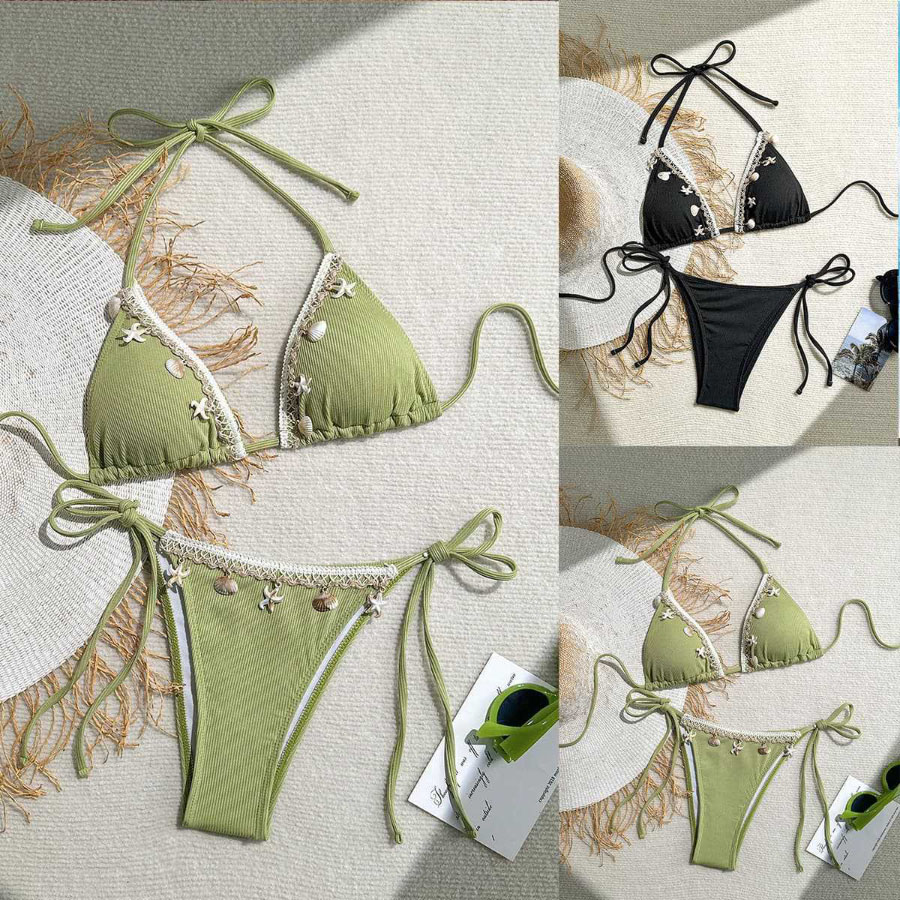
Avoid assuming that a fabric is suitable for a specific activity based only on its name or appearance. If you need a swimsuit for frequent pool use, ask the brand or supplier about the material's intended use and care guidance.
## A Five-Step Bikini Fit Check Before You Buy
A short try-on routine can reveal problems that are easy to miss when you only look in the mirror.
1. Check your measurements. Use the size chart for the specific product and measure according to its instructions.
2. Put the suit on carefully. Adjust straps and ties before judging the fit.
3. Move naturally. Raise your arms, sit down, bend gently, and take a few steps.
4. Check for pressure and shifting. Notice whether the band rides up, straps dig in, or fabric pulls.
5. Review the return policy. Check hygiene-seal requirements, return windows, and whether swimwear returns are accepted.
A size label is only a starting point. If you are between sizes, compare the product's measurements, construction, and fit notes rather than automatically choosing the larger or smaller option.
## Match Your Bikini to the Activity
Different settings place different demands on a swimsuit. The table below gives general questions to consider—not guarantees that a particular style will perform a certain way.
| Intended use | Fit priorities | Details to consider |
| Relaxing at the beach | Comfort and preferred coverage | Adjustable straps, lining, and easy-care instructions |
| Swimming | Secure fit during movement | Stable bands and well-secured ties |
| Beach sports | Reduced shifting and comfortable support | More secure straps and coverage you can move in |
| Travel | Comfort across repeated wear | Care label, drying guidance, and mix-and-match pieces |
If you are buying for a specific sport or activity, check the product details and ask the brand about intended use. A fashion bikini may not provide the same hold as a design made for active movement.
## Swimwear Care: Help Your Bikini Last Longer
Care guidance depends on the garment's material, dye, and finish, so follow the label first. As a general habit, avoid leaving a wet bikini rolled up for long periods, and handle ties and closures gently.
Before buying, check whether the care label gives clear washing and drying instructions. For brands and retailers, consistent care information can help customers understand how to look after a product and what to expect from its materials.
## For Swimwear Brands: Use Fit Feedback to Improve Bikini Design
For swimwear brands, fit is not just a design decision—it is a product-development and customer-experience issue. Customer feedback can help reveal whether a style's coverage, strap placement, sizing, or construction matches the intended use.
A practical development process can include:
- Define the wearer and use case: Specify whether the style is for lounging, swimming, or active beachwear.
- Create a clear fit brief: Record coverage, support, rise, strap adjustability, and construction goals.
- Review samples on multiple wearers: Capture fit observations across different sizes, not just a single sample size.
- Collect structured feedback: Ask focused questions about comfort, movement, coverage, and areas that shift or press.
- Update product information: Make size charts, material details, and care guidance easy to find.
This process does not guarantee a perfect fit for every wearer. It does make design decisions more transparent and gives brands a repeatable way to learn from product feedback.
Dongguan Abely Fashion Co., Ltd. provides OEM services for international brands, wholesalers, and manufacturers. Brands developing a bikini line can use a clear design brief to discuss style, materials, construction, sizing, and intended use with their manufacturing partner. Confirm project capabilities, minimum order quantities, lead times, and compliance requirements directly with the supplier.
## Frequently Asked Questions About Choosing a Bikini
1. How do I know if a bikini fits correctly?
The bikini should feel secure without painful pressure. Check that the top's band and straps stay in place and that the bottoms do not dig in or shift uncomfortably. Try gentle movement before deciding.
2. Should I choose a bikini based on my body shape?
Body-shape guides can suggest styles to try, but they are not rules. Choose based on your comfort, preferred coverage, support, and the activity you have planned.
3. What bikini style is best for swimming?
There is no single best style for everyone. For swimming, prioritize a secure fit that stays in place when you move, and check that ties, straps, and closures are properly secured.
4. How should I choose between bikini sizes?
Use the size chart for the specific product and follow its measurement instructions. If you are between sizes, compare the garment's construction and fit notes, and check the retailer's return policy.
5. Are high-waisted bikini bottoms more comfortable?
Comfort depends on the person and the garment's cut, fabric, and fit. High-waisted bottoms offer a higher rise and more waist coverage, but they are not automatically more comfortable for everyone.
6. What should I check before buying a bikini online?
Review the size chart, product measurements, fabric and lining details, care instructions, customer feedback if available, and the return policy. Do not assume that sizing is identical across brands.
## Final Thoughts: Choose the Bikini That Works for You
The best bikini swimsuit is the one that matches your fit preferences, comfort needs, and intended use. Start with support and coverage, check the construction and care details, and test how the suit feels when you move. Body-shape advice can offer inspiration, but your own comfort should guide the final choice.
If you are a brand, wholesaler, or manufacturer developing a bikini collection, contact Dongguan Abely Fashion Co., Ltd. to discuss your OEM requirements, including design direction, target market, materials, and sizing needs.
## References
- Moosita, "How to Choose the Best Swimsuit for Your Body Shape." https://moosita.com/blogs/moosita/how-to-choose-the-best-swimsuit-for-your-body-shape
- Simply Beach, "What Bikini Suits My Shape? An Easy Guide." https://www.simplybeach.com/blogs/blog/what-bikini-suits-my-shape
- Simply Beach, "How to Look Good in a Bikini: Easy Style Guide." https://www.simplybeach.com/blogs/blog/how-to-look-good-in-a-bikini